Wormwood (Artemisia)
Artemisia absinthium
Family Asteraceae
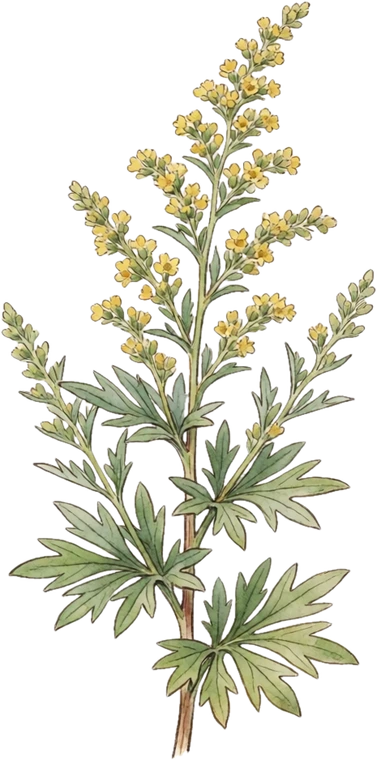
Wormwood's silver is the kind painters reach for — finely filigreed, almost luminous foliage that makes every flower planted near it look deliberately chosen. This is the storied absinthe plant, but its real modern job is simpler: the best gray-leaved anchor a hot, dry border can have.
Drought and deer mean nothing to it, and 'Powis Castle' is the form gardeners swear by. Two honest notes: it chemically discourages some close neighbors, so give it elbow room, and its famous bitterness is genuinely toxic — grow it for beauty, not remedies. Silver this good earns the space.
 Full Sun
 Low water
 Fast growth
 Deer-resistant
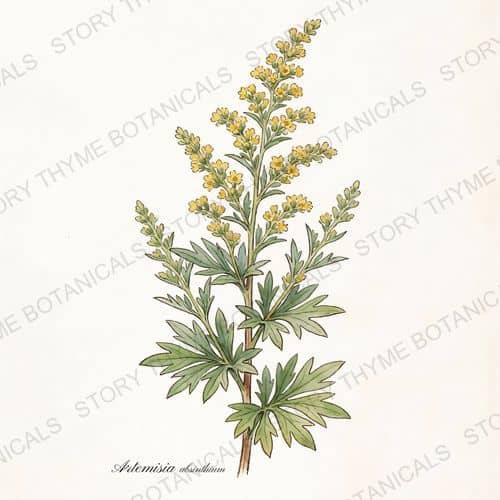
From the print shop
Growing wormwood (artemisia)? Hang it.
Our Plant Library collection carries wormwood (artemisia) — Artemisia absinthium, print Nº 520, “Wormwood (Artemisia).”
526 designsfrom $12.99white or black backgroundmatte poster, unframed
Will it fruit where you are?
Enter your ZIP — we look up your USDA hardiness zone (2023 map) and check it against what wormwood (artemisia) actually needs.
 Hardy inZones 4-9
Wormwood (Artemisia) · Common problems
Common wormwood (artemisia) problems

Pests
1 problem on file
- Almost none — deer- and pest-repellent

Diseases
1 problem on file
- Root Rot in wet soil
Wormwood (Artemisia) · Growing & propagation
Growing wormwood (artemisia)
- Light
- Full Sun
- Water
- Very low
Thrives in hot, dry, poor soil
 Soil
Soil- Lean, sharp drainage · pH 6.0 - 7.5
 Fertilizer
- None
Rich soil ruins the silver foliage
 Pruning
- Spring
Cut back hard for fresh silver growth — Grown today mainly for its filigreed silver-gray foliage, which lights up borders and pairs with everything. Drought- and deer-proof. Cut back hard in spring. Note it's allelopathic — it chemically suppresses some neighboring plants, so give it space.
 Spacing
- 18-24 in
How to plant & propagate wormwood (artemisia)
- Propagate
- Division or seed
Wormwood (Artemisia) · Calculators & field guides
A little help in the garden.
Wormwood (Artemisia) · Yearly calendar
The wormwood (artemisia) year, month by month
Jan
No calendar activity is listed for this month.
 BloomPrune
BloomJune to August
PruneMarch to May
What each band means
- Bloom — flowers open — pollinators working, frost on blossoms is the danger.
- Prune — shape it now — cuts heal cleanly and structure is visible.
These are the species' typical months — expect them a few weeks earlier in warm zones and later in cold ones. Watch the plant, not just the calendar.
Wormwood (Artemisia) · Ecology & uses
Ecology & uses
Artemisia absinthium
Wormwood (Artemisia) in the garden system
- Herbaceous layer perennial
 Moisture
- Upland / dry
- Deer
- Resistant
A safer unfenced choice
 Origin
- Introduced
What wormwood (artemisia) is grown for
! Some parts toxic — see notesContains thujone, a neurotoxin. Ingesting wormwood OIL has caused seizures, muscle breakdown and acute kidney failure (New England Journal of Medicine, 1997). US FDA allows Artemisia in food only if the finished food is thujone free (21 CFR 172.510), and it is not a GRAS spice. Not for casual internal use, and not in pregnancy or breastfeeding. Grow it as an ornamental.
 Use
Use- Silver foliage
- Use
- Drought borders
- Use
- Deer-proof
- Edible value
- 1/5
 Traditional use rating
- 3/5 in herbal tradition
Harvesting & storing wormwood (artemisia)
Historically medicinal and the botanical behind absinthe — but strong and regulated; mostly grown as silver foliage now.
Edibility, identification, and traditional-use notes here are general reference — not medical or veterinary advice, and not a claim that any plant treats or prevents anything. Medicinal ratings record how strongly a plant features in herbal tradition, nothing more. Never eat or dose a plant you have not positively identified. More on how to use this library.
Wormwood (Artemisia) · Varieties & cultivars
Choosing a wormwood (artemisia) variety
'Lambrook Silver'; 'Powis Castle' (a sterile, well-behaved silver hybrid — the best garden form)
Sources & plant identity
Know what you’re growing.
See where the knowledge comes from.
Wormwood (Artemisia)
Artemisia absinthium
The plant, at a glance.
- Botanical name
- Artemisia absinthium
- Plant family
- Asteraceae
- Growth habit
- Perennial
- Origin
- Introduced
- USDA plant symbol
- ARAB3
- Invasive risk
- Low
Hardiness, size and timing vary with your cultivar, soil and climate.
Rooted in research.
University extension research, brought together with hands-on growing experience at Story Thyme Farms.
Questions
Wormwood (Artemisia) questions, answered straight.
Do deer eat wormwood (artemisia)?
Rarely — wormwood (artemisia) is considered deer-resistant, which makes it one of the safer unfenced choices in deer country. Hungry deer in a hard winter test every rule, but it's a low-risk pick.
Is wormwood (artemisia) safe for kids and pets?
With care. Contains thujone, a neurotoxin. Ingesting wormwood OIL has caused seizures, muscle breakdown and acute kidney failure (New England Journal of Medicine, 1997). US FDA allows Artemisia in food only if the finished food is thujone free (21 CFR 172.510), and it is not a GRAS spice. Not for casual internal use, and not in pregnancy or breastfeeding. Grow it as an ornamental. Site it accordingly if children or pets roam the garden. This is general reference, not medical or veterinary advice — call a vet or poison control if something has actually been eaten.
When do you harvest wormwood (artemisia)?
Historically medicinal and the botanical behind absinthe — but strong and regulated; mostly grown as silver foliage now.
How do you propagate wormwood (artemisia)?
Division or seed.
Elsewhere
Where wormwood (artemisia) sits in the library.
 Comfrey
 Lavender
 Rosemary
 Anise Hyssop