Japanese Barberry
Berberis thunbergii
Family Berberidaceae
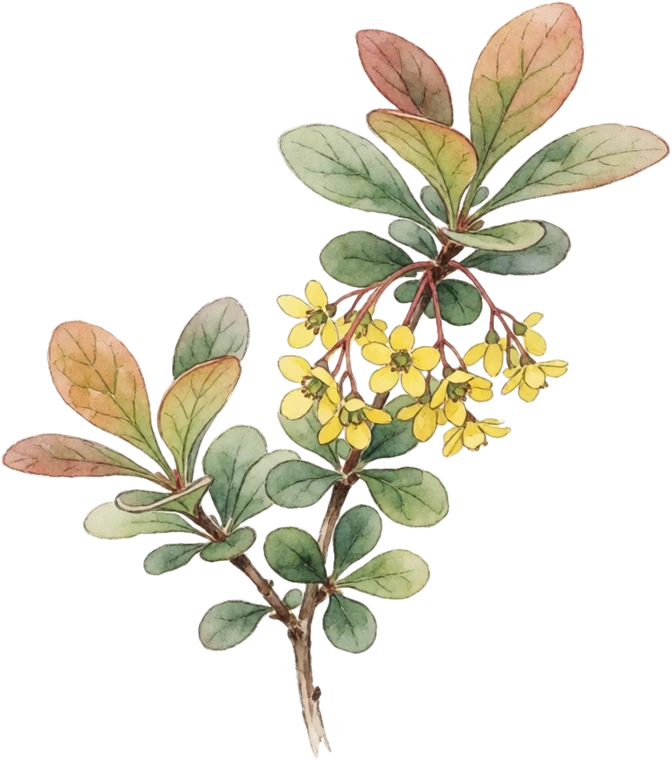
Japanese barberry sells itself on indestructible color — burgundy, gold, or variegated foliage on a compact, thorny mound that deer, drought, and neglect cannot dent. As a low hedge or a stripe of season-long contrast, almost nothing is easier. That ease, though, comes with an asterisk.
The asterisk: it is invasive and banned in a growing list of states, because birds carry its seed into forests. Where it remains legal, choose modern sterile cultivars like the 'Sunjoy' series; where it doesn't, ninebark and weigela offer the same color honestly. Plant with your eyes open.
⚠ Invasive in parts of the USCheck your state before planting.
 Full Sun to Part Shade
 Low water
 Moderate growth
 Deer-resistant
From the print shop
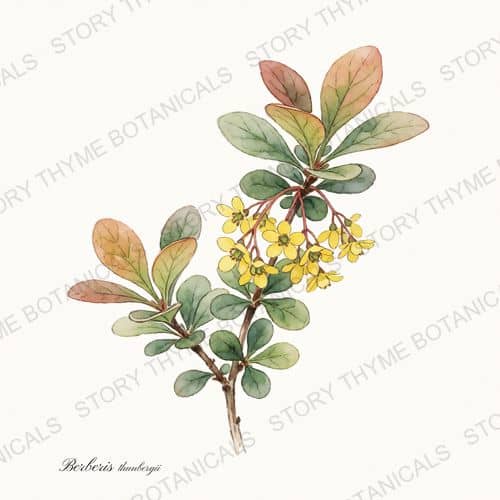
Growing japanese barberry? Hang it.
Our Plant Library collection carries japanese barberry — Berberis thunbergii, print Nº 41, “Japanese Barberry.”
526 designsfrom $12.99white or black backgroundmatte poster, unframed
Will it fruit where you are?
Enter your ZIP — we look up your USDA hardiness zone (2023 map) and check it against what japanese barberry actually needs.
 Hardy inZones 4-8
Japanese Barberry · Common problems
Common japanese barberry problems

Pests
2 problems on file
- Almost none — deer avoid the thorns
- Rabbits

Diseases
2 problems on file
- Almost none
- Botryosphaeria Canker
Japanese Barberry · Growing & propagation
Growing japanese barberry
- Light
- Full Sun to Part Shade
Best color in sun
- Water
- Low
Very drought-tough
 Soil
Soil- Any well-drained · pH 6.0 - 7.0
 Fertilizer
- None needed
 Pruning
- Late Winter
Shear or shape anytime; thorny, so wear gauntlets. Very low-maintenance.
 Spacing
- 2-4 ft
How to plant & propagate japanese barberry
- Propagate
- Seed (stratify), cuttings, or layering
Japanese Barberry · Calculators & field guides
A little help in the garden.
Japanese Barberry · Yearly calendar
The japanese barberry year, month by month
Jan
HarvestDecember to February
 BloomPrune
 Harvest
BloomMarch to May
PruneFebruary to March
HarvestDecember to February
What each band means
- Bloom — flowers open — pollinators working, frost on blossoms is the danger.
- Prune — shape it now — cuts heal cleanly and structure is visible.
- Harvest — picking time — check ripeness every few days.
These are the species' typical months — expect them a few weeks earlier in warm zones and later in cold ones. Watch the plant, not just the calendar.
Japanese Barberry · Ecology & uses
Ecology & uses
Berberis thunbergii
Japanese Barberry in the garden system
- Shrub layer shrub
 Attracts
- Birds
 Habitat
- Woodland
 Moisture
- Upland / dry
- Deer
- Resistant
A safer unfenced choice
 Origin
- Introduced
What japanese barberry is grown for
! Some parts toxic — see notesMildly toxic; thorns are the real hazard
- Use
- Colored foliage
- Use
- Deer-proof
- Use
- Barrier hedge
Check legality
Harvesting & storing japanese barberry
Red berries persist into winter (bird-spread — part of the invasive problem).
Edibility, identification, and traditional-use notes here are general reference — not medical or veterinary advice, and not a claim that any plant treats or prevents anything. Medicinal ratings record how strongly a plant features in herbal tradition, nothing more. Never eat or dose a plant you have not positively identified. More on how to use this library.
Japanese Barberry · Varieties & cultivars
Choosing a japanese barberry variety
'Crimson Pygmy' (dwarf red); 'Aurea' (gold); 'Rose Glow'; sterile 'Sunjoy' series bred to not seed
Sources & plant identity
Know what you’re growing.
See where the knowledge comes from.
Japanese Barberry
Berberis thunbergii
The plant, at a glance.
- Botanical name
- Berberis thunbergii
- Plant family
- Berberidaceae
- Growth habit
- Shrub · Perennial
- Origin
- Introduced
- USDA plant symbol
- BETH
- Invasive risk
- High; check your state
Hardiness, size and timing vary with your cultivar, soil and climate.
Rooted in research.
University extension research, brought together with hands-on growing experience at Story Thyme Farms.
Questions
Japanese Barberry questions, answered straight.
Do deer eat japanese barberry?
Rarely — japanese barberry is considered deer-resistant, which makes it one of the safer unfenced choices in deer country. Hungry deer in a hard winter test every rule, but it's a low-risk pick.
Is japanese barberry safe for kids and pets?
With care. Mildly toxic; thorns are the real hazard Site it accordingly if children or pets roam the garden. This is general reference, not medical or veterinary advice — call a vet or poison control if something has actually been eaten.
When do you harvest japanese barberry?
Red berries persist into winter (bird-spread — part of the invasive problem).
How do you propagate japanese barberry?
Seed (stratify), cuttings, or layering.
Is japanese barberry invasive?
It can be invasive in some regions — give it room or a barrier, and check your state's invasive-species list before planting.
Elsewhere
Where japanese barberry sits in the library.
 Rose
Rose Hydrangea
 Common Lilac
 Forsythia