Rose
- Hardiness
- 4-9
- Mature size
- 2-12 ft by type
- Growth rate
- Moderate-Fast
- Pollination
- None needed for bloom
- Bloom season
- May - Frost (repeat bloomers)
- Harvest season
- Cut in bud for vase; hips after frost
Family Rosaceae
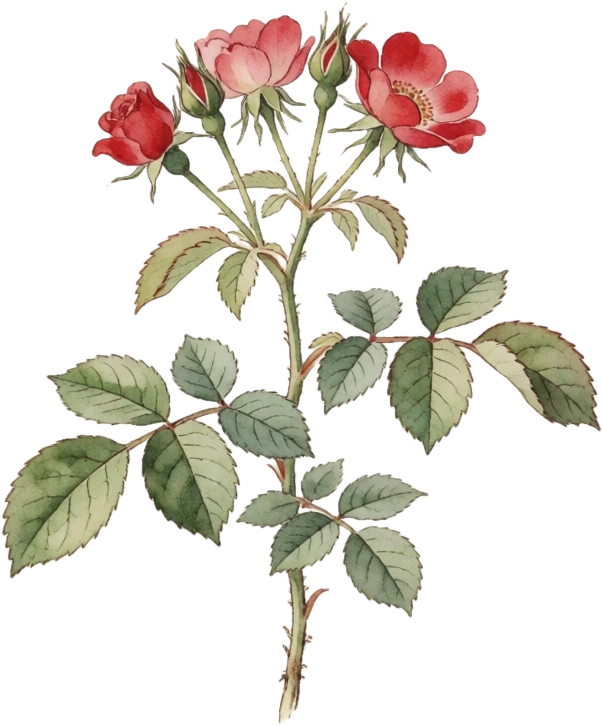
No plant carries more freight than a rose — and no bloom earns it better. From carefree Knock Outs that flower all season to rugged, sea-tough rugosas with clove-scented blooms and fat scarlet hips, there's a rose here for the garden you actually have.
Match the type to your winters — hardiness runs zones 2 through 10 across the three — and a rose becomes a long-lived shrub, not a diva. Hips feed winter birds; thorns politely fence the pets out on their own. Pick your type and give it the sunny spot it deserves.
From the print shop
Our Plant Library collection carries rose — Rosa, print Nº 402, “Rose.”
526 designsfrom $12.99white or black backgroundmatte poster, unframed
Hardiness differs across the 3 roses in this guide, so pick yours and this panel answers for that one.
Rose
Rose · Common problems
Nothing common enough to list for rose. Watch it like anything else in the garden, and check the plants growing next to it.
Rose · Which one do you have?
Where these differ, the key facts above give the span across all of them. Each type’s own figures, as the catalogue records them:
Rose · Growing & propagation
Rose merges several types whose light, water and soil needs differ — the care groups and the growing playbook carry what applies to each.
Rose · Seasonal care & spray guidance
early spring
7 jobs MulchingIn springRose
Pull off the old mulch and lay down a fresh 3-inch layer of pine straw, leaves, pine bark, or wood chips, keeping the area right at the stem clear. Come fall, add extra mulch over the roots for winter protection. Mulch conserves moisture and suppresses weeds, but replacing it rather than topping it up is what matters for disease: the old layer holds the fungal spores that washed down out of last year's foliage, and clearing it out early removes that inoculum before the new leaves are up.
 FeedingAt green tipRose
Fertilize when the plant first leafs out with a rose fertilizer or a slow-release tree and shrub fertilizer at label rate, then feed again after each flush of bloom. Through the heat of midsummer cut the amount in half but keep feeding once blooms appear. Apply to damp soil under the leaves, keep it off the canes, and water it in thoroughly. Composted manure works as a top dressing and adds organic matter along with the nutrients. Stop feeding six weeks before your area's earliest frost date. A repeat-blooming rose spends itself on every flush and rebuilds for the next one, so the feeding tracks the bloom cycle rather than the calendar. Stopping six weeks before frost matters because late nitrogen pushes soft new growth that will not harden off in time and dies back over winter.
FeedingIn springRugosa Rose (Beach Rose)Give a light feed in spring before growth begins, and stop by midsummer. On decent soil a rugosa often needs nothing at all - this is a shrub that tolerates poor, sandy, salt-washed ground. Rugosa is adapted to nutrient-poor maritime soils, and a plant still growing vigorously late in the fall is the one most likely to suffer winter dieback.
 ThinningIn springRugosa Rose (Beach Rose)
Walk the edge of the planting and cut or pull the suckers coming up outside the bounds you want, taking as much rhizome as you can while the soil is moist. One cut does not stop it - expect to cut repeatedly through the growing season, and to keep at it for several years. Rugosa spreads by underground rhizomes as well as seed and forms dense thickets that crowd out everything around them, which is exactly why it escaped cultivation in the first place.
 PruningAt green tipRose
Watch the canes and cut when the buds swell and break, not on a calendar date. On repeat-blooming roses like hybrid teas and floribundas, keep only three to five of the healthiest, most vigorous canes and shorten them to 15 to 18 inches, removing anything thinner than a pencil and any canes that cross. Cut a quarter inch above an outward-facing bud, angling the cut at the same angle as the bud. Old garden roses want a gentler hand: take only the oldest unproductive stems and never more than a third of the bush. Once-blooming roses and their climbers are the exception, prune those right after they flower instead. Bud break tells you the plant has come through winter and shows you which wood is actually alive, so you are cutting to living buds rather than guessing in the cold. Once-blooming roses set their flowers on the previous year's wood, so a spring cut removes the very buds that were going to bloom.
PruningIn springRugosa Rose (Beach Rose)In early spring, while the shrub is still dormant and you can see its structure, cut about a third of the oldest, thickest canes right down to the soil line and head back the remaining stems to control size. Work before growth begins - that moment arrives anywhere from March in the south of its range to May in the far north, so watch the plant, not the calendar. A rugosa needs this only every few years, not annually. Rugosas flower on new wood and rebloom from June to September, so removing the oldest canes pushes vigorous young shoots that carry both the bloom and the hip crop, and it opens the dense canopy so leaves dry faster after rain.
 SprayingAt green tipRose
Begin spraying at bud break, when leaves are first unfolding, using chlorothalonil, myclobutanil, or a copper fungicide. Repeat every seven to 14 days until wet weather subsides. Alternate between at least two different active ingredients rather than leaning on one. Water at the base with a soaker or drip hose instead of overhead, and space plants for airflow. Diplocarpon rosae overwinters in fallen rose leaf litter and in infected canes, and wind or splashing rain carries its spores onto the tender new leaves exactly as they emerge. That first flush of wet-weather infection is what produces the spores that defoliate the plant later in the season, so a spray after lesions appear is already behind the fungus.
at bloom
1 job What to watch forAt bloomRugosa Rose (Beach Rose)
Check the shrub daily while beetles are active and knock them into a bucket of soapy water. Morning and evening are easiest, when the beetles are cool and sluggish. Do not hang a beetle trap anywhere near the rose. A rugosa is in flower more or less continuously from late spring to frost, so the plant is full of foraging bees for the whole window when adult beetles are feeding - there is almost no moment when a spray would not hit pollinators.
the growing season
5 jobsWhat to watch forIn summerRoseWalk your roses through the growing season looking for abnormally red new shoots, thickened stems, rapidly elongating growth with shortened spaces between leaves, a mass of soft flexible thorns, and witches'-broom clustering. There is no chemical cure. Bag the foliage before you dig so the mites do not scatter on the wind, then remove the entire plant including every root so it cannot resprout. Do not compost it or throw it on a brush pile. Remove any wild multiflora rose within 100 yards, and wait until all the diseased roots are out before replanting a rose in that spot. The virus is carried by microscopic eriophyid mites that blow in on the wind and feed on tender new growth, and it goes systemic through the whole plant including the roots. That is why pruning out the symptoms does nothing and why leftover roots that resprout keep the infection alive on your site.
What to watch forIn summerRoseCheck the blooms and foliage early in the morning while temperatures are still cool and the beetles are sluggish. Shake or pick them into a bucket of soapy water and dispose of them. Repeat daily through the flight period, since new beetles keep arriving. Beetles cannot fly well when they are cold, so the same insect that is untouchable at midday drops straight off the cane at dawn. Handpicking also spares the bees working the open flowers, which a blanket spray would not.
What to watch forThrough summerRugosa Rose (Beach Rose)Watch for reddened, thickened shoots, a witches-broom cluster of soft flexible thorns, distorted leaves, and aborted flowers. If you find it, uproot the entire shrub promptly - roots included - and then check every other rose nearby. Remove any wild multiflora rose in the vicinity. The virus is spread by wind-borne eriophyid mites and lives systemically in the roots, so cutting out the affected cane leaves the infection in the plant, and an infected shrub becomes the source that infects everything downwind.
What to watch forThrough summerRugosa Rose (Beach Rose)If you see black spot, rust, or powdery mildew, pick off and remove the infected leaves, water at the base rather than overhead, and prune to open the shrub to air movement. Rugosas are nearly indestructible shrubs, so the leaf spots that do appear are usually a symptom of a crowded, slow-drying canopy rather than a problem needing chemistry - the fix is airflow and sanitation.
SprayingThrough summerRoseAt the first sign of the white powdery coating on leaves or stems, spray weekly until conditions turn unfavorable. Sulfur, myclobutanil, propiconazole, thiophanate-methyl, or neem oil are all options, as is baking soda mixed with horticultural oil. Give the plant good air circulation and full sun rather than a shady, crowded spot. In a wet spring and summer you may not need to treat at all until the drier weather of late summer, so scout before you spray. Powdery mildew infects when temperatures are mild, around 70 to 80F, and humidity is high at night but low during the day. It is worst in shade and during cooler spells. Unlike black spot, a film of water on the leaf actually inhibits this fungus, which is why a rainy spring can suppress it and the drier stretch of late summer is often when it arrives. Weather and the first lesion set the trigger, not the month.
as it ripens, and picking
1 job HarvestingAt harvestRugosa Rose (Beach Rose)
Gather the hips once they are red and ripe but still firm - the window runs from late summer through winter, and many growers pick after the first frost, when the flesh has sweetened. Leave the deadheading off if you want a crop, since a spent flower is what becomes a hip. Rugosa sets unusually large, meaty hips that hold well on the shrub into winter, and ripeness is what makes them sweet enough to be worth processing.
autumn, and putting it to bed
1 jobPruningAfter harvestRoseAfter the season winds down, rake up and remove every fallen rose leaf under the plants along with the old mulch, and cut out canes with visible black spot lesions or canker, taking the cut 6 to 8 inches below the infection and only when the canes are dry. Do not compost any of it. In windy sites, shorten long canes to about 3 feet so winter wind cannot whip and loosen the plant. The black spot fungus does not overwinter in the soil, it overwinters in the fallen leaves and in the infected canes still standing on the plant. Every leaf you leave under the bush is next spring's spore source landing on next spring's new growth.
Rose · Calculators & field guides
Rose · Yearly calendar
No calendar activity is listed for this month.
PrunePruneFebruary to March
These are the species' typical months — expect them a few weeks earlier in warm zones and later in cold ones. Watch the plant, not just the calendar.
Rose · Ecology & uses
 Deer
DeerProtect young plants
! Some parts toxic — see notesMildly toxic to pets (thorns worse) · Safe (hips edible) · Hips and petals edible; safe
Edibility, identification, and traditional-use notes here are general reference — not medical or veterinary advice, and not a claim that any plant treats or prevents anything. Medicinal ratings record how strongly a plant features in herbal tradition, nothing more. Never eat or dose a plant you have not positively identified. More on how to use this library.
Rose · Varieties & cultivars
Choose a rose for your climate, available space and the way you want it to grow. Compare hardiness, mature size, growth habit and disease resistance below, then check each variety description for its flowers and garden use.
7 varieties
Also known as Rosa Knock Out Group
Bred specifically for a long bloom season and blackspot resistance, and one of the few roses that blooms reasonably well in partial shade. Needs far less pruning than most roses - light pruning mainly to manage size. Tolerant of heat and humidity. Rabbits and deer will browse it.
Story Thyme Farms may earn a small commission from these links, at no cost to you — it never changes what we recommend.
Also known as Explorer Series
Canadian Explorer Group climber with medium red, slightly fragrant semi-double to double clusters of about 20 petals. The Explorer Group shows extreme resistance to blackspot, mildew and rust. Full sun, fertile well-drained soil, mulch to hold moisture.
Story Thyme Farms may earn a small commission from these links, at no cost to you — it never changes what we recommend.
Rugosa introduced in 1905 with very fragrant 4-inch purple-pink double blooms of 17 to 25 petals and a clove-like scent. Large orange-red hips are edible and used for teas or jellies. Salt-tolerant and useful for coastal erosion control. Attracts bees and butterflies. Plant in full sun with good air circulation to hold down black spot.
Story Thyme Farms may earn a small commission from these links, at no cost to you — it never changes what we recommend.
Climber discovered in 1930, named the most popular rose in the world at the 1997 World Convention of Rose Societies. Soft shell-pink semi-double to double flowers with a mild sweet fragrance, glossy green foliage, and abundant fall hips. An Earth-Kind rose. Train on a trellis, fence, or pergola. Still wants leaf litter removed and a late-winter prune.
Story Thyme Farms may earn a small commission from these links, at no cost to you — it never changes what we recommend.
Bred in Texas and very heat tolerant. Full, very double pink flowers of 41 to 100 petals in small clusters, 3 to 4 inches across, with a moderate raspberry scent. The first rose to receive the Texas Superstar designation and an Earth-Kind rose. Prune in late winter, avoid crowding and overhead watering. Deer will browse the foliage.
Story Thyme Farms may earn a small commission from these links, at no cost to you — it never changes what we recommend.
Polyantha bearing clusters of small pink double flowers, roughly an inch across, that may fade to blush white in summer heat. Listed as an Earth-Kind rose by Texas A&M AgriLife (aggie-horticulture.tamu.edu/earthkindroses). Tolerates partial shade but flourishes and stays healthier in full sun, drought tolerant once established, and tolerates air pollution.
Story Thyme Farms may earn a small commission from these links, at no cost to you — it never changes what we recommend.
Bourbon climber whose canes are almost prickle-free. The 4-inch semi-double blooms carry up to 30 petals in cerise pink to carmine and deep rose, and are extremely fragrant with a strong fruity scent.
Story Thyme Farms may earn a small commission from these links, at no cost to you — it never changes what we recommend.
Sources & plant identity
Hardiness, size and timing vary with your cultivar, soil and climate.
University extension research, brought together with hands-on growing experience at Story Thyme Farms.
 Clemson University
 Kansas State University
 NC State Extension
 Oregon State University
 University of Wisconsin-Madison
 Maine Natural Areas Program, Maine Dept. of Agriculture, Conservation and Forestry
 University of Alaska Fairbanks
 University of Illinois
 University of Maryland
 University of Minnesota
 North Dakota State University
Publisher marks identify sources, not sponsorship or endorsement.
Rose questions, answered straight.
With care. Mildly toxic to pets (thorns worse) · Safe (hips edible) · Hips and petals edible; safe Site it accordingly if children or pets roam the garden. This is general reference, not medical or veterinary advice — call a vet or poison control if something has actually been eaten.
Where rose sits in the library.
 Serviceberry / Juneberry
 Fig
Fig Elderberry
 Blackberry