Common Lilac
Syringa vulgaris
Family Oleaceae
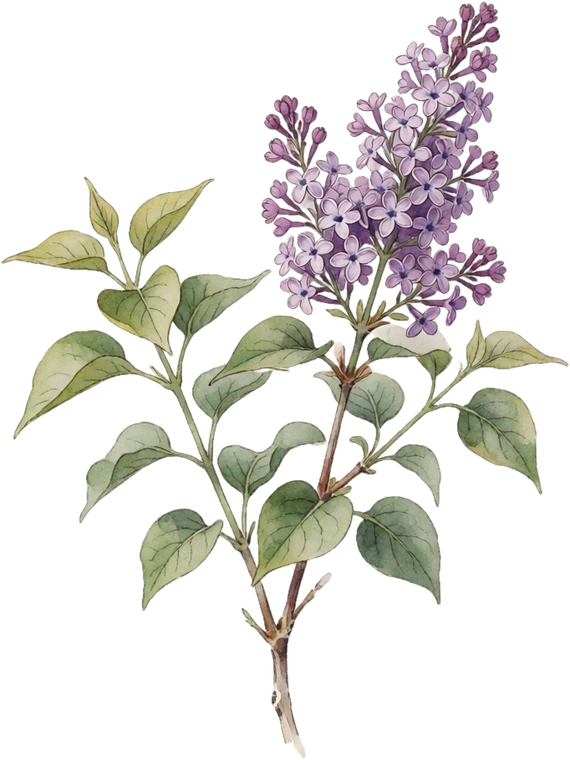
For a hundred and fifty years, common lilac has been the smell of an American May — perfume heavy enough to find with your eyes closed, on eight-to-fifteen-foot shrubs that outlive the houses they're planted beside. Farmsteads vanish; their lilacs keep right on blooming.
Hummingbirds, butterflies, and bees all show up for the party, cut panicles perfume whole rooms, and once established it barely asks for water. It's safe around pets and children and nearly immortal in a sunny corner. Plant one where the kitchen window can supervise it.
 Full Sun — 6+ hrs or few blooms
 Low water
 Moderate growth
 Attracts hummingbirds
 Attracts butterflies
 Attracts bees
 Juglone-sensitive
From the print shop
Growing common lilac? Hang it.
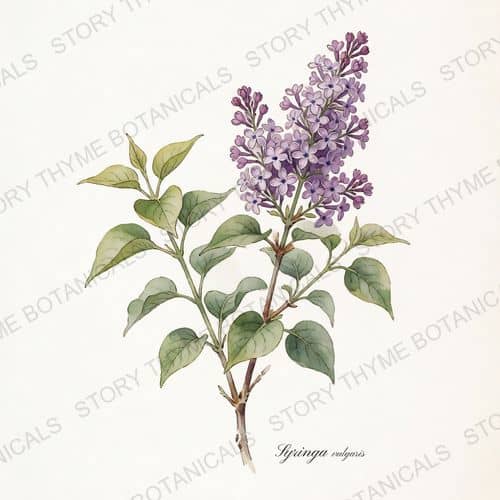
Our Plant Library collection carries common lilac — Syringa vulgaris, print Nº 275, “Common Lilac.”
526 designsfrom $12.99white or black backgroundmatte poster, unframed
Will it fruit where you are?
Enter your ZIP — we look up your USDA hardiness zone (2023 map) and check it against what common lilac actually needs.
 Hardy inZones 3-7
Common Lilac · Common problems
Common common lilac problems

Pests
2 problems on file
- Lilac Borer
- Scale

Diseases
3 problems on file
- Powdery Mildew (universal by August, harmless)
- Bacterial Blight
- Verticillium Wilt
Common Lilac · Growing & propagation
Growing common lilac
- Light
- Full Sun
6+ hrs or few blooms
- Water
- Low once established
 Soil
Soil- Well-drained, LIMED (loves what blueberries hate) · pH 6.5 - 7.5
 Fertilizer
- Wood ash or lime topdress in fall; little else
 Pruning
- IMMEDIATELY after bloom (next year's buds form by July
Late pruning = no flowers) — Renewal method: remove a third of the oldest trunks at the ground each year after bloom; deadhead what you can reach.
 Spacing
- 8-10 ft
How to plant & propagate common lilac
- Propagate
- Seed (stratify), cuttings, or layering
Common Lilac · Seasonal care & spray guidance
The common lilac growing playbook
When to spray common lilac
Dormant season. Dormant oil if scale builds.
Growing season. Ignore the August mildew — every lilac in America wears it.
Common Lilac · Calculators & field guides
A little help in the garden.
Common Lilac · Yearly calendar
The common lilac year, month by month
Jan
No calendar activity is listed for this month.
 BloomPrune
BloomApril to May
PruneJuly
What each band means
- Bloom — flowers open — pollinators working, frost on blossoms is the danger.
- Prune — shape it now — cuts heal cleanly and structure is visible.
These are the species' typical months — expect them a few weeks earlier in warm zones and later in cold ones. Watch the plant, not just the calendar.
Common Lilac · Ecology & uses
Ecology & uses
Syringa vulgaris
Common Lilac in the garden system
- Shrub layer shrub
- Nectary/insectary
- Attracts
- Hummingbirds, Butterflies, Bees
 Moisture
- Upland / dry
 Deer
Deer- Browsed
Protect young plants
 Origin
- Introduced
- Juglone
- Common Lilac is sensitive to juglone
The toxin exuded by black walnut, butternut, and their relatives. Keep it 50+ ft from any walnut or hickory, or its leaves will yellow, wilt, and die back for no obvious reason.
What common lilac is grown for
✓ Commonly eaten
 Use
Use- Fragrance
- Use
- Old-home restoration
- Use
- Cut panicles
Harvesting & storing common lilac
Cut stems when half the panicle is open; smash stem ends for vase life.
Edibility, identification, and traditional-use notes here are general reference — not medical or veterinary advice, and not a claim that any plant treats or prevents anything. Medicinal ratings record how strongly a plant features in herbal tradition, nothing more. Never eat or dose a plant you have not positively identified. More on how to use this library.
Common Lilac · Varieties & cultivars
Choosing a common lilac variety
'Sensation' (purple edged white); 'Beauty of Moscow'; 'Miss Kim' (compact, mildew-clean); 'Bloomerang' (reblooms)
Sources & plant identity
Know what you’re growing.
See where the knowledge comes from.
Common Lilac
Syringa vulgaris
The plant, at a glance.
- Botanical name
- Syringa vulgaris
- Plant family
- Oleaceae
- Growth habit
- Shrub · Perennial
- Origin
- Introduced
- USDA plant symbol
- SYVU
- Invasive risk
- Low
Hardiness, size and timing vary with your cultivar, soil and climate.
Rooted in research.
University extension research, brought together with hands-on growing experience at Story Thyme Farms.
for Common Lilac
Research from these sources
 Iowa State University
 Missouri Botanical Garden
 NC State Extension
 University of Illinois
 University of Maryland
 University of Minnesota
Publisher marks identify sources, not sponsorship or endorsement.
Where to buy
Third-party nurseries — not Story Thyme Farms.
Third-party nurseries, not Story Thyme Farms. Prices are theirs.
Story Thyme Farms may earn a small commission from these links, at no cost to you — it never changes what we recommend.
Questions
Common Lilac questions, answered straight.
Is common lilac safe for kids and pets?
Common Lilac is commonly eaten and isn't considered toxic, but "commonly eaten" isn't a guarantee for any particular person or animal — allergies, quantity, and which part you eat all matter. Never eat a plant you haven't positively identified, and check with a vet before letting pets or livestock graze anything new.
When do you harvest common lilac?
Cut stems when half the panicle is open; smash stem ends for vase life.
How do you propagate common lilac?
Seed (stratify), cuttings, or layering.
Elsewhere
Where common lilac sits in the library.
 Rose
Rose Hydrangea
 Forsythia
 Azalea