Hydrangea
- Hardiness
- 3-9
- Mature size
- 3-8 ft by type
- Growth rate
- Moderate
- Pollination
- Lacecaps and paniculatas feed pollinators; sterile mopheads don't
- Bloom season
- June - September by type
- Harvest season
- Dry heads for everlasting arrangements
Family Hydrangeaceae
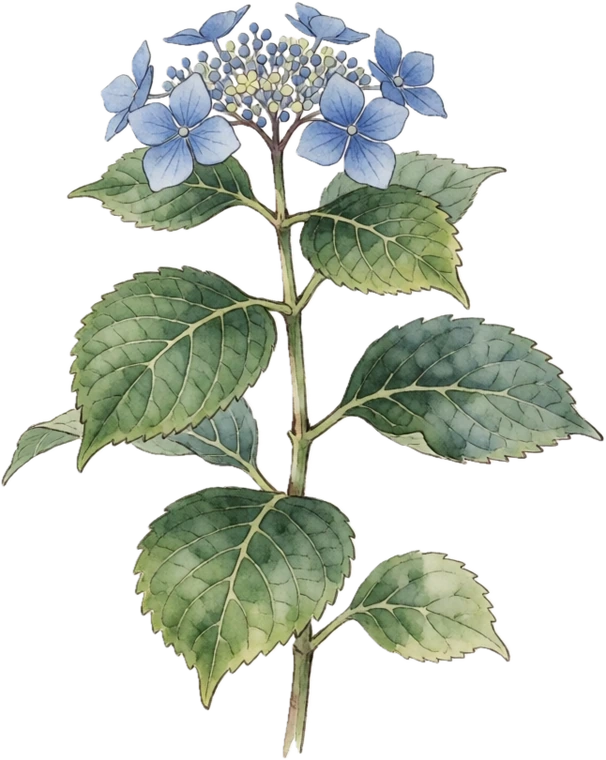
Whole summers organize themselves around hydrangeas — enormous, long-lasting flower heads that age from cream, blue, and pink into antique parchment shades worth cutting for winter. This entry covers three of them: garden hydrangea, climbing hydrangea, and oakleaf — one name, three distinct talents.
Among the three there's a hydrangea for nearly any spot from zone 3 to 9 — a shrub for the border, a climber for a shaded wall, an oakleaf whose foliage burns burgundy in fall. Bees visit; pets shouldn't chew. Match the type to your place and plant with confidence.
 Attracts bees
 Juglone-sensitive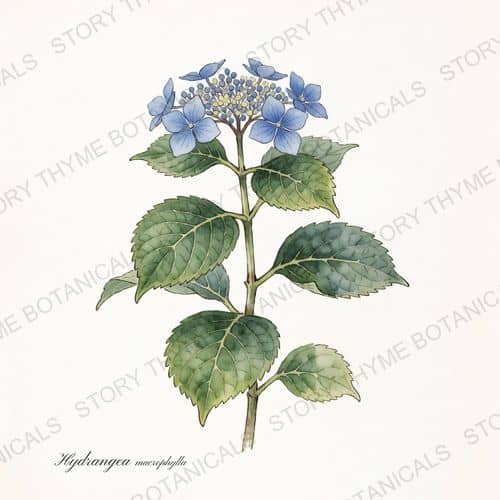
From the print shop
Our Plant Library collection carries hydrangea — Hydrangea macrophylla, print Nº 243, “Hydrangea.”
526 designsfrom $12.99white or black backgroundmatte poster, unframed
Hardiness differs across the 3 hydrangeas in this guide, so pick yours and this panel answers for that one.
Hydrangea
Hydrangea · Common problems
Nothing common enough to list for hydrangea. Watch it like anything else in the garden, and check the plants growing next to it.
Hydrangea · Which one do you have?
Where these differ, the key facts above give the span across all of them. Each type’s own figures, as the catalogue records them:
Hydrangea · Growing & propagation
Hydrangea merges several types whose light, water and soil needs differ — the care groups and the growing playbook carry what applies to each.
Hydrangea · Calculators & field guides
Hydrangea · Yearly calendar
No fixed season calendar for hydrangea — its care follows conditions, not the calendar.
Hydrangea · Ecology & uses
 Attracts
 Moisture
 Deer
DeerProtect young plants
JugloneThe toxin exuded by black walnut, butternut, and their relatives. Keep it 50+ ft from any walnut or hickory, or its leaves will yellow, wilt, and die back for no obvious reason.
! Some parts toxic — see notesToxic to dogs, cats and horses (ASPCA; cyanogenic glycoside) — usually vomiting, depression and diarrhoea rather than true cyanide poisoning, which is rare.
Edibility, identification, and traditional-use notes here are general reference — not medical or veterinary advice, and not a claim that any plant treats or prevents anything. Medicinal ratings record how strongly a plant features in herbal tradition, nothing more. Never eat or dose a plant you have not positively identified. More on how to use this library.
Hydrangea · Varieties & cultivars
Compare hardiness, mature size, growth habit, days to maturity and intended use in the seller’s variety description. Where this guide covers several plant types, start with the type you want to grow, then choose a variety for your season and space.
Sources & plant identity
Hardiness, size and timing vary with your cultivar, soil and climate.
University extension research, brought together with hands-on growing experience at Story Thyme Farms.
Publisher marks identify sources, not sponsorship or endorsement.
Hydrangea questions, answered straight.
With care. Toxic to dogs, cats and horses (ASPCA; cyanogenic glycoside) — usually vomiting, depression and diarrhoea rather than true cyanide poisoning, which is rare. Site it accordingly if children or pets roam the garden. This is general reference, not medical or veterinary advice — call a vet or poison control if something has actually been eaten.
Where hydrangea sits in the library.

 Sunflower
 Zinnia
 Peony
Peony Daylily