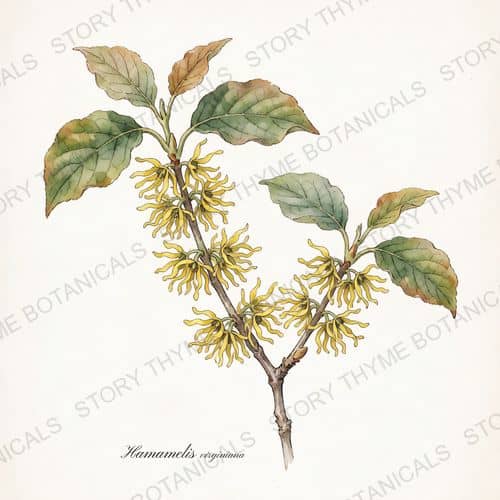
Witch Hazel

Hamamelis virginiana

Family Hamamelidaceae

ShrubNativeZones 3-8

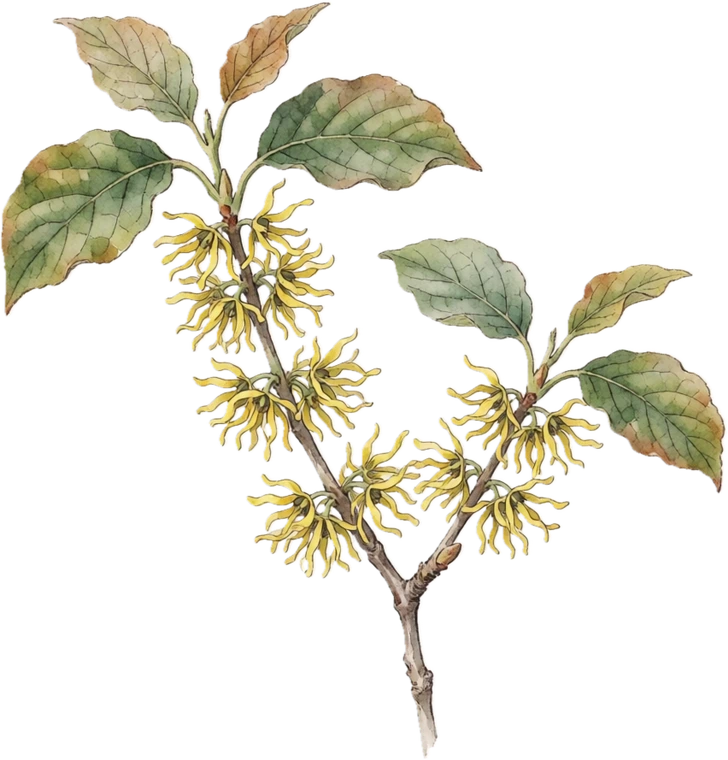
Botanical illustration of Witch Hazel

When the rest of the garden has surrendered to November, Witch Hazel unfurls ribbons of spidery yellow bloom in the bare woods — the last flowers of the American year. Its bark distills into the astringent sold on every pharmacy shelf, and its seed pods fire seeds twenty feet with an audible snap.

In the yard it's a graceful vase-shaped understory native, content in sun or part shade, unbothered and unhurried, feeding late-flying bees when nothing else offers. Every food forest wants a medicine layer; this is its founding member. Tuck one at the woodland edge and own November.

Where to buy witch hazel — 2 nurseries compared

  • Full Sun to Part Shade
  • Moderate water
  • Slow-Moderate growth
  • Native to North America
  • Attracts bees
Witch Hazel — a print from the Plant Library collection

From the print shop

Growing witch hazel? Hang it.

Our Plant Library collection carries witch hazel — Hamamelis virginiana, print Nº 519, “Witch Hazel.”

526 designsfrom $12.99white or black backgroundmatte poster, unframed

Shop Plant Library botanical prints →

✓

Will it fruit where you are?

Enter your ZIP — we look up your USDA hardiness zone (2023 map) and check it against what witch hazel actually needs.

Hardy inZones 3-8

Witch Hazel · Common problems

Common witch hazel problems

Pests, diseases and weather to keep an eye on.

Pests

1 problem on file

  • Almost none

Diseases

1 problem on file

Witch Hazel · Growing & propagation

Growing witch hazel

Light, water, soil, propagation and the season’s jobs.
What it needsThe details
Light
Full Sun to Part Shade

Understory native

Water
Moderate
Soil
Moist, acid-leaning, humusy · pH 5.5 - 6.5
Fertilizer
None needed
Pruning
Late Winter

Minimal — remove suckers below graft on hybrids; enjoy the natural vase.

Spacing
10-15 ft

How to plant & propagate witch hazel

Propagate
Seed (stratify), cuttings, or layering

Witch Hazel · Seasonal care & spray guidance

The witch hazel growing playbook

Field-tested instructions for every job witch hazel asks of you, compiled from university extension guidance — in the order the season brings them.

While it is dormant

winter, before growth starts

3 jobs
PruningIn February and March

Late winter: take out dead and crossing wood, nothing more

Remove dead or crossing branches back to their point of origin, and cut suckers off at the base, so the shrub keeps its natural arching vase form. Common witch hazel flowers in October through December, so a late winter cut costs you nothing, but if you grow a vernal or hybrid type that blooms February into March, wait until its flowers have faded before you cut. Witch hazel sets its flowers on old growth, so wood removed now is wood that would have bloomed; heading cuts also destroy the layered, spreading branch habit that is the whole reason to plant this shrub.

PruningIn February and March

Rejuvenate a tired, crowded clump by thinning the oldest stems

On an established multi-stemmed plant that has gone thin and twiggy inside, selectively cut the oldest, thickest stems out at ground level while it is leafless, leaving the younger stems to carry the canopy. Witch hazel also tolerates an occasional hard cut back to renew the whole plant. Established witch hazel responds well to heavy renewal pruning and resprouts vigorously from the base, which is the same trait that lets harvested plants regrow; the oldest stems flower least and shade out the young wood that flowers best.

HarvestingIn November and December

Cut twigs and bark for distillate once the leaves are down

Take your prunings for distillate in late fall and early winter, after leaf drop. The twigs and bark are the parts used; commercially they are chipped and boiled, and the condensed steam is the astringent product. Note that common witch hazel is still flowering in this window, so cut what you need and leave the rest of the flowering wood standing. Late fall and early winter is the harvest window used by the commercial witch hazel trade, and the shrub is leafless then, so a cut takes wood rather than a working canopy and the plant resprouts from the base. Do not mistake leafless for dormant: common witch hazel blooms mid-October into early December, so wood cut now is wood in flower, and those flowers are one of the last nectar sources of the year — take prunings selectively rather than stripping the plant.

As growth begins

early spring

2 jobs
Planting outIn spring

Plant from a container, early in the season

Set out containerized plants early in the growing season in moist, well-drained soil, in light shade to full sun. Avoid both wet, poorly drained ground and dry sites. Do not plan to move it later. Witch hazel establishes best from containers and resents transplanting once established, so the spot you choose now is effectively permanent; flowering improves with more sun, but the roots want steady moisture.

MulchingIn spring

Two to four inches of mulch over the root zone

Spread a 2 to 4 inch layer of mulch out over the root zone, kept back off the stems. Mulch holds the even soil moisture this shrub needs and keeps the shallow woodland root system from swinging between wet and dry, which is the condition it evolved under on a forest floor.

Through summer

the growing season

3 jobs
WateringIn summer

Keep it evenly moist through its first two summers

Water consistently through the first two growing seasons, enough to keep the root zone moist rather than soggy. Witch hazel grows best in moist, well-drained soil: avoid wet, poorly drained sites and avoid dry locations. Even once established it prefers steady moisture, and it will tolerate somewhat drier sites but not a genuinely dry one. Iowa State calls for consistent moisture through the first couple of growing seasons and says to avoid dry locations. This is a woodland understory shrub — Maryland Extension describes it as ideally moist, tolerant of temporary wetness and somewhat drier sites, and vulnerable to sunscorch in full sun — so a young plant on a dry, exposed site checks and stalls rather than establishing.

PruningIn summer

Rub off suckers, especially on a grafted hybrid

Pull or cut suckers at the base as they appear through the growing season. If your plant is a named hybrid like Arnold Promise or Jelena, look hard at anything rising from below the graft union and remove it immediately. Hybrid witch hazels are commonly grafted onto common witch hazel rootstock, and common witch hazel is especially prone to suckering, so unchecked rootstock shoots will outgrow and eventually replace the cultivar you paid for.

What to watch forIn summer

Cone and spiny galls on the leaves: identify them, then leave them alone

Expect cone-shaped bumps standing up from the leaf surface, and spiny galls on the leaves and seed pods. These are the witch hazel cone gall aphid and the spiny witch hazel gall aphid, both native. Do not spray. If a small infestation bothers you, prune the affected shoots out in summer. Both aphids are native insects that alternate between witch hazel and birch, and the galls are cosmetic. They do not harm the plant and do not need managing, so any insecticide here buys you nothing and costs the beneficial insects in the shrub.

Witch Hazel · Calculators & field guides

A little help in the garden.

Calculators for the figures. Field guides for the hands-on work.

Witch Hazel · Yearly calendar

The witch hazel year, month by month

What witch hazel asks for, month by month.

Jan

BloomOctober to March

MonthJanFebMarAprMayJunJulAugSepOctNovDec
Bloom
Prune

BloomOctober to March

PruneFebruary to March

What each band means

  • Bloom — flowers open — pollinators working, frost on blossoms is the danger.
  • Prune — shape it now — cuts heal cleanly and structure is visible.

These are the species' typical months — expect them a few weeks earlier in warm zones and later in cold ones. Watch the plant, not just the calendar.

Witch Hazel · Ecology & uses

Ecology & uses

What it does for the garden, and what it is grown for.
Botanical illustration of Witch Hazel

Hamamelis virginiana

Witch Hazel in the garden system

  • Understory layer shrub
  • Nectary/insectary
Attracts
Bees
Habitat
Woodland
Moisture
Facultative / average
Deer
Browsed

Protect young plants

Origin
Native to North America

What witch hazel is grown for

✓ Commonly eatentopical use traditional; not for casual internal use

Use
Astringent (topical)
Use
Winter bloom
Use
Native understory
Traditional use rating
4/5 in herbal tradition

Harvesting & storing witch hazel

Bark + twigs: the astringent distillate in every drugstore (harvest prunings).

Edibility, identification, and traditional-use notes here are general reference — not medical or veterinary advice, and not a claim that any plant treats or prevents anything. Medicinal ratings record how strongly a plant features in herbal tradition, nothing more. Never eat or dose a plant you have not positively identified. More on how to use this library.

Witch Hazel · Varieties & cultivars

Best witch hazel varieties & cultivars

There are far more than these — the ones below are the named varieties of witch hazel people actually plant.

Named varieties of witch hazel differ in winter-chill needs, ripening time, hardiness, and whether they set fruit on their own — pick one that fits your climate.

11 varieties

Harvest Moon

Zones
3-8
Size
15 to 20 feet tall

Common witch hazel, Hamamelis virginiana. Lemon yellow flowers on a vase-shaped plant, blooming mid October to early December. The full-size form, and the hardiest group.

Where to buy ‘Harvest Moon’

Story Thyme Farms may earn a small commission from these links, at no cost to you — it never changes what we recommend.

Sources & plant identity

Know what you’re growing.
See where the knowledge comes from.

Botanical illustration of Witch Hazel

Witch Hazel

Hamamelis virginiana

The plant, at a glance.

Botanical name
Hamamelis virginiana
Plant family
Hamamelidaceae
Growth habit
Shrub · Perennial
Origin
Native to North America
USDA plant symbol
HAVI4
Invasive risk
Low
Every garden is different.

Hardiness, size and timing vary with your cultivar, soil and climate.

Rooted in research.

University extension research, brought together with hands-on growing experience at Story Thyme Farms.

Explore Witch Hazel’s sources5 reference links
for Witch Hazel

Research from these sources

Publisher marks identify sources, not sponsorship or endorsement.

Questions

Witch Hazel questions, answered straight.

Is witch hazel safe for kids and pets?

Witch Hazel is commonly eaten and isn't considered toxic, but "commonly eaten" isn't a guarantee for any particular person or animal — allergies, quantity, and which part you eat all matter. One caveat on this one: topical use traditional; not for casual internal use. Never eat a plant you haven't positively identified, and check with a vet before letting pets or livestock graze anything new.

When do you harvest witch hazel?

Bark + twigs: the astringent distillate in every drugstore (harvest prunings).

How do you propagate witch hazel?

Seed (stratify), cuttings, or layering.

Elsewhere

Where witch hazel sits in the library.

Where witch hazel sits in the library

Grows in the same world