Wild Ginger
Asarum canadense
Family Aristolochiaceae
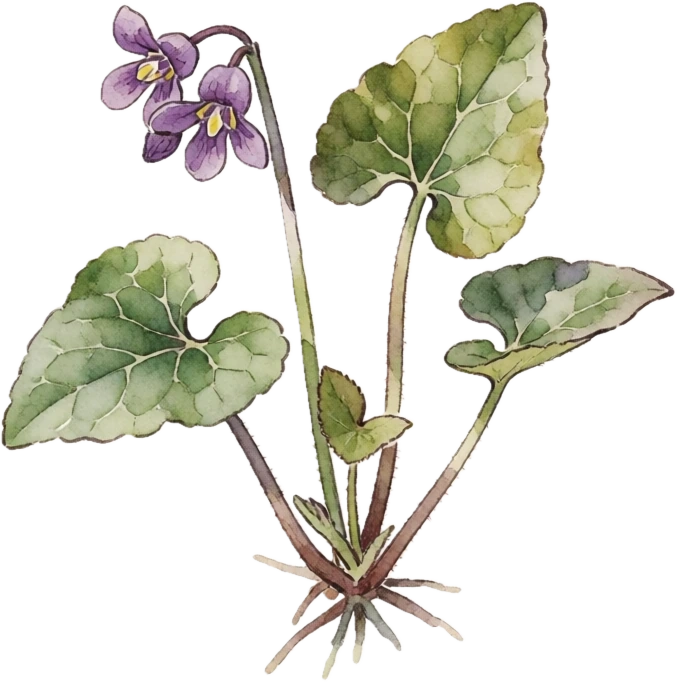
Under the trees where grass gives up, wild ginger unrolls a lush carpet of fuzzy, heart-shaped leaves — one of the finest native groundcovers for shade. Its ginger-scented rhizome flavored early kitchens, but modern science says admire, don't eat; the beauty alone carries it.
Look beneath the leaves in spring for its secret — odd maroon flowers at soil level, pollinated by crawling insects. Deer-resistant and weed-smothering, it slowly knits dry or moist shade into something finished. Where you've run out of ideas under a maple, this is the answer.
 Part Shade to Full Shade
 Moderate water
 Slow-Moderate growth
 Deer-resistant
 Native to North America
 Attracts butterflies
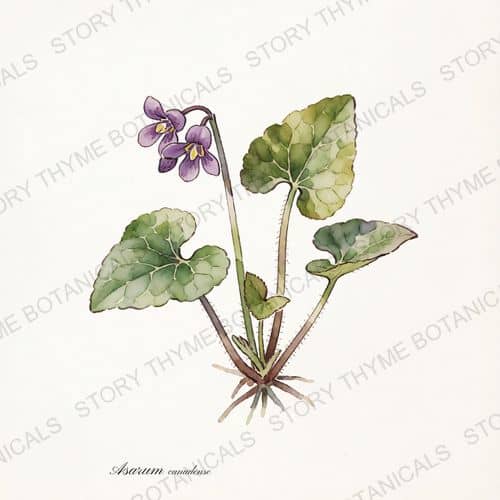
From the print shop
Growing wild ginger? Hang it.
Our Plant Library collection carries wild ginger — Asarum canadense, print Nº 511, “Wild Ginger.”
526 designsfrom $12.99white or black backgroundmatte poster, unframed
Will it fruit where you are?
Enter your ZIP — we look up your USDA hardiness zone (2023 map) and check it against what wild ginger actually needs.
 Hardy inZones 3-8
Wild Ginger · Common problems
Common wild ginger problems

Pests
1 problem on file
- Almost none

Diseases
1 problem on file
- Almost none
Wild Ginger · Growing & propagation
Growing wild ginger
- Light
- Part Shade to Full Shade
- Water
- Moderate
Woodland moisture
 Soil
Soil- Rich, moist, humusy · pH 5.5 - 7.0
 Fertilizer
- Leaf mold
 Pruning
- Rarely needed
A lovely native groundcover for deep, dry-to-moist shade — heart-shaped fuzzy leaves forming a lush weed-smothering carpet under trees, with quirky maroon flowers hiding at ground level (pollinated by early crawling insects). The rhizome smells of ginger and was used as a flavoring, though it contains aristolochic acid, so modern guidance is to enjoy it as an ornamental, not a spice. Deer-resistant.
 Spacing
- 10-12 in
How to plant & propagate wild ginger
- Propagate
- Division or seed
Wild Ginger · Calculators & field guides
A little help in the garden.
Wild Ginger · Yearly calendar
The wild ginger year, month by month
Jan
No calendar activity is listed for this month.
 Bloom
BloomBloomMarch to April
What each band means
- Bloom — flowers open — pollinators working, frost on blossoms is the danger.
These are the species' typical months — expect them a few weeks earlier in warm zones and later in cold ones. Watch the plant, not just the calendar.
Wild Ginger · Ecology & uses
Ecology & uses
Asarum canadense
Wild Ginger in the garden system
- Groundcover layer perennial
- Living mulch
- Attracts
- Butterflies
 Habitat
- Woodland
- Moisture
- Facultative / average
- Deer
- Resistant
A safer unfenced choice
- Origin
- Native to North America
What wild ginger is grown for
✓ Commonly eatenRhizome aromatic but contains aristolochic acid — grow as an ornamental groundcover, not for eating
 Use
Use- Shade groundcover
- Use
- Woodland native
- Use
- Deer-resistant
Harvesting & storing wild ginger
Aromatic rhizome (a traditional ginger substitute/flavoring, but see caution).
Edibility, identification, and traditional-use notes here are general reference — not medical or veterinary advice, and not a claim that any plant treats or prevents anything. Medicinal ratings record how strongly a plant features in herbal tradition, nothing more. Never eat or dose a plant you have not positively identified. More on how to use this library.
Wild Ginger · Varieties & cultivars
Choosing a wild ginger variety
Species (A. canadense, deciduous native); European A. europaeum (glossy evergreen)
Sources & plant identity
Know what you’re growing.
See where the knowledge comes from.
Wild Ginger
Asarum canadense
The plant, at a glance.
- Botanical name
- Asarum canadense
- Plant family
- Aristolochiaceae
- Growth habit
- Perennial
- Origin
- Native to North America
- USDA plant symbol
- ASCA
- Invasive risk
- Low
Hardiness, size and timing vary with your cultivar, soil and climate.
Rooted in research.
University extension research, brought together with hands-on growing experience at Story Thyme Farms.
Questions
Wild Ginger questions, answered straight.
Do deer eat wild ginger?
Rarely — wild ginger is considered deer-resistant, which makes it one of the safer unfenced choices in deer country. Hungry deer in a hard winter test every rule, but it's a low-risk pick.
Is wild ginger safe for kids and pets?
Wild Ginger is commonly eaten and isn't considered toxic, but "commonly eaten" isn't a guarantee for any particular person or animal — allergies, quantity, and which part you eat all matter. One caveat on this one: Rhizome aromatic but contains aristolochic acid — grow as an ornamental groundcover, not for eating. Never eat a plant you haven't positively identified, and check with a vet before letting pets or livestock graze anything new.
When do you harvest wild ginger?
Aromatic rhizome (a traditional ginger substitute/flavoring, but see caution).
How do you propagate wild ginger?
Division or seed.
Elsewhere
Where wild ginger sits in the library.
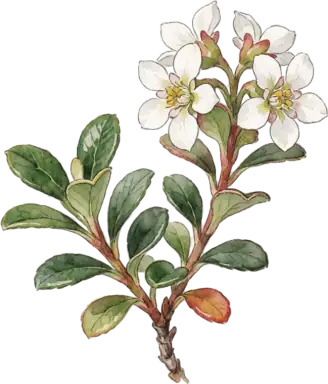 Bearberry (Kinnikinnick)
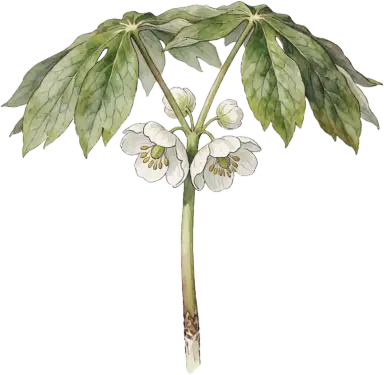 Mayapple
 Foamflower
 Virginia Creeper