Foamflower
Tiarella cordifolia
Family Saxifragaceae
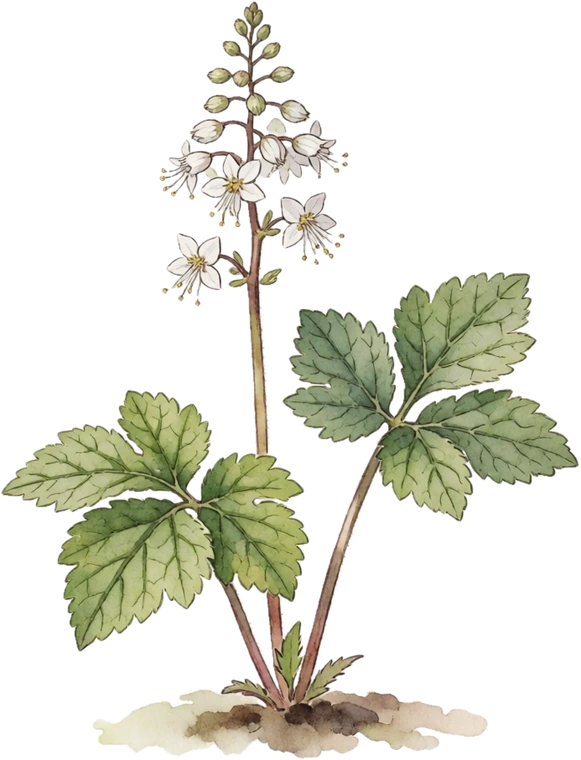
Foamflower earns its name every spring — a froth of starry white spikes floating over neatly patterned, maple-shaped leaves, many veined in burgundy. It's the rare groundcover that would be worth growing for the foliage alone, then flowers like it has something to prove.
Small bees attend the bloom, deer pass it by, and in mild winters the carpet stays semi-evergreen — a gentle, weed-suppressing native for moist shade that layers perfectly with ferns, bluebells, and coral bells. Among the easiest shade natives to succeed with; start your woodland floor here.
 Part Shade to Full Shade
 Moderate water
 Moderate growth
 Deer-resistant
 Native to North America
 Attracts bees
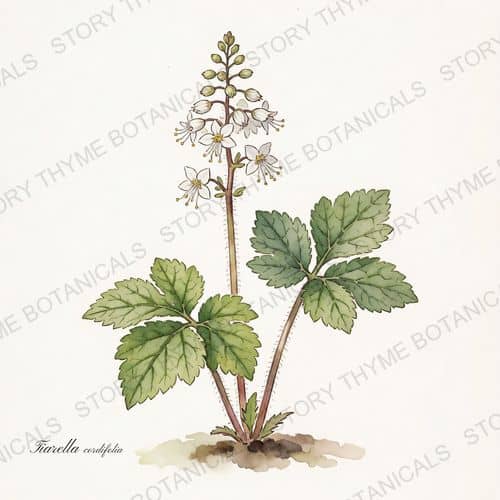
From the print shop
Growing foamflower? Hang it.
Our Plant Library collection carries foamflower — Tiarella cordifolia, print Nº 188, “Foamflower.”
526 designsfrom $12.99white or black backgroundmatte poster, unframed
Will it thrive where you are?
Enter your ZIP — we look up your USDA hardiness zone (2023 map) and check it against what foamflower actually needs.
 Hardy inZones 3-8
Foamflower · Common problems
Common foamflower problems

Pests
1 problem on file
- Almost none

Diseases
1 problem on file
- Almost none
Foamflower · Growing & propagation
Growing foamflower
- Light
- Part Shade to Full Shade
- Water
- Moderate, even
Woodland moisture
 Soil
Soil- Rich, moist, humusy · pH 5.5 - 6.5
 Fertilizer
- Leaf mold
 Pruning
- Remove tired leaves in spring
A charming native groundcover for moist shade — mounds of maple-shaped, often burgundy-veined leaves (semi-evergreen) topped in spring by airy spikes of foamy white flowers that feed small bees. It spreads politely by runners into a weed-smothering carpet and pairs beautifully with ferns, heuchera, and bluebells. One of the best-behaved native shade groundcovers. Deer-resistant.
 Spacing
- 12 in
How to plant & propagate foamflower
- Propagate
- Division or seed
Foamflower · Calculators & field guides
A little help in the garden.
Foamflower · Yearly calendar
The foamflower year, month by month
Jan
No calendar activity is listed for this month.
 BloomPrune
BloomMarch to June
PruneMarch to May
What each band means
- Bloom — flowers open — pollinators working, frost on blossoms is the danger.
- Prune — shape it now — cuts heal cleanly and structure is visible.
These are the species' typical months — expect them a few weeks earlier in warm zones and later in cold ones. Watch the plant, not just the calendar.
Foamflower · Ecology & uses
Ecology & uses
Tiarella cordifolia
Foamflower in the garden system
- Groundcover layer perennial
- Nectary/insectary
- Living mulch
 Attracts
- Bees
 Habitat
- Woodland
- Moisture
- Facultative / average
- Deer
- Resistant
A safer unfenced choice
- Origin
- Native to North America
What foamflower is grown for
✓ Not known to be toxic
 Use
Use- Shade groundcover
- Use
- Spring bloom
- Use
- Woodland native
- Use
- Deer-resistant
Edibility, identification, and traditional-use notes here are general reference — not medical or veterinary advice, and not a claim that any plant treats or prevents anything. Medicinal ratings record how strongly a plant features in herbal tradition, nothing more. Never eat or dose a plant you have not positively identified. More on how to use this library.
Foamflower · Varieties & cultivars
Choosing a foamflower variety
'Brandywine' (bold veins); 'Running Tapestry'; 'Sugar and Spice' (cut leaves); × Heucherella hybrids
Sources & plant identity
Know what you’re growing.
See where the knowledge comes from.
Foamflower
Tiarella cordifolia
The plant, at a glance.
- Botanical name
- Tiarella cordifolia
- Plant family
- Saxifragaceae
- Growth habit
- Perennial
- Origin
- Native to North America
- USDA plant symbol
- TICO
- Invasive risk
- Low
Hardiness, size and timing vary with your cultivar, soil and climate.
Rooted in research.
University extension research, brought together with hands-on growing experience at Story Thyme Farms.
Questions
Foamflower questions, answered straight.
Do deer eat foamflower?
Rarely — foamflower is considered deer-resistant, which makes it one of the safer unfenced choices in deer country. Hungry deer in a hard winter test every rule, but it's a low-risk pick.
Is foamflower safe for kids and pets?
Foamflower is commonly eaten and isn't considered toxic, but "commonly eaten" isn't a guarantee for any particular person or animal — allergies, quantity, and which part you eat all matter. Never eat a plant you haven't positively identified, and check with a vet before letting pets or livestock graze anything new.
How do you propagate foamflower?
Division or seed.
Elsewhere
Where foamflower sits in the library.
 Bearberry (Kinnikinnick)
 Wild Ginger
 Mayapple
 Virginia Creeper