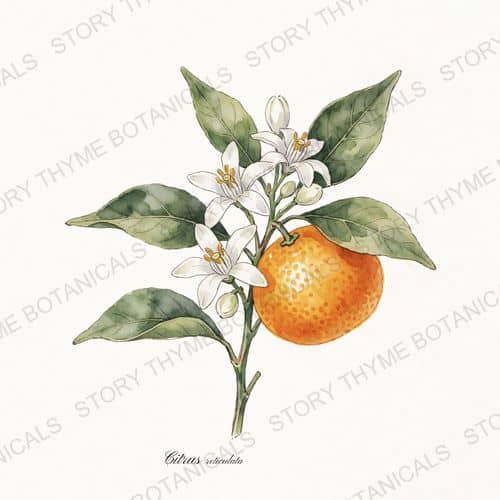
Mandarin / Tangerine

Citrus reticulata

Family Rutaceae

TreeZones 8-11

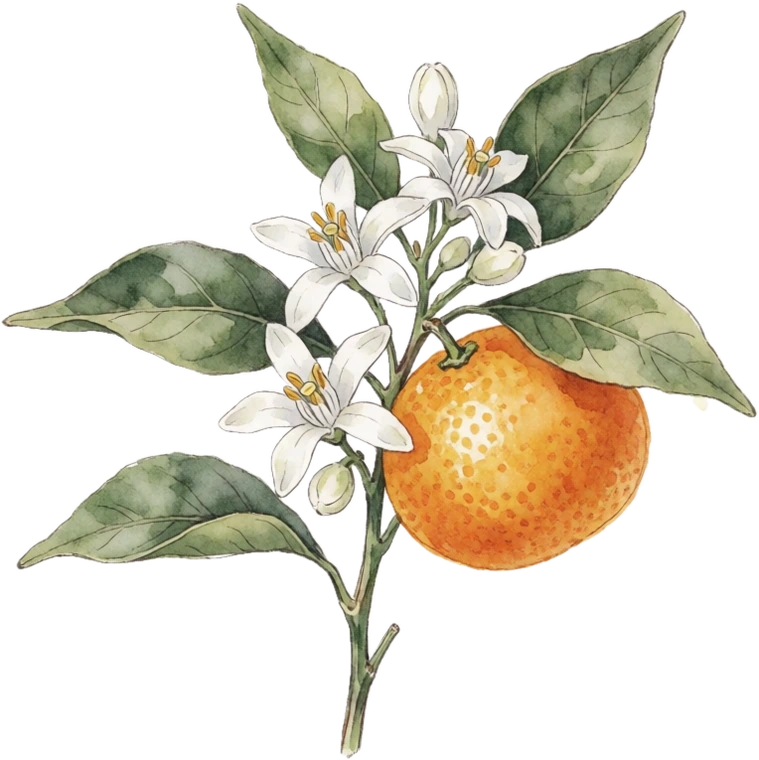
Botanical illustration of Mandarin / Tangerine

Mandarins are the citrus built for hands: loose skins that peel in one satisfying spiral, seedless satsuma segments sweet enough that kids strip the low branches first. The crop ripens October through December, which means fresh-picked easy-peelers exactly in time for the holidays — a Gulf South tradition worth importing.

Here is the citrus that breaks the rules northward: Owari satsuma takes a hard frost and grows in the ground in zone 8, no other common citrus matching it. Colder than that, it is the best-tempered citrus for a big pot. Self-fertile and content alone — one tree, one sunny spot, decades of Decembers.

Where to buy mandarin / tangerine — 1 nursery compared

  • Full Sun
  • Moderate water
  • Moderate growth
  • Excellent edible
  • Attracts bees
  • None winter chill
Mandarin / Tangerine — a print from the Plant Library collection

From the print shop

Growing mandarin / tangerine? Hang it.

Our Plant Library collection carries mandarin / tangerine — Citrus reticulata, print Nº 290, “Mandarin / Tangerine.”

526 designsfrom $12.99white or black backgroundmatte poster, unframed

Shop Plant Library botanical prints →

✓

Will it fruit where you are?

Enter your ZIP — we look up your USDA hardiness zone (2023 map) and check it against what mandarin / tangerine actually needs.

Life cyclePerennial zones 8–11, annual elsewhere
Winter chillNone
PollinationSelf-fertile

Mandarin / Tangerine · Common problems

Common mandarin / tangerine problems

Pests, diseases and weather to keep an eye on.

Pests

3 problems on file

Diseases

2 problems on file

Mandarin / Tangerine · Growing & propagation

Growing mandarin / tangerine

Light, water, soil, propagation and the season’s jobs.
What it needsThe details
Light
Full Sun
Water
Moderate, even
Soil
Well-drained citrus mix · pH 6.0 - 7.0
Fertilizer
Citrus feed in season
Pruning
Spring

Light thinning; branches can break under heavy fruit — support if loaded.

Spacing
8-12 ft

Container 4-6 ft

How to plant & propagate mandarin / tangerine

Propagate
Grafted, or from cuttings/layering

Seed won't come true

Mandarin / Tangerine · Harvest & keeping

What you get from mandarin / tangerine

How long before it bears, how much it gives, how you know it is ready, and how long it keeps once picked.
Botanical illustration of Mandarin / Tangerine
Years to first harvest
2 to 4 years
Typical yield
40–100 lbs
What you eat
Fruit
How to tell it is ready
Full color, slightly puffy at peak, easy peel; clip rather than pull

The skin plugs

How long it keeps
1-2 weeks room temperature

2-4 refrigerated

Mandarin / Tangerine · Seasonal care & spray guidance

The mandarin / tangerine growing playbook

Field-tested instructions for every job mandarin / tangerine asks of you, compiled from university extension guidance — in the order the season brings them.

When to spray mandarin / tangerine

Dormant season. Oil in late winter.

Growing season. Oil for scale.

While it is dormant

winter, before growth starts

2 jobs
PruningIn winter

Light pruning in late winter, just before bloom

Wait until hard freeze danger has passed, then prune just before bloom or just after fruit set. Mandarins need very little: take out crossing and dead branches, and cut any sucker arising below the graft union right back to the trunk. Leave the tree full-skirted rather than limbing it up. Paint any newly exposed bark with a 50:50 mix of white interior latex paint and water. Pruning late in the season pushes tender growth that frost will kill, and shoots below the bud union come from the rootstock, so they never bear the fruit you planted. Bark that spent years shaded burns in full sun once you open the canopy.

ProtectionIn January, February and December

Winter freeze protection: bank soil over the graft union

In early December mound soil around the trunk to a height of about two feet, covering the region above the graft union, and remove the mound by mid-March. In-tree micro-sprinklers protect to a height of roughly five feet; commercial trunk wraps add some further protection. A mature dormant satsuma has come through 14-18F without serious injury, but the graft union is the part you cannot replace - if it survives, the tree regrows as your variety rather than as rootstock.

As growth begins

early spring

2 jobs
FeedingIn March, April, May, June, July and August

Feed from March to early August, then stop

Apply a balanced 10-10-10 with micronutrients roughly every six weeks starting in March and ending in early August. Spread it evenly over a circle about 1.5 times the width of the canopy, not against the trunk. Do not feed from September through mid-February. Nitrogen after late summer pushes a soft autumn flush that has no time to harden before the first freeze, and that tender growth is exactly what a cold night kills. Bearing trees need the nitrogen already in place before flowering and fruit set.

SprayingAt green tip

Alternaria brown spot: first copper as the spring flush expands

On susceptible varieties only - Dancy, Murcott, Minneola tangelo, and less frequently Sunburst, Orlando, Nova and Lee - spray copper when the new spring flush is about a quarter to half expanded, before any spots appear. If infection is heavy, repeat as the flush nears full expansion. Satsuma is not among the susceptible varieties listed for this disease and generally does not need this program; if you grow one of the susceptible types above, do not skip it. The tangerine pathotype of Alternaria alternata infects young expanding leaves; heavy infection on the spring flush builds the spore load that later ruins the fruit, and once that happens brown spot is very hard to control.

Just after bloom

as the fruit sets

1 job
SprayingAt petal fall

Alternaria brown spot: second copper shortly after petal fall

On susceptible varieties, spray copper again shortly after the petals drop, then keep a protective film on the young fruit through the wet months - every two to four weeks depending on how often it rains. About 2 lb metallic copper per acre covers a three-week interval, or 1 lb if you spray more often. Young fruit is susceptible from set onward, and each rain both spreads spores and washes off residue, so protection has to be renewed rather than applied once.

Through summer

the growing season

1 job
What to watch forThrough summer

Citrus leafminer: look, but on a mature tree do not spray

Check the summer and fall flush for silvery serpentine mines with a thin dark frass line inside, and curled leaves. On an established tree, leave it alone - do not spray, and do not pick off mined leaves, because the undamaged part of the leaf still feeds the tree. Do remove water sprouts, which flush for months and give the moth a nursery. Leafminer infestations on mature trees rarely if ever require insecticide treatment; parasitic wasps do the work, and a broad-spectrum spray kills them and makes the problem worse.

Harvest time

as it ripens, and picking

1 job
HarvestingAt harvest

Taste one before you pick, and pick satsumas promptly

Do not go by rind color - taste a fruit first. In humid climates satsumas often sweeten inside while the peel is still green. Once they are good, pick steadily: UF/IFAS reports satsumas hold poorly on the tree after maturity and must be picked promptly, or they go puffy and dry. Clip or snap the fruit off, then refrigerate at 32-36F, where they store well. Citrus does not ripen after picking - the fruit only slowly dries out - so the tree is the only place it can get sweeter, and a taste test is the only honest maturity test. Rind color develops well before eating quality in warm autumns, and long after it in cool ones.

Mandarin / Tangerine · Calculators & field guides

A little help in the garden.

Calculators for the figures. Field guides for the hands-on work.

Mandarin / Tangerine · Yearly calendar

The mandarin / tangerine year, month by month

What mandarin / tangerine asks for, month by month.

Jan

No calendar activity is listed for this month.

MonthJanFebMarAprMayJunJulAugSepOctNovDec
Bloom
Prune
Harvest

BloomMarch to May

PruneMarch to May

HarvestSeptember to December

What each band means

  • Bloom — flowers open — pollinators working, frost on blossoms is the danger.
  • Prune — shape it now — cuts heal cleanly and structure is visible.
  • Harvest — picking time — check ripeness every few days.

These are the species' typical months — expect them a few weeks earlier in warm zones and later in cold ones. Watch the plant, not just the calendar.

Mandarin / Tangerine · Ecology & uses

Ecology & uses

What it does for the garden, and what it is grown for.
Botanical illustration of Mandarin / Tangerine

Citrus reticulata

Mandarin / Tangerine in the garden system

  • Understory layer tree
Attracts
Bees
Moisture
Facultative / average
Deer
Browsed

Protect young plants

Origin
Introduced

What mandarin / tangerine is grown for

✓ Commonly eatenSkin oils mildly irritating to pets

Use
Kids' snacking
Use
Fresh eating
Use
Holidays
Edible value
4/5

Harvesting & storing mandarin / tangerine

Satsumas ripen in fall (Oct-Dec); easy-peel and eat off the tree.

Edibility, identification, and traditional-use notes here are general reference — not medical or veterinary advice, and not a claim that any plant treats or prevents anything. Medicinal ratings record how strongly a plant features in herbal tradition, nothing more. Never eat or dose a plant you have not positively identified. More on how to use this library.

Mandarin / Tangerine · Varieties & cultivars

Best mandarin / tangerine varieties & cultivars

There are far more than these — the ones below are the named varieties of mandarin / tangerine people actually plant.

Named varieties of mandarin / tangerine differ in winter-chill needs, ripening time, hardiness, and whether they set fruit on their own — pick one that fits your climate.

10 varieties

Owari Satsuma

Also known as Satsuma mandarin, Citrus unshiu

Self-fertile

Ripens
Oct-Dec
Zones
8-11
Disease
good (resistant to Alternaria brown spot)
Size
8-12 ft; naturally small, easily kept 6 ft or in a pot

sweet, low-acid, nearly seedless, easy-peel — The most cold-hardy commonly grown satsuma (to ~15F once established) and reliably seedless without a pollinizer, making it the safest single-tree citrus for the Gulf South.

Where to buy ‘Owari Satsuma’verified

Story Thyme Farms may earn a small commission from these links, at no cost to you — it never changes what we recommend.
Sources & plant identity

Know what you’re growing.
See where the knowledge comes from.

Botanical illustration of Mandarin / Tangerine

Mandarin / Tangerine

Citrus reticulata

The plant, at a glance.

Botanical name
Citrus reticulata
Plant family
Rutaceae
Growth habit
Tree · Tender Perennial
Origin
Introduced
USDA plant symbol
CIRE3
Invasive risk
Low
Every garden is different.

Hardiness, size and timing vary with your cultivar, soil and climate.

Rooted in research.

University extension research, brought together with hands-on growing experience at Story Thyme Farms.

Explore Mandarin / Tangerine’s sources9 reference links
for Mandarin / Tangerine

Research from these sources

Publisher marks identify sources, not sponsorship or endorsement.

Questions

Mandarin / Tangerine questions, answered straight.

Do I need two mandarin / tangerine plants to get fruit?

No — mandarin / tangerine is self-fertile, so a single plant will set a crop. A second one usually improves yields, but it isn't required.

Is mandarin / tangerine safe for kids and pets?

Mandarin / Tangerine is commonly eaten and isn't considered toxic, but "commonly eaten" isn't a guarantee for any particular person or animal — allergies, quantity, and which part you eat all matter. One caveat on this one: Skin oils mildly irritating to pets. Never eat a plant you haven't positively identified, and check with a vet before letting pets or livestock graze anything new.

When do you harvest mandarin / tangerine?

Satsumas ripen in fall (Oct-Dec); easy-peel and eat off the tree.

How do you propagate mandarin / tangerine?

Grafted, or from cuttings/layering (seed won't come true).

Elsewhere

Where mandarin / tangerine sits in the library.