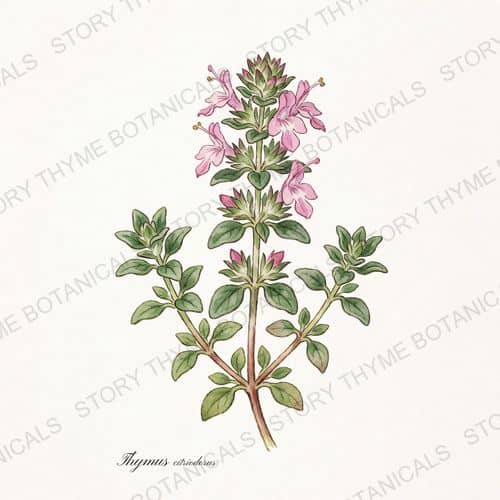
Lemon Thyme

Thymus × citriodorus

Family Lamiaceae

PerennialZones 5-9

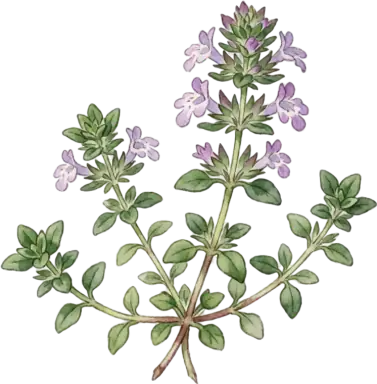
Botanical illustration of Lemon Thyme

Lemon thyme is regular thyme with the volume turned up: all the savory backbone, plus a bright citrus note that transforms fish, chicken and roasted vegetables. Brush past it on a path and the scent rises to meet you — a seasoning and an experience from the same 6-to-12-inch plant.

If you grow one thyme, the argument goes, grow this one: drought-proof, evergreen through mild winters so the harvest never really stops, hardy zones 5 to 9, and covered in bees when it blooms. It doubles as a fragrant groundcover that tolerates footsteps. Edge a sunny path with it and cook from the walkway.

Where to buy lemon thyme — 1 nursery compared

  • Full Sun
  • Low water
  • Slow-Moderate growth
  • Attracts bees
Lemon Thyme — a print from the Plant Library collection

From the print shop

Growing lemon thyme? Hang it.

Our Plant Library collection carries lemon thyme — Thymus citriodorus, print Nº 195, “Lemon Thyme.”

526 designsfrom $12.99white or black backgroundmatte poster, unframed

Shop Plant Library botanical prints →

✓

Will it fruit where you are?

Enter your ZIP — we look up your USDA hardiness zone (2023 map) and check it against what lemon thyme actually needs.

Hardy inZones 5-9

Lemon Thyme · Common problems

Common lemon thyme problems

Pests, diseases and weather to keep an eye on.

Pests

1 problem on file

  • Almost none

Diseases

1 problem on file

Lemon Thyme · Growing & propagation

Growing lemon thyme

Light, water, soil, propagation and the season’s jobs.
What it needsThe details
Light
Full Sun
Water
Low
Soil
Sharp drainage, lean · pH 6.0 - 8.0
Fertilizer
None
Pruning
After bloom, shear lightly

One post-bloom shear; divide when woody.

Spacing
8-12 in

How to plant & propagate lemon thyme

Propagate
Division or seed

Lemon Thyme · Seasonal care & spray guidance

The lemon thyme growing playbook

Field-tested instructions for every job lemon thyme asks of you, compiled from university extension guidance — in the order the season brings them.

While it is dormant

winter, before growth starts

1 job
MulchingIn winter

Mulch after the ground freezes to stop frost heaving

Once the ground has frozen in midwinter, lay a loose mulch over the planting. Water about once a month during dry winter spells. Wait for a frozen surface rather than mulching in fall. Repeated freeze and thaw lifts these shallow, wiry root systems clear out of the soil and tears the roots. The mulch is there to hold the ground frozen, not to keep it warm, which is why it goes on after the freeze rather than before.

As growth begins

early spring

3 jobs
FeedingIn spring

Feed lightly, or not at all

Skip the routine feeding. Lemon thyme does well in poor, coarse, gritty soil, and needs no more than a thin spring topdressing of compost on a truly depleted bed. Put the effort into drainage instead. Heavy nitrogen drives weak, tall, watery growth at the expense of the aromatic oil you are growing the plant for, and that soft growth sits wet and invites root rot and fungal trouble.

DividingIn spring

Divide well-established clumps in spring

In spring, lift the whole root ball of an established plant and pull or cut it into smaller pieces, keeping rootlets attached to every piece. Replant at the original depth, 8 to 12 inches apart. Lemon thyme also comes readily from four-inch cuttings of shoot tips struck in sand. Division is how you renew the planting before the parent goes woody, and it is the reliable route for lemon thyme in particular, which does not come true from seed the way common thyme does.

PruningIn spring

Hard renewal cut in spring once the plant turns woody

Every few years, when the clump has gone gray and twiggy with leaves only at the tips, cut it back severely in spring as growth resumes. If a plant no longer answers a hard cut with new shoots, replace it from cuttings or a division. Lemon thyme is a subshrub that lays down wood from the base outward every year. Old wood carries no leaf buds, so without periodic renewal the productive green shell moves further out and the plant slowly hollows.

While it flowers

at bloom

1 job
HarvestingAt bloom

Cut the main crop as the flower buds show, before they open

When the first flower buds appear but have not yet opened, cut the leafy branch tips back by two to three inches. Gather on a dry day after the dew has burned off and before midday. You can keep snipping tips all season, but this is the cut worth drying. Essential oil in the leaves peaks just before the plant flowers and then drops as the plant puts its energy into bloom, so the same leaves cut a few weeks later carry noticeably less lemon.

Just after bloom

as the fruit sets

1 job
PruningAt petal fall

Shear back once the bloom fades

After the pink-lilac flowers brown off, shear the spent bloom and the top third of the growth away. Do not cut into the bare woody base, which will not resprout. Trimming after bloom pushes a flush of young tender stems instead of letting the plant set seed and harden off, and it slows the drift toward all-wood, no-leaf growth.

Lemon Thyme · Calculators & field guides

A little help in the garden.

Calculators for the figures. Field guides for the hands-on work.

Lemon Thyme · Yearly calendar

The lemon thyme year, month by month

What lemon thyme asks for, month by month.

Jan

HarvestJanuary to December

MonthJanFebMarAprMayJunJulAugSepOctNovDec
Bloom
Harvest

BloomJune

HarvestJanuary to December

What each band means

  • Bloom — flowers open — pollinators working, frost on blossoms is the danger.
  • Harvest — picking time — check ripeness every few days.

These are the species' typical months — expect them a few weeks earlier in warm zones and later in cold ones. Watch the plant, not just the calendar.

Lemon Thyme · Ecology & uses

Ecology & uses

What it does for the garden, and what it is grown for.
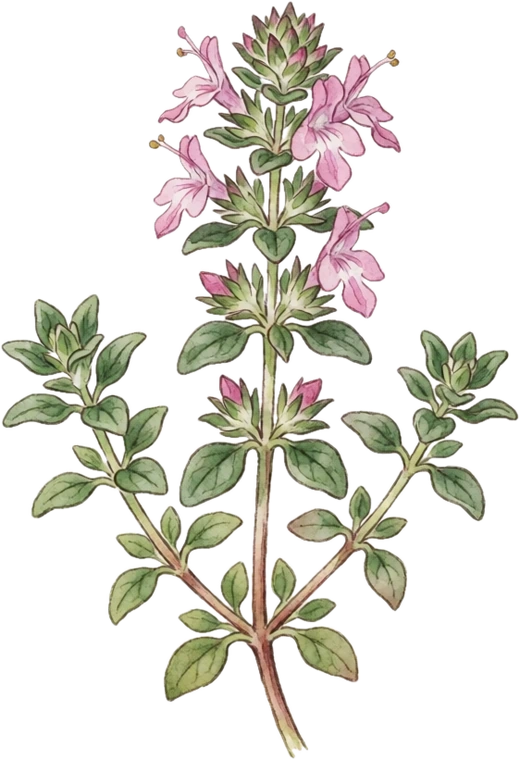
Botanical illustration of Lemon Thyme

Thymus × citriodorus

Lemon Thyme in the garden system

  • Groundcover layer perennial
  • Nectary/insectary
  • Living mulch
Attracts
Bees
Moisture
Upland / dry
Deer
Browsed

Protect young plants

Origin
Introduced

What lemon thyme is grown for

✓ Commonly eaten

Use
Fish & poultry
Use
Fragrant paths
Use
Bee forage
Edible value
3/5

Harvesting & storing lemon thyme

Lemon-scented leaves year-round (evergreen in mild winters).

Edibility, identification, and traditional-use notes here are general reference — not medical or veterinary advice, and not a claim that any plant treats or prevents anything. Medicinal ratings record how strongly a plant features in herbal tradition, nothing more. Never eat or dose a plant you have not positively identified. More on how to use this library.

Lemon Thyme · Varieties & cultivars

Choosing a lemon thyme variety

Match the plant to your climate, season and available space.

'Variegata' (gold-edge); 'Golden Lemon'; 'Doone Valley'

Sources & plant identity

Know what you’re growing.
See where the knowledge comes from.

Botanical illustration of Lemon Thyme

Lemon Thyme

Thymus × citriodorus

The plant, at a glance.

Botanical name
Thymus × citriodorus
Plant family
Lamiaceae
Growth habit
Perennial
Origin
Introduced
Invasive risk
Low
Every garden is different.

Hardiness, size and timing vary with your cultivar, soil and climate.

Rooted in research.

University extension research, brought together with hands-on growing experience at Story Thyme Farms.

Explore Lemon Thyme’s sources5 reference links
for Lemon Thyme

Research from these sources

Publisher marks identify sources, not sponsorship or endorsement.

Questions

Lemon Thyme questions, answered straight.

Is lemon thyme safe for kids and pets?

Lemon Thyme is commonly eaten and isn't considered toxic, but "commonly eaten" isn't a guarantee for any particular person or animal — allergies, quantity, and which part you eat all matter. Never eat a plant you haven't positively identified, and check with a vet before letting pets or livestock graze anything new.

When do you harvest lemon thyme?

Lemon-scented leaves year-round (evergreen in mild winters).

How do you propagate lemon thyme?

Division or seed.

Elsewhere

Where lemon thyme sits in the library.

Where lemon thyme sits in the library

Grows in the same world