Alocasia (Elephant Ear)
Alocasia × amazonica
Family Araceae
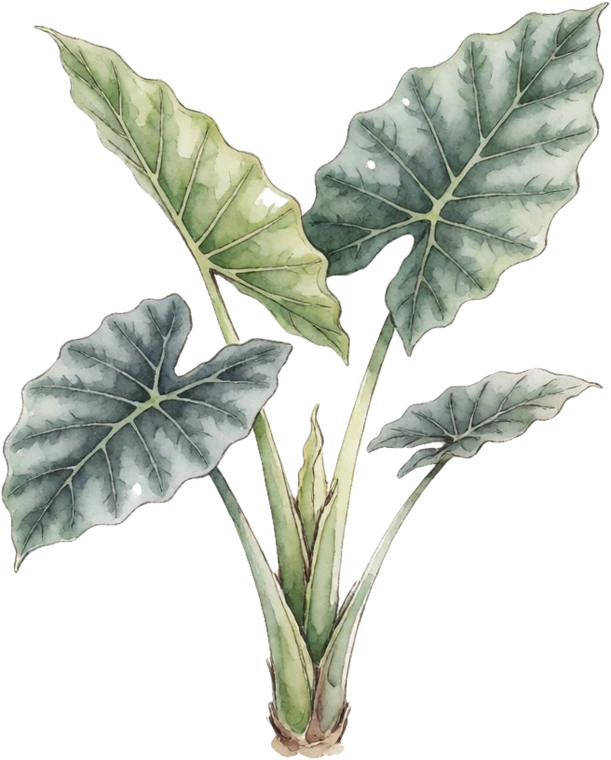
Few leaves stop a room like alocasia's — huge arrowhead blades in deep green, slashed with veins so pale and precise they look painted on. This is the African mask plant of collectors' shelves, a single specimen that carries a corner the way a sculpture would.
Honesty first: it wants warmth, humidity, and bright indirect light, and it will sulk dramatically without them — though even a leafless sulk is just dormancy, and the tuber returns. Keep it away from pets and children, give it the humid room it wants, and it earns the space.
 Bright indirect — no harsh direct sun
 Moderate water
 Moderate in warmth growth
 Deer-resistant
 None winter chill
From the print shop
Growing alocasia (elephant ear)? Hang it.
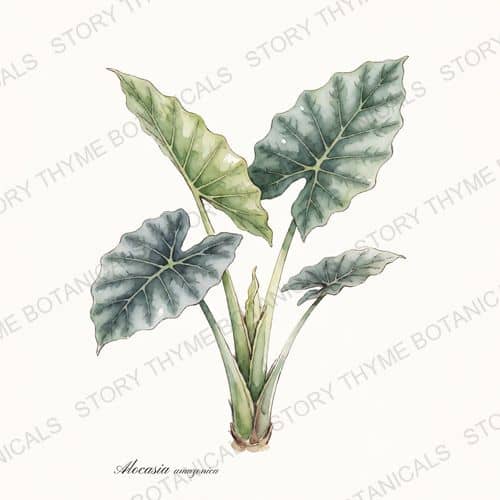
Our Plant Library collection carries alocasia (elephant ear) — Alocasia amazonica, print Nº 9, “Alocasia (Elephant Ear).”
526 designsfrom $12.99white or black backgroundmatte poster, unframed
Will it thrive where you are?
Enter your ZIP — we look up your USDA hardiness zone (2023 map) and check it against what alocasia (elephant ear) actually needs.
 Hardy inZones 10-11
Alocasia (Elephant Ear) · Common problems
Common alocasia (elephant ear) problems

Pests
3 problems on file
- Spider Mites (the #1 killer)
- Mealybugs
- Fungus Gnats

Diseases
2 problems on file
- Root Rot
- dormancy from cold/low light
Alocasia (Elephant Ear) · Growing & propagation
Growing alocasia (elephant ear)
- Light
- Bright indirect
No harsh direct sun
- Water
- Keep lightly moist in growth
Drier in winter dormancy
 Soil
Soil- Airy, chunky aroid mix · pH 5.5 - 6.5
 Fertilizer
- Monthly dilute in growth
 Pruning
- As needed
Remove tired leaves; it may go dormant (drop all leaves) in winter — keep the tuber barely moist, it returns.
 Spacing
- One per pot
How to plant & propagate alocasia (elephant ear)
- Propagate
- Stem/leaf cuttings, division, or pups
Alocasia (Elephant Ear) · Seasonal care & spray guidance
The alocasia (elephant ear) growing playbook
When to spray alocasia (elephant ear)
Growing season. Humidity + warmth + airy mix; mites love the dry-air version.
Alocasia (Elephant Ear) · Calculators & field guides
A little help in the garden.
Alocasia (Elephant Ear) · Yearly calendar
The alocasia (elephant ear) year, month by month
No fixed season calendar for alocasia (elephant ear) — its care follows conditions, not the calendar.
Alocasia (Elephant Ear) · Ecology & uses
Ecology & uses
Alocasia × amazonica
Alocasia (Elephant Ear) in the garden system
- Moisture
- Facultative / average
- Deer
- Resistant
A safer unfenced choice
 Origin
- Introduced
What alocasia (elephant ear) is grown for
⚠ Toxic if eatenToxic to cats/dogs and kids (calcium oxalate)
 Use
Use- Statement foliage
- Use
- Collectors
- Use
- Humid rooms
Edibility, identification, and traditional-use notes here are general reference — not medical or veterinary advice, and not a claim that any plant treats or prevents anything. Medicinal ratings record how strongly a plant features in herbal tradition, nothing more. Never eat or dose a plant you have not positively identified. More on how to use this library.
Alocasia (Elephant Ear) · Varieties & cultivars
Choosing a alocasia (elephant ear) variety
'Polly'/'Amazonica' (dark arrow leaves, white veins); 'Zebrina' (striped stems); jumbo 'Regal Shield'
Sources & plant identity
Know what you’re growing.
See where the knowledge comes from.
Alocasia (Elephant Ear)
Alocasia × amazonica
The plant, at a glance.
- Botanical name
- Alocasia × amazonica
- Plant family
- Araceae
- Growth habit
- Houseplant · Perennial
- Origin
- Introduced
- Invasive risk
- Low
Hardiness, size and timing vary with your cultivar, soil and climate.
Rooted in research.
University extension research, brought together with hands-on growing experience at Story Thyme Farms.
for Alocasia (Elephant Ear)
Research from these sources


Publisher marks identify sources, not sponsorship or endorsement.
Questions
Alocasia (Elephant Ear) questions, answered straight.
Do deer eat alocasia (elephant ear)?
Rarely — alocasia (elephant ear) is considered deer-resistant, which makes it one of the safer unfenced choices in deer country. Hungry deer in a hard winter test every rule, but it's a low-risk pick.
Is alocasia (elephant ear) safe for kids and pets?
No — treat it as toxic if eaten. Toxic to cats/dogs and kids (calcium oxalate) Site it accordingly if children or pets roam the garden. This is general reference, not medical or veterinary advice — call a vet or poison control if something has actually been eaten.
How do you propagate alocasia (elephant ear)?
Stem/leaf cuttings, division, or pups.
Elsewhere
Where alocasia (elephant ear) sits in the library.
 Monstera
 Golden Pothos
 Snake Plant
 Heartleaf Philodendron