June-bearing Strawberry
- Bloom season
- Spring
- Harvest season
- June — one big 3-week flood of fruit
Fragaria × ananassa
Family Rosaceae
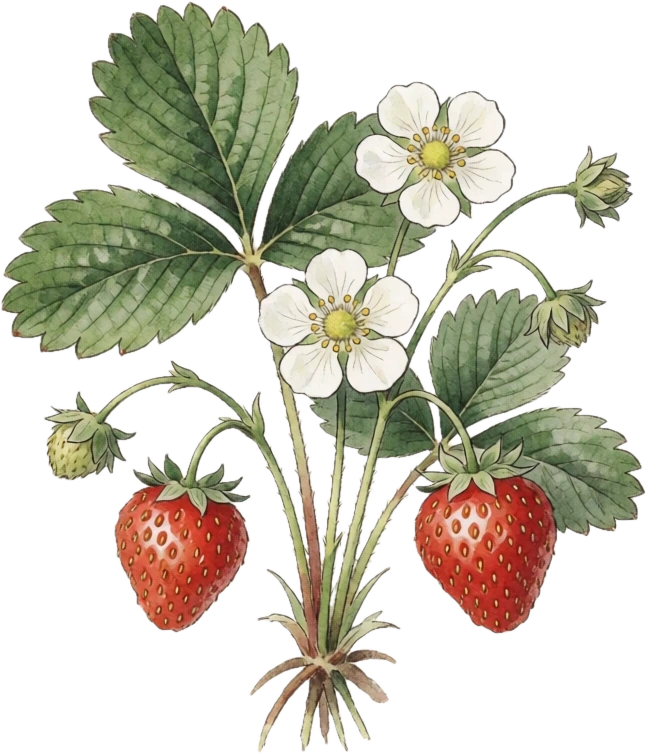
A sun-warm strawberry eaten standing in the garden is a different fruit from anything sold in a clamshell — softer, sweeter, actually perfumed. Choose June-bearing types for one glorious jam-making flood or everbearing for a steady bowl-by-bowl trickle; either way, the flavor gap is enormous.
Six to ten inches tall, self-fertile, and hardy across zones 3-9, strawberries fit where trees never could: a raised bed, a border edge, a big pot on the steps. Bees handle the flowers; you handle the picking. Tuck in a row this spring.
 Full Sun
 Moderate water
 Fast growth
 Native to North America
 Attracts bees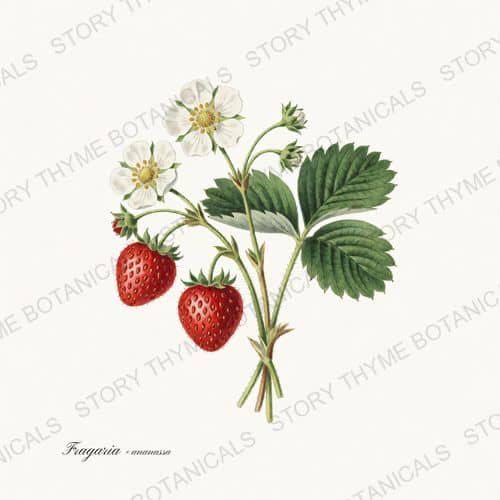
From the print shop
Our Kitchen & Orchard collection carries strawberry — Fragaria × ananassa, print Nº 16, “Strawberry.”
16 designsfrom $12.99white or black backgroundmatte poster, unframed
Will it fruit where you are?
Enter your ZIP — we look up your USDA hardiness zone (2023 map) and check it against what strawberry actually needs.
 Hardy inZones 3-9PollinationSelf-fertile
Strawberry · Common problems

8 problems on file
Strawberry · Which one do you have?
Where these differ, the key facts above give the span across all of them. Each type’s own figures, as the catalogue records them:
Strawberry · Growing & propagation
Light Propagate
Strawberry · Seasonal care & spray guidance
early spring
3 jobsPlanting outIn springJune-bearing StrawberryPlant bare-root dormant crowns as soon as the soil is workable and beginning to warm, ordering them in winter for early spring delivery. Fan the roots out and set each plant with half the crown below the soil line. For a matted row, space mother plants 18 to 24 inches apart in rows at least 36 inches apart; for a hill system, one foot apart in every direction. Planting depth is what kills new strawberry beds: a crown buried too deep rots, and one set too high dries out and dies. The wide matted-row spacing looks absurdly empty on day one because it is sized for the runners this plant will throw all summer.
 MulchingIn springJune-bearing Strawberry
Start checking under the mulch every couple of days as the ground thaws. Rake the straw off the crowns once soil temperature reaches 40 F and the first new leaves are growing, but leave a thin half-inch to one-inch layer over and between the plants. Leaving the straw on past that point holds the bed cold, delays harvest and cuts yield, while the thin layer you leave behind suppresses weeds and keeps the berries off the soil where rot starts.
MulchingIn springEverbearing StrawberryStart checking under the straw every couple of days once spring warms. When new leaves are emerging and the soil has reached about 40F, pull the straw off the crowns into the aisles, leaving only a half inch to an inch over the plants. Check the forecast first and hold off if a hard freeze is coming. Leave the straw on too long and you delay the harvest and cut the yield, because the crown is trying to grow in the dark under a blanket. Take it off too early and the exposed flowers meet a spring frost. The straw raked into the aisles goes on earning its keep by keeping berries off the mud, which is where gray mold waits.
at bloom
7 jobsThinningAt bloomJune-bearing StrawberryOn plants set out this season, pinch off the flower buds as they appear and keep doing it through the first season rather than letting any fruit set. A first-year plant asked to ripen fruit spends itself on a handful of small berries instead of building the root system and crown that carry next June's crop, and June-bearers set those fruiting buds in fall on the plant you grew this year.
ThinningAt bloomEverbearing StrawberryOn a newly planted bed, snap off every flower truss as it appears until the plants carry five or six fully expanded leaves, roughly four to six weeks after planting. After that, let them bloom and crop for the rest of the season. A young crown asked to ripen fruit spends its sugar on berries instead of roots and leaves, and never builds the frame that carries the long day-neutral harvest from midsummer to frost. Unlike June-bearers, which are stripped of flowers all of the first year, everbearers only need this restraint for the first few weeks.
What to watch forAt bloomJune-bearing StrawberryFrom bloom into early fruit set, shake flower trusses over a flat white surface - a sheet of paper or a white pan - and look for small pale-green nymphs dropping onto it. Sample about 30 flower clusters spread evenly across the patch, walking a V or W pattern rather than checking one corner, and repeat weekly while the planting is in bloom. Keep the planting itself weed-free, but do not mow or cut the weeds around the patch while the strawberries are in bloom and early fruit. The nymphs feed on the developing seeds before the berry expands, so the receptacle swells unevenly and the fruit stays small, woody and knobbed - the injury called button berry or cat-facing. Berries damaged this way still have seeds, which is how you tell it from poor pollination, where the seed sites are hollow hair-like projections.
What to watch forAt bloomEverbearing StrawberryRight before and during bloom, place a white sheet of paper under the strawberry canopy at several spots in the bed and shake the leaves; tarnished plant bug adults drop onto the paper where you can count them. UMN's guidance is that this pest must be monitored closely right before or during bloom. The bug feeds on the blossom, and the injured flower still develops into a berry — a lopsided, hard, misshapen one. UMN describes the result as a distinctive 'cat face' deformity. Once the flower has been fed on the damage is already written into the berry, which is why this has to be caught at bloom rather than found at harvest.
 SprayingAt bloomJune-bearing Strawberry
Captan at 7-10 day intervals from early bloom is the homeowner programme for fruit rot. Bloom is the timing that matters - the fungus gets in through the flower and shows up later as rot on the berry. Botrytis infects through the open flower and stays latent until the fruit ripens, so a spray applied when you can see rot is already too late.
SprayingAt bloomEverbearing StrawberryIf the bloom period is wet, spray captan while flowers are open and repeat on a 7 to 10 day interval. Alongside it, keep straw under the plants so berries never touch soil, pick every couple of days, and carry off any berry already fuzzed with gray spores. Botrytis infects almost exclusively through the open blossom, then sits latent inside the developing berry and only erupts as gray mold as the fruit ripens. The rot you find at harvest was decided back at bloom, which is why spraying ripening fruit accomplishes nothing.
 ProtectionAt bloomJune-bearing Strawberry
Watch the forecast once flowers open and lay a row cover over the bed the afternoon before a freeze is expected, so it traps the day's heat in the soil. A 0.6 ounce per square yard fabric buys 2 to 3 degrees F; doubled plastic buys up to 10. If you have overhead irrigation instead, start it when air temperature drops below 34 F and run 0.1 to 0.2 inch of water per hour without stopping until the temperature climbs back above freezing. Tight buds still tucked in the crown shrug off 20 F, but once a flower opens its reproductive center dies at 30 F and turns black, and the earliest flowers are the ones that would have made your biggest berries.
the growing season
4 jobsWateringIn summerEverbearing StrawberryGive the bed roughly an inch of water per week across the season, and keep up with it in August in particular, when the plants are pushing runners and still cropping. Strawberry roots sit in the top few inches of soil, so a bed that dries out has nowhere to fall back to. SDSU Extension's guidance is to irrigate as needed so the plants receive about an inch of water per week, especially in August during runner development. Shallow-rooted plants cannot chase moisture downward, and a day-neutral is carrying flowers and sizing fruit at the same time all season, so it has no slack week in which to go dry.
 FeedingIn summerEverbearing Strawberry
Apply about 1 pound of ammonium nitrate per 100 feet of row once a month from June through the first day of September. Penn State gives this constant-nitrogen schedule for day-neutrals in the planting year. Keep granules off wet foliage and water them in. Stop at the first of September rather than carrying on into fall. A day-neutral flowers and ripens at the same time for months on end, so it drains nitrogen steadily instead of taking one big post-harvest feed the way a June-bearer does. Small monthly doses hold berry size and keep new trusses coming. The season ends at the first of September because nitrogen pushed later keeps the crown growing soft when it should be hardening off for winter.
ThinningIn JulyJune-bearing StrawberryAfter harvest mow the old foliage high and thin runners to a tidy row. Renovation resets vigor and fruit size for next year.
 PruningIn summerEverbearing Strawberry
Snip runners off close to the crown whenever they appear, right through the growing season, rather than letting them root into a matted row. Every runner is a daughter plant built out of sugar the mother crown would otherwise spend on flowers, and a day-neutral fruits off that mother crown continuously. UMN's guidance is to remove runners throughout the season to encourage greater fruit production.
as it ripens, and picking
2 jobsWateringBefore harvestJune-bearing StrawberrySupply the equivalent of 1 inch of rain per week through fruit development, using soaker hose or drip rather than a sprinkler. Water early in the day so the leaves dry before nightfall. The berry fills with water in its last days on the plant, and a strawberry's roots are shallow, so a dry week during fruit swell shows up directly as small fruit. Foliage that stays wet overnight is how leaf diseases and fruit rot get established.
 HarvestingAt harvestEverbearing Strawberry
Once fruiting starts, pick every one to two days rather than weekly, strip every ripe berry off the plant, and refrigerate the picking immediately. Bag, freeze, or solarize culls and overripe fruit rather than dropping them on the ground. Spotted wing drosophila is the pest that defines everbearing strawberries: it turns up in late June and peaks in August, exactly when day-neutrals are cropping and June-bearers are long finished. Unlike common vinegar flies, the female saws into sound ripe fruit, so a berry left an extra day becomes a nursery. UMN found harvesting every 1 to 2 days decreases SWD infestation and increases marketable yield, and cooling the fruit promptly stops eggs already laid from developing.
autumn, and putting it to bed
3 jobsMulchingIn autumnJune-bearing StrawberryCheck soil temperature with a thermometer rather than the calendar, and once it has stayed at or below 40 F for three consecutive days, spread clean weed-free oat, wheat or soybean straw 2 to 3 inches deep over the plants. Do not rush this after an early snow - snow is insulation, and the soil under it may still be warm. The straw is protecting the flower buds already formed inside the crown, and it only works on a plant that has gone dormant: mulch thrown over actively growing leaves smothers and rots them, while waiting too long exposes those buds to cold injury you will not see until June's crop fails to appear.
FeedingAfter harvestJune-bearing StrawberryFertilize immediately after the last berry is picked, as part of renovation once the old leaves are mowed off about two inches above the crowns. Apply roughly 5 pounds of 10-10-10 or a similar analysis per 100 feet of row. Do not fertilize an established June-bearing bed in spring. Next June's flowers are initiated in the fall on the leaves the plant regrows now, so nitrogen delivered right after harvest builds the crop you will pick a year from now. The same nitrogen in spring only pushes soft foliage over the fruit, producing softer berries, more rot and a harder harvest.
ProtectionIn autumnEverbearing StrawberryAfter the plants are dormant and soil temperature has stayed at or below 40F for three consecutive days, cover the crowns with 2 to 3 inches of clean, weed-free straw. Do not rush it after an early snow; snow is itself insulation, and strawing a bed whose soil is still warm invites crown rot. Day-neutral crowns can succumb to winter injury at or below about 12F, and what kills them is the bare crown taking the cold and the freeze-thaw directly. Straw laid too early traps warmth and moisture around a crown that has not yet hardened off.
Strawberry · Calculators & field guides
Strawberry · Yearly calendar
No fixed season calendar for strawberry — its care follows conditions, not the calendar.
Strawberry · Ecology & uses
Fragaria × ananassa
 AttractsMoisture
 Deer
DeerProtect young plants
Origin✓ Commonly eaten
Edibility, identification, and traditional-use notes here are general reference — not medical or veterinary advice, and not a claim that any plant treats or prevents anything. Medicinal ratings record how strongly a plant features in herbal tradition, nothing more. Never eat or dose a plant you have not positively identified. More on how to use this library.
Strawberry · Varieties & cultivars
Compare hardiness, mature size, growth habit, days to maturity and intended use in the seller’s variety description. Where this guide covers several plant types, start with the type you want to grow, then choose a variety for your season and space.
Sources & plant identity
Fragaria × ananassa
Hardiness, size and timing vary with your cultivar, soil and climate.
University extension research, brought together with hands-on growing experience at Story Thyme Farms.
 Iowa State University
 Missouri Botanical Garden
 NC State Extension
 University of California ANR
 University of Minnesota
 University of New Hampshire
 noursefarms.com
 Johnny?s Selected Seeds
Publisher marks identify sources, not sponsorship or endorsement.
Strawberry questions, answered straight.
No — strawberry is self-fertile, so a single plant will set a crop. A second one usually improves yields, but it isn't required.
Strawberry is commonly eaten and isn't considered toxic, but "commonly eaten" isn't a guarantee for any particular person or animal — allergies, quantity, and which part you eat all matter. Never eat a plant you haven't positively identified, and check with a vet before letting pets or livestock graze anything new.
Division or seed.
Where strawberry sits in the library.
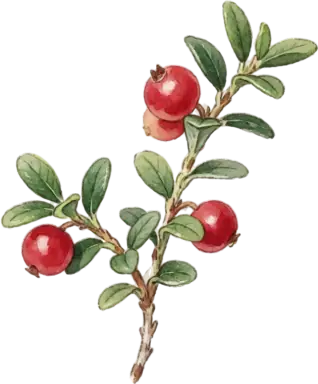 Cranberry
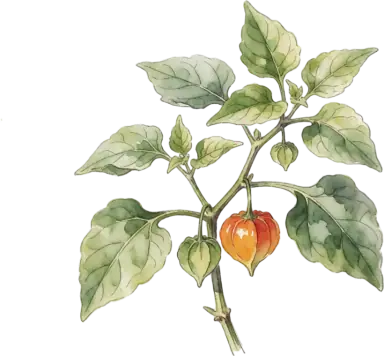 Ground Cherry
 Prickly Pear
 Lingonberry