Jostaberry

Ribes × nidigrolaria

Family Grossulariaceae

ShrubZones 3-8

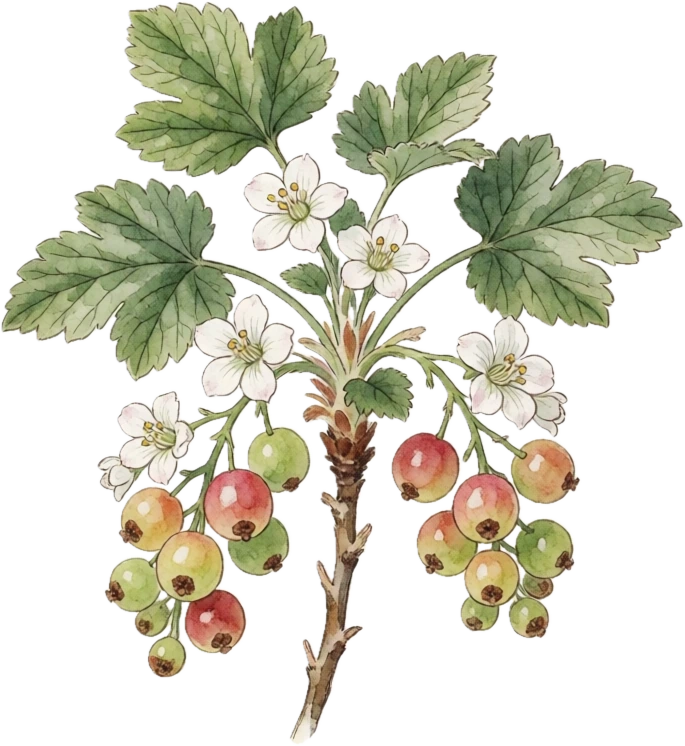
Botanical illustration of Jostaberry

Jostaberry is what happens when plant breeders fix everything at once: gooseberry-sized black berries with a blackcurrant depth, on a completely thornless bush. Come July you pick them by the bowlful, bare-handed, for fresh eating, jam and pies — a flavor the store has simply never stocked.

One bush is enough — it's self-fertile — and an easy keeper: disease-resistant, low-spray, hardy zones 3 to 8, immune to the white pine blister rust that gets its currant relatives banned near pines. Bees work the spring flowers; birds will negotiate for the crop. A 5-to-6-foot no-brainer for the fruiting shrub layer.

Where to buy jostaberry — 3 nurseries compared

  • Full Sun to Part Shade
  • Moderate water
  • Fast growth
  • Excellent edible
  • Attracts bees
  • 800-1200 winter chill
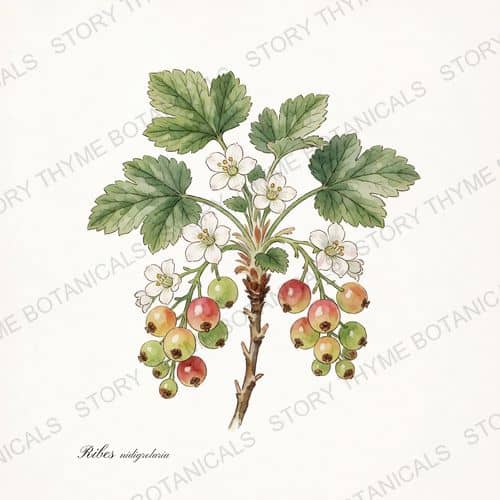
Jostaberry — a print from the Plant Library collection

From the print shop

Growing jostaberry? Hang it.

Our Plant Library collection carries jostaberry — Ribes nidigrolaria, print Nº 214, “Jostaberry.”

526 designsfrom $12.99white or black backgroundmatte poster, unframed

Shop Plant Library botanical prints →

✓

Will it fruit where you are?

Enter your ZIP — we look up your USDA hardiness zone (2023 map) and check it against what jostaberry actually needs.

Hardy inZones 3-8
Winter chill800-1200
PollinationSelf-fertile

Jostaberry · Common problems

Common jostaberry problems

Pests, diseases and weather to keep an eye on.

Pests

3 problems on file

  • Currant Aphid
  • Sawfly (less than gooseberry)
  • Sawflies

Diseases

2 problems on file

  • Immune to White Pine Blister Rust (unlike currants — plantable near pines)
  • Mildew-resistant

Jostaberry · Growing & propagation

Growing jostaberry

Light, water, soil, propagation and the season’s jobs.
What it needsThe details
Light
Full Sun to Part Shade
Water
Moderate
Soil
Rich, well-drained · pH 6.0 - 7.0
Fertilizer
Compost + light spring feed
Pruning
Late Winter

Renewal-prune oldest wood; open the center for airflow.

Spacing
4-5 ft

How to plant & propagate jostaberry

Propagate
Grafted, or from cuttings/layering

Seed won't come true

Jostaberry · Harvest & keeping

What you get from jostaberry

How long before it bears, how much it gives, how you know it is ready, and how long it keeps once picked.
Botanical illustration of Jostaberry
Years to first harvest
2 to 3 years
Typical yield
6–12 lbs
What you eat
Fruit
How to tell it is ready
Berries near-black, glossy, with slight give

Taste for the gooseberry-cassis balance

How long it keeps
1-2 weeks refrigerated

Freezes perfectly

Jostaberry · Seasonal care & spray guidance

The jostaberry growing playbook

Field-tested instructions for every job jostaberry asks of you, compiled from university extension guidance — in the order the season brings them.

When to spray jostaberry

Growing season. Low-spray by nature.

While it is dormant

winter, before growth starts

2 jobs
PruningIn winter

Renewal pruning: cut out everything older than three years

While the bush is dormant, in late winter or early spring before the buds swell, cut every cane older than three years off at ground level, along with any branches lying on the soil and anything broken or hollow. Thin the young shoots so a mature bush carries about eight bearing canes, roughly three or four of each age class. Ribes fruit at the base of one-year-old wood and most heavily on the spurs of two- and three-year-old wood, so a fourth-year cane takes light and space without paying for it. Removing the oldest class every year forces the new canes that will carry the next crop.

SprayingIn winter

Dormant oil for San Jose scale, only if you saw scale last year

Scale is easy to spot on bare dormant wood as small hard grey bumps crusting the older canes. If you find them, spray a dormant horticultural oil or lime-sulfur while the bush is fully dormant and before the buds swell. Pruning out and destroying the infested canes handles a light infestation on its own. Oil kills scale by smothering it, so it only works against the armored overwintering stage, and only while there is no foliage or swelling bud tissue for the oil to burn.

As growth begins

early spring

3 jobs
MulchingIn spring

Two to three inches of mulch, topped up every year

Spread two to three inches of straw, wood chips, compost, lawn rakings or grass clippings over the root zone and replenish it yearly. Grass clippings are the best of them here. Jostaberry is a cool-climate plant with a shallow root system that wants moist soil and a high water-holding capacity. Mulch keeps the soil cool through summer, holds that moisture, suppresses weeds, and reduces winter injury to the roots.

FeedingIn spring

Feed only a bush that is not vigorous, and keep the chloride out

Work manure into the soil before planting, and topdress with composted manure annually - on soil already in good heart that is the whole job. Then look at the bush each spring: if it is pushing strong new canes from the base, it does not need fertilizer. Only if plants are not vigorous, lightly broadcast about a quarter to a half pound of 10-10-10 per plant. Cornell recommends the 10-10-10 only for plants that are not vigorous. Ribes are heavy nitrogen feeders and the cane-renewal system does depend on the plant pushing new basal shoots every year, but feeding a bush that is already making them buys soft growth and a denser canopy, and poor air circulation is what favors powdery mildew - the disease that most commonly plagues Ribes.

What to watch forAt green tip

Imported currantworm: check the undersides of the first leaves

As the leaves expand, turn over the leaves low in the center of the bush and look along the major veins for rows of small eggs, then a week to ten days later for half-inch greenish larvae with black spots chewing holes and eating in from the leaf margins. Hand-pick the egg-bearing leaves and the larvae. If a bush is being stripped after fruit set, an azadirachtin product such as AzaGuard or Molt-X, or a horticultural oil such as SuffOil-X, will bring the larvae down. The sawfly adults lay on the undersides of the first leaves to expand, and if the larvae are numerous they can strip a bush of its foliage in a few days. A defoliated bush cannot finish the crop it is already carrying.

Through summer

the growing season

1 job
What to watch forThrough summer

White pine blister rust: check your state law first, then watch the leaves

Before you plant at all, check with your state department of agriculture or local extension office - jostaberry is a black currant hybrid and several states regulate it as one. Through summer, look on the undersides of the leaves for orange-yellow pustules, the sign of Cronartium ribicola, and report a find to your extension office. The rust cannot complete its life cycle without both a Ribes and a five-needle pine, which is why states with white pine still control Ribes planting. Jostaberry cultivars are rated resistant, but resistance is not immunity, and a newer rust strain in New England has already overcome resistance in some black currant varieties previously considered safe.

Harvest time

as it ripens, and picking

1 job
HarvestingAt harvest

Pick when fully colored and soft - the window is forgiving

Pick jostaberries once they are fully colored, reddish-black to black, and soft to the touch. Timing is not critical the way it is with most soft fruit, so a bush can be picked over more than one pass without losing the crop. Jostaberries have a long shelf life, so the fruit does not punish a late picking the way a raspberry does.

After harvest

autumn, and putting it to bed

1 job
WateringAfter harvest

Taper the water after harvest to harden the bush for winter

Irrigate steadily through fruit development for best berry size and yield, then gradually reduce the water once the last picking is done rather than cutting it off all at once. Adequate irrigation is what sets fruit size and yield, but water carried late into the season keeps pushing soft growth that has not hardened off by the time the first freezes arrive.

Jostaberry · Calculators & field guides

A little help in the garden.

Calculators for the figures. Field guides for the hands-on work.

Jostaberry · Yearly calendar

The jostaberry year, month by month

What jostaberry asks for, month by month.

Jan

No calendar activity is listed for this month.

MonthJanFebMarAprMayJunJulAugSepOctNovDec
Bloom
Prune
Harvest

BloomApril

PruneFebruary to March

HarvestJuly

What each band means

  • Bloom — flowers open — pollinators working, frost on blossoms is the danger.
  • Prune — shape it now — cuts heal cleanly and structure is visible.
  • Harvest — picking time — check ripeness every few days.

These are the species' typical months — expect them a few weeks earlier in warm zones and later in cold ones. Watch the plant, not just the calendar.

Jostaberry · Ecology & uses

Ecology & uses

What it does for the garden, and what it is grown for.
Botanical illustration of Jostaberry

Ribes × nidigrolaria

Jostaberry in the garden system

  • Shrub layer shrub
Attracts
Bees, Birds
Moisture
Facultative / average
Deer
Browsed

Protect young plants

Origin
Introduced

What jostaberry is grown for

✓ Commonly eaten

Use
Fresh eating
Use
Jam
Use
Pies
Use
Low-spray shrub
Edible value
4/5

Harvesting & storing jostaberry

July: black, grape-sized — blackcurrant-meets-gooseberry flavor.

Edibility, identification, and traditional-use notes here are general reference — not medical or veterinary advice, and not a claim that any plant treats or prevents anything. Medicinal ratings record how strongly a plant features in herbal tradition, nothing more. Never eat or dose a plant you have not positively identified. More on how to use this library.

Jostaberry · Varieties & cultivars

Best jostaberry varieties & cultivars

There are far more than these — the ones below are the named varieties of jostaberry people actually plant.

Named varieties of jostaberry differ in winter-chill needs, ripening time, hardiness, and whether they set fruit on their own — pick one that fits your climate.

5 varieties

Jostine

Partly self-fertile

Ripens
July
Zones
3-8
Disease
Described as disease resistant
Size
3-5 ft tall

Excellent flavor, medium to large berries — Hardy to minus 40 F. Thornless. Very high yields, reported at 10 to 20 lbs annually, and begins bearing 1 to 2 years after planting. Like other jostaberries it is only partially self-fertile - a second jostaberry or a black currant nearby increases fruit set.

Where to buy ‘Jostine’

Story Thyme Farms may earn a small commission from these links, at no cost to you — it never changes what we recommend.

Sources & plant identity

Know what you’re growing.
See where the knowledge comes from.

Botanical illustration of Jostaberry

Jostaberry

Ribes × nidigrolaria

The plant, at a glance.

Botanical name
Ribes × nidigrolaria
Plant family
Grossulariaceae
Growth habit
Shrub · Perennial
Origin
Introduced
Invasive risk
Low
Every garden is different.

Hardiness, size and timing vary with your cultivar, soil and climate.

Rooted in research.

University extension research, brought together with hands-on growing experience at Story Thyme Farms.

Explore Jostaberry’s sources9 reference links
for Jostaberry

Questions

Jostaberry questions, answered straight.

Do I need two jostaberry plants to get fruit?

No — jostaberry is self-fertile, so a single plant will set a crop. A second one usually improves yields, but it isn't required.

Will jostaberry fruit in a warm-winter climate?

Jostaberry needs roughly 800-1200 hours of winter chill (hours between 32–45°F) to break dormancy and set fruit. Mild-winter growers should count their chill hours before planting.

Is jostaberry safe for kids and pets?

Jostaberry is commonly eaten and isn't considered toxic, but "commonly eaten" isn't a guarantee for any particular person or animal — allergies, quantity, and which part you eat all matter. Never eat a plant you haven't positively identified, and check with a vet before letting pets or livestock graze anything new.

When do you harvest jostaberry?

July: black, grape-sized — blackcurrant-meets-gooseberry flavor.

Elsewhere

Where jostaberry sits in the library.

Where jostaberry sits in the library

Grows in the same world