Goji Berry

Lycium barbarum

Family Solanaceae

ShrubZones 5-9

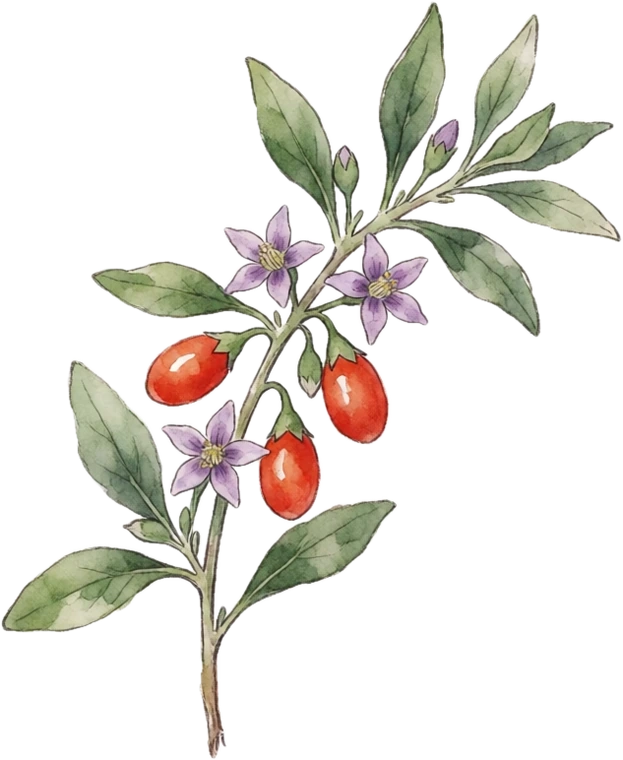
Botanical illustration of Goji Berry

Fresh goji berries are the secret the dried ones keep badly: sweeter, juicier, faintly tomato-adjacent, and ripening in a continuous trickle from July until frost. Because they barely survive shipping, growing your own is essentially the only way to ever taste them properly.

Tough, self-fertile, and happy in zones 5-9, it's an arching, enthusiastic shrub that appreciates a corner where the mower can patrol its edges. Bees, butterflies, and birds all visit. Give that unruly corner a job — a berry bush that never stops handing you snacks.

Where to buy goji berry — 9 nurseries compared

  • Full Sun
  • Low water
  • Fast growth
  • Excellent edible
  • Attracts bees
  • Attracts butterflies
Goji Berry — a print from the Plant Library collection

From the print shop

Growing goji berry? Hang it.

Our Plant Library collection carries goji berry — Lycium barbarum, print Nº 207, “Goji Berry.”

526 designsfrom $12.99white or black backgroundmatte poster, unframed

Shop Plant Library botanical prints →

✓

Will it fruit where you are?

Enter your ZIP — we look up your USDA hardiness zone (2023 map) and check it against what goji berry actually needs.

Hardy inZones 5-9
PollinationSelf-fertile

Goji Berry · Common problems

Common goji berry problems

Pests, diseases and weather to keep an eye on.

Pests

2 problems on file

Diseases

2 problems on file

Goji Berry · Growing & propagation

Growing goji berry

Light, water, soil, propagation and the season’s jobs.
What it needsThe details
Light
Full Sun
Water
Low once established
Soil
Adaptable, well-drained

Tolerates poor soil · pH 6.5 - 8.0

Fertilizer
Little

Rich soil = all vine, no berries

Pruning
Late Winter

Trellis or fountain-form; head back to 6 ft; berries on new wood.

Spacing
4-6 ft

How to plant & propagate goji berry

Propagate
Grafted, or from cuttings/layering

Seed won't come true

Goji Berry · Harvest & keeping

What you get from goji berry

How long before it bears, how much it gives, how you know it is ready, and how long it keeps once picked.
Botanical illustration of Goji Berry
Years to first harvest
2 to 3 years
Typical yield
2–6 lbs
What you eat
Fruit
How to tell it is ready
Berries bright red and slightly soft; shake into a tray

Fingers bruise them black

How long it keeps
2-3 days fresh

Usually dried

Goji Berry · Seasonal care & spray guidance

The goji berry growing playbook

Field-tested instructions for every job goji berry asks of you, compiled from university extension guidance — in the order the season brings them.

While it is dormant

winter, before growth starts

1 job
PruningIn winter

Dormant pruning: open the shrub and shorten last year's laterals

While the shrub is leafless and dormant, cut out weak, dead, and damaged wood, then shorten the lateral branches back to somewhere between 6 and 18 inches. Keep three to five strong side shoots as the permanent frame. Skip this entirely in the first year and let the plant build roots. Goji carries its crop on lateral shoots off the current season's growth, so heading the laterals while dormant is what forces out the new fruiting wood. An open canopy also dries faster after rain, which is most of the powdery mildew control.

As growth begins

early spring

1 job
FeedingAt green tip

First feeding at budbreak, one of three splits

Budget 4 to 5 tablespoons of 16-16-16 per 10 square feet for the year and split it into three roughly equal applications: the first now at budbreak, the second at flowering, the third as fruit ripens. Cut the rate on soils that are already fertile. Splitting the year's nitrogen across budbreak, bloom, and ripening matches supply to the three points where the plant is actually building tissue. A single heavy dose pushes leafy growth at the expense of fruit.

Through summer

the growing season

3 jobs
WateringThrough summer

Even moisture through bloom and fruit sizing

Give about an inch of water a week, ideally on drip, and aim for steady soil moisture rather than swings between soaked and bone dry. Watch this most closely during bloom and while fruit is sizing. Goji is prone to blossom end rot, which is a localized calcium deficiency rather than a disease. Calcium travels to the fruit dissolved in water, so when soil moisture swings the plant cannot move it to the far end of the berry fast enough and that tissue collapses, even where soil calcium is perfectly adequate.

PruningThrough summer

Summer: pinch the shoot tips and pull the root suckers

Pinch the top two to three inches off vigorous new shoots to force side branching, trim shoots sprouting directly off the main trunk, and pull out root suckers and sprouts rising from the base. Once the trunk reaches 16 to 18 inches, cut its tip to push side branches. Most fruit forms on lateral branches, so pinching a tip turns one long unproductive whip into several fruiting laterals. Goji suckers aggressively from the roots and will build itself into a thicket that shades out its own fruiting wood if the sprouts are left standing.

What to watch forThrough summer

Scout for powdery mildew in the crowded interior

Through summer, check leaves for white powdery patches, working from the shaded interior of the shrub outward. Thin crowded branches to move air through the canopy. Horticultural oil can slow the spread once mildew is already present. Powdery mildew takes hold on foliage that stays still and damp, which is exactly the interior of an unpruned goji. Air movement and faster leaf drying do most of the work a spray would otherwise have to do.

Harvest time

as it ripens, and picking

2 jobs
ProtectionAs fruit ripens

Net the shrub as the first berries color up

Drape bird netting over the shrub as soon as the earliest berries turn orange-red, and fence the base if rabbits or deer browse your area. Birds and squirrels strip ripe goji, and because this crop ripens as a long trickle from midsummer to frost instead of all at once, an unnetted shrub gets picked over daily for months rather than losing one harvest.

HarvestingAt harvest

Pick at full color, about 35 days after full bloom

Harvest when berries reach full color, roughly 35 days after full bloom, and keep picking into late fall. Hand pick only, pulling each berry slightly to the side so the stem stays on the plant. Go over the shrub repeatedly rather than stripping it once: in warm weather around 68 to 77 F expect to pick about every 10 to 15 days, eight to ten times a season (UF/IFAS HS1391), and expect longer gaps between pickings in cooler climates or late in the season. Goji sets flowers continuously, so ripe and green fruit hang on the plant together and it has to be picked repeatedly rather than stripped once. Pulling a berry straight out tears the peduncle off with it, which wounds the shrub and shortens how long the fruit keeps.

After harvest

autumn, and putting it to bed

1 job
SprayingIn autumn

Goji gall mite: 2 percent horticultural oil at leaf drop

Spray a 2 percent horticultural oil solution in fall just before the leaves drop, or alternatively in spring just as the leaves emerge. Cover the stems and buds thoroughly rather than just wetting the foliage, since that is where the mites sit. The goji gall mite runs six to seven generations a year and is too small to see until the galls have already formed, so once the season is underway you are permanently behind it. A dormant oil smothers the overwintering mites and knocks the starting population down before it can compound.

Goji Berry · Calculators & field guides

A little help in the garden.

Calculators for the figures. Field guides for the hands-on work.

Goji Berry · Yearly calendar

The goji berry year, month by month

What goji berry asks for, month by month.

Jan

No calendar activity is listed for this month.

MonthJanFebMarAprMayJunJulAugSepOctNovDec
Bloom
Prune
Harvest

BloomJune to August

PruneFebruary to March

HarvestJuly

What each band means

  • Bloom — flowers open — pollinators working, frost on blossoms is the danger.
  • Prune — shape it now — cuts heal cleanly and structure is visible.
  • Harvest — picking time — check ripeness every few days.

These are the species' typical months — expect them a few weeks earlier in warm zones and later in cold ones. Watch the plant, not just the calendar.

Goji Berry · Ecology & uses

Ecology & uses

What it does for the garden, and what it is grown for.
Botanical illustration of Goji Berry

Lycium barbarum

Goji Berry in the garden system

  • Shrub layer shrub
Attracts
Bees, Birds, Butterflies
Moisture
Upland / dry
Deer
Browsed

Protect young plants

Origin
Introduced

What goji berry is grown for

✓ Commonly eatennightshade family — unripe berries can upset stomachs

Use
Fresh snacking
Use
Drying
Use
Tea
Edible value
4/5
Traditional use rating
3/5 in herbal tradition

Harvesting & storing goji berry

July - Frost (continuous trickle).

Edibility, identification, and traditional-use notes here are general reference — not medical or veterinary advice, and not a claim that any plant treats or prevents anything. Medicinal ratings record how strongly a plant features in herbal tradition, nothing more. Never eat or dose a plant you have not positively identified. More on how to use this library.

Goji Berry · Varieties & cultivars

Best goji berry varieties & cultivars

There are far more than these — the ones below are the named varieties of goji berry people actually plant.

Named varieties of goji berry differ in winter-chill needs, ripening time, hardiness, and whether they set fruit on their own — pick one that fits your climate.

6 varieties

Phoenix Tears

Self-fertile

Ripens
Mid-July through frost
Zones
3-9
Disease
good (few serious pests/diseases; watch for spider mites and aphids)
Size
6-10 ft, arching canes; trains to trellis

sweet, mild; excellent fresh or dried — One of the most cold-hardy widely sold selections and a good starter for northern gardens, bearing 1-2 years after planting. Self-fruitful (USU Extension: goji are self fruitful and do not require cross-pollination). Chill requirement is low but not documented by extension sources; goji fruits across a wide zone range.

Where to buy ‘Phoenix Tears’

Story Thyme Farms may earn a small commission from these links, at no cost to you — it never changes what we recommend.

Sources & plant identity

Know what you’re growing.
See where the knowledge comes from.

Botanical illustration of Goji Berry

Goji Berry

Lycium barbarum

The plant, at a glance.

Botanical name
Lycium barbarum
Plant family
Solanaceae
Growth habit
Shrub · Perennial
Origin
Introduced
USDA plant symbol
LYBA4
Invasive risk
Spreads aggressively
Every garden is different.

Hardiness, size and timing vary with your cultivar, soil and climate.

Rooted in research.

University extension research, brought together with hands-on growing experience at Story Thyme Farms.

Explore Goji Berry’s sources3 reference links
for Goji Berry

Research from these sources

Publisher marks identify sources, not sponsorship or endorsement.

Questions

Goji Berry questions, answered straight.

Do I need two goji berry plants to get fruit?

No — goji berry is self-fertile, so a single plant will set a crop. A second one usually improves yields, but it isn't required.

Is goji berry safe for kids and pets?

Goji Berry is commonly eaten and isn't considered toxic, but "commonly eaten" isn't a guarantee for any particular person or animal — allergies, quantity, and which part you eat all matter. One caveat on this one: nightshade family — unripe berries can upset stomachs. Never eat a plant you haven't positively identified, and check with a vet before letting pets or livestock graze anything new.

When do you harvest goji berry?

July - Frost (continuous trickle).

How do you propagate goji berry?

Grafted, or from cuttings/layering (seed won't come true).

Is goji berry invasive?

It can be an aggressive spreader — give it room or a barrier, and check your state's invasive-species list before planting.

Elsewhere

Where goji berry sits in the library.

Where goji berry sits in the library

Grows in the same world