Flowering Quince

Chaenomeles speciosa

Family Rosaceae

ShrubZones 4-9

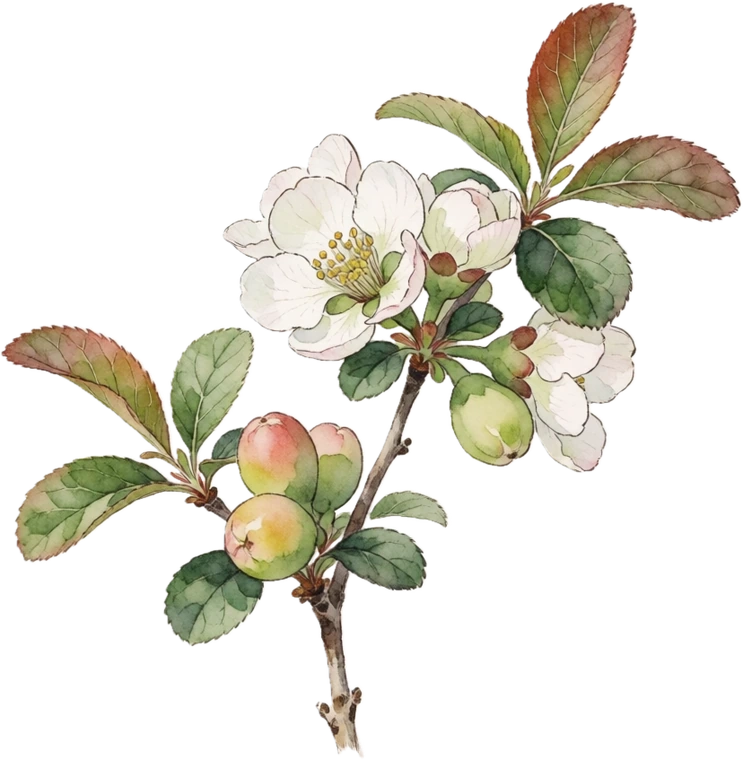
Botanical illustration of Flowering Quince

Before the garden wakes, flowering quince covers bare branches in gem-colored blooms that feed the year's first bees — and cut stems force into flower indoors while snow is still on the ground. In fall it delivers a second act: hard, perfumed fruits that cook into rose-colored jelly and quince paste.

Thorny, drought-tough, and unbothered by neglect, it doubles as a barrier hedge nothing walks through. Fruit set improves with a partner shrub, and the old-fashioned types fruit best. For a plant this generous in the garden's two hungriest seasons, it asks remarkably little — tuck one along a fence.

Where to buy flowering quince — 4 nurseries compared

  • Full Sun to Part Shade
  • Low water
  • Moderate growth
  • Excellent edible
  • Attracts bees
  • Needs a pollination partner
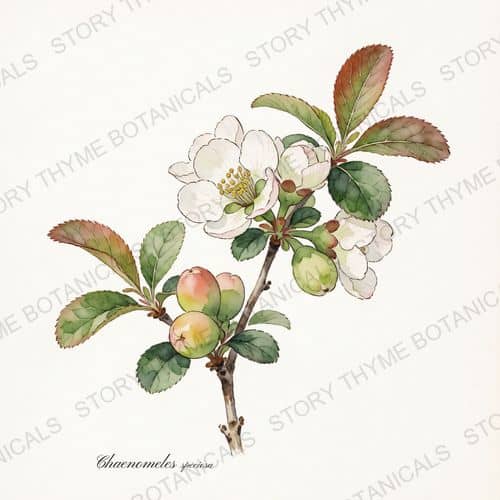
Flowering Quince — a print from the Plant Library collection

From the print shop

Growing flowering quince? Hang it.

Our Plant Library collection carries flowering quince — Chaenomeles speciosa, print Nº 187, “Flowering Quince.”

526 designsfrom $12.99white or black backgroundmatte poster, unframed

Shop Plant Library botanical prints →

✓

Will it fruit where you are?

Enter your ZIP — we look up your USDA hardiness zone (2023 map) and check it against what flowering quince actually needs.

Hardy inZones 4-9
PollinationPartner needed

Flowering Quince · Common problems

Common flowering quince problems

Pests, diseases and weather to keep an eye on.

Pests

4 problems on file

Diseases

3 problems on file

Pollination

Poor pollination → low fruit set (plant a partner)

Flowering Quince · Growing & propagation

Growing flowering quince

Light, water, soil, propagation and the season’s jobs.
What it needsThe details
Light
Full Sun to Part Shade
Water
Low once established
Soil
Any well-drained · pH 6.0 - 7.0
Fertilizer
None
Pruning
Right after flowering

One of the earliest shrubs to bloom — jewel-toned flowers studding bare thorny branches before forsythia, feeding the first bees. Cut budded branches to force indoors in late winter. The knobby fall fruits are rock-hard and sour raw but make a fragrant, rose-tinted jelly and paste like their tree-quince relative. Tough, thorny (good barrier hedge), drought-proof.

Spacing
4-6 ft

How to plant & propagate flowering quince

Propagate
Grafted, or from cuttings/layering

Seed won't come true

Flowering Quince · Harvest & keeping

What you get from flowering quince

How long before it bears, how much it gives, how you know it is ready, and how long it keeps once picked.
Botanical illustration of Flowering Quince
Years to first harvest
3 to 4 years
Typical yield
5–15 lbs
What you eat
Fruit (cooked)
How to tell it is ready
The small hard fruits turn fragrant yellow-green in fall

Pick before a hard freeze and cook like true quince

How long it keeps
1-2 months cold storage

Flowering Quince · Seasonal care & spray guidance

The flowering quince growing playbook

Field-tested instructions for every job flowering quince asks of you, compiled from university extension guidance — in the order the season brings them.

While it is dormant

winter, before growth starts

1 job
PruningIn winter

Cut out fire blight cankers while the shrub is dormant

Walk the shrub while it is leafless and look for blackened, sunken cankers and dead twigs. Cut at least 8 to 12 inches below any sign of infected tissue, into healthy wood, and destroy what you remove. The fire blight bacterium overwinters in cankers and twigs, and those cankers are the source of the ooze that starts next spring's infections. Cutting in the dormant season removes the inoculum when the bacteria are not active and cannot be spread by the cuts themselves.

As growth begins

early spring

1 job
FeedingIn spring

Feed sparingly, and go easy on the nitrogen

Flowering quince tolerates a wide range of soil and rarely needs feeding. If you feed at all, keep nitrogen low. If the leaves turn yellow while the veins stay green, read that as iron chlorosis from alkaline soil, not hunger - correct the pH rather than adding more fertilizer. Excess nitrogen pushes soft succulent shoots, and succulent growth is what fire blight infects most easily. Separately, this shrub tolerates a wide range of soils except very alkaline ones, which cause iron chlorosis that no amount of nitrogen will fix; Virginia Cooperative Extension pub 2901-1044 puts its workable pH range at 3.7 to 7.0.

While it flowers

at bloom

2 jobs
What to watch forAt bloom

Watch for fire blight strikes while the shrub is in flower

During and just after bloom, look for blossoms and shoot tips that suddenly blacken and wilt, with the tip curling into a shepherd's crook. Flag the strikes now and leave them - cut them out during the dormant season. Fire blight bacteria enter through open flowers in warm, wet weather and run down the shoot from there, which is why the damage shows first at the blossom clusters and shoot tips.

ProtectionAt bloom

Expect late frosts to take some of the bloom

This shrub opens its flowers on bare branches very early, ahead of most of the garden, so a late spring frost will brown some of the open blooms. On a small plant you can throw a light cover over it the night a hard frost is forecast; on a large one, accept the loss. The plant itself is hardy well below freezing when dormant, but open flowers are not - and every flower killed by frost is a fruit that will not form, since the bloom comes all at once on old wood.

Just after bloom

as the fruit sets

1 job
PruningAt petal fall

Renewal prune as soon as the flowers finish

Once the last petals drop, cut about a third of the wood to the ground, taking the oldest branches and any weak twiggy growth first. If you want fruit, go lighter than that; if you only want flowers, this shrub tolerates hard pruning. Flowering quince blooms on old wood and sets next spring's flower buds over the summer, so the window between petal fall and bud set is the only time you can cut without throwing away next year's bloom.

Through summer

the growing season

1 job
What to watch forThrough summer

Check shoot tips and fruit for cedar-quince rust

In mid to late summer, inspect shoot tips, fruit, and leaves for pinkish tendril-like aecia, and note any swollen, distorted stem cankers. Prune out cankered stems in the dormant season. Do not plant new quince right beside junipers or eastern redcedar. Cedar-quince rust needs both a juniper and a rose-family host to complete its cycle. Spores blow from juniper swellings to the quince during cool, wet spring weather, and the infection only becomes visible on the quince months later, in mid to late summer.

After harvest

autumn, and putting it to bed

1 job
HarvestingIn autumn

Pick the fruit in early fall, once it turns from green to yellow

The hard, aromatic pomes ripen in early fall, going from greenish to yellow. Pick them then and cook them - they are far too hard and bitter to eat off the shrub, but they are excellent in preserves and jelly, and the juice works as a lemon substitute. The fruit is a pome that stays rock hard on the bush and never softens to dessert quality; its value is aroma, acidity, and pectin, all of which peak once the skin colors up in early fall.

Flowering Quince · Calculators & field guides

A little help in the garden.

Calculators for the figures. Field guides for the hands-on work.

Flowering Quince · Yearly calendar

The flowering quince year, month by month

What flowering quince asks for, month by month.

Jan

No calendar activity is listed for this month.

MonthJanFebMarAprMayJunJulAugSepOctNovDec
Bloom
Harvest

BloomMarch to April

HarvestSeptember to November

What each band means

  • Bloom — flowers open — pollinators working, frost on blossoms is the danger.
  • Harvest — picking time — check ripeness every few days.

These are the species' typical months — expect them a few weeks earlier in warm zones and later in cold ones. Watch the plant, not just the calendar.

Flowering Quince · Ecology & uses

Ecology & uses

What it does for the garden, and what it is grown for.
Botanical illustration of Flowering Quince

Chaenomeles speciosa

Flowering Quince in the garden system

  • Shrub layer shrub
  • Nectary/insectary
Attracts
Bees
Moisture
Upland / dry
Deer
Browsed

Protect young plants

Origin
Introduced

What flowering quince is grown for

✓ Commonly eatenFruit edible cooked (not raw); safe

Use
Early bloom
Use
Quince jelly
Use
Barrier hedge
Use
Forcing
Edible value
4/5

Harvesting & storing flowering quince

Hard, aromatic yellow-green fruits in fall — inedible raw but superb cooked into jelly, paste, and preserves (like true quince).

Edibility, identification, and traditional-use notes here are general reference — not medical or veterinary advice, and not a claim that any plant treats or prevents anything. Medicinal ratings record how strongly a plant features in herbal tradition, nothing more. Never eat or dose a plant you have not positively identified. More on how to use this library.

Flowering Quince · Varieties & cultivars

Best flowering quince varieties & cultivars

There are far more than these — the ones below are the named varieties of flowering quince people actually plant.

Named varieties of flowering quince differ in winter-chill needs, ripening time, hardiness, and whether they set fruit on their own — pick one that fits your climate.

7 varieties

Toyo-Nishiki

Ripens
early fall
Zones
5-9
Size
5-10 ft tall and wide, rounded and spreading

Fragrant, hard and bitter raw; for jelly and jam — Carries red, white, and pink flowers on the same plant, sometimes all three on a single flower. Thorny gray-brown stems. Fruit is a yellowish-green pome 1-3 inches long with a reddish blush, ripening in early fall.

Where to buy ‘Toyo-Nishiki’

Story Thyme Farms may earn a small commission from these links, at no cost to you — it never changes what we recommend.

Sources & plant identity

Know what you’re growing.
See where the knowledge comes from.

Botanical illustration of Flowering Quince

Flowering Quince

Chaenomeles speciosa

The plant, at a glance.

Botanical name
Chaenomeles speciosa
Plant family
Rosaceae
Growth habit
Shrub · Perennial
Origin
Introduced
USDA plant symbol
CHSP12
Invasive risk
Low
Every garden is different.

Hardiness, size and timing vary with your cultivar, soil and climate.

Rooted in research.

University extension research, brought together with hands-on growing experience at Story Thyme Farms.

Explore Flowering Quince’s sources12 reference links
for Flowering Quince

Research from these sources

Publisher marks identify sources, not sponsorship or endorsement.

Questions

Flowering Quince questions, answered straight.

Why isn't my flowering quince fruiting?

Most often: it has no genetically distinct partner nearby. Flowering Quince can't pollinate itself — early flowers feed the first bees; a very early nectar source. Plant a second, unrelated one nearby; two different cultivars, or a cultivar plus a seedling, is the classic pairing.

Is flowering quince safe for kids and pets?

Flowering Quince is commonly eaten and isn't considered toxic, but "commonly eaten" isn't a guarantee for any particular person or animal — allergies, quantity, and which part you eat all matter. One caveat on this one: Fruit edible cooked (not raw); safe. Never eat a plant you haven't positively identified, and check with a vet before letting pets or livestock graze anything new.

When do you harvest flowering quince?

Hard, aromatic yellow-green fruits in fall — inedible raw but superb cooked into jelly, paste, and preserves (like true quince).

How do you propagate flowering quince?

Grafted, or from cuttings/layering (seed won't come true).

Elsewhere

Where flowering quince sits in the library.

Where flowering quince sits in the library

Grows in the same world