Eastern White Pine

Pinus strobus

Family Pinaceae

TreeNativeZones 3-8

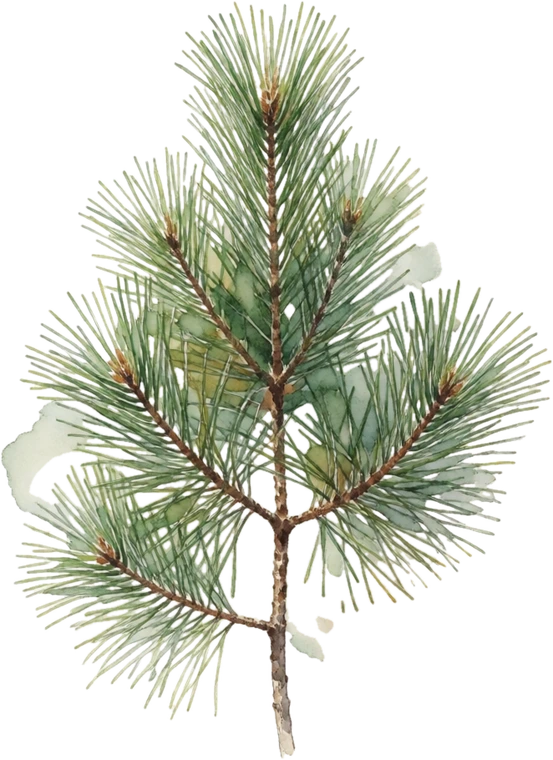
Botanical illustration of Eastern White Pine

Run a hand through eastern white pine and it gives — long, soft, five-needle plumes where other conifers jab. It's the whispering giant of the East, fifty to eighty feet of blue-green softness, growing two to three feet a year; colonial navies literally fought over these trunks for masts.

As a windbreak or soft screen it shelters birds all winter, and the sound of wind through it is half the reason to own one. Food-forest planners should note its old quarrel with currants and gooseberries before siting. Give it space and it becomes the landmark tree of the property.

Where to buy eastern white pine — 2 nurseries compared

  • Full Sun to Light Shade
  • Moderate water
  • FAST growth
  • Native to North America
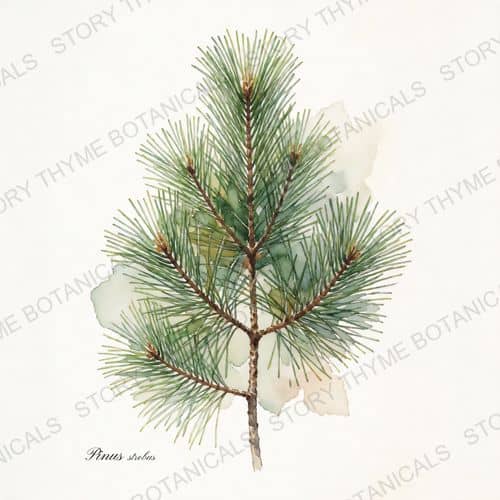
Eastern White Pine — a print from the Plant Library collection

From the print shop

Growing eastern white pine? Hang it.

Our Plant Library collection carries eastern white pine — Pinus strobus, print Nº 163, “Eastern White Pine.”

526 designsfrom $12.99white or black backgroundmatte poster, unframed

Shop Plant Library botanical prints →

✓

Will it fruit where you are?

Enter your ZIP — we look up your USDA hardiness zone (2023 map) and check it against what eastern white pine actually needs.

Hardy inZones 3-8

Eastern White Pine · Common problems

Common eastern white pine problems

Pests, diseases and weather to keep an eye on.

Pests

3 problems on file

Diseases

3 problems on file

Eastern White Pine · Growing & propagation

Growing eastern white pine

Light, water, soil, propagation and the season’s jobs.
What it needsThe details
Light
Full Sun to Light Shade
Water
Moderate

Intolerant of salt + pollution

Soil
Acid, sandy loam · pH 4.5 - 6.0
Fertilizer
None
Pruning
Prune candles in early summer for density

One annual candle-pinch makes hedge-dense windbreak trees; otherwise let it soar.

Spacing
20-30 ft

Windbreak rows

How to plant & propagate eastern white pine

Propagate
Seed (stratify), cuttings, or layering

Eastern White Pine · Seasonal care & spray guidance

The eastern white pine growing playbook

Field-tested instructions for every job eastern white pine asks of you, compiled from university extension guidance — in the order the season brings them.

When to spray eastern white pine

Growing season. The currant conflict is real: Ribes within a few hundred yards sustains rust cycles.

As growth begins

early spring

5 jobs
Planting outIn spring

Plant it on acid sand or loam, never clay

Set white pine in non-compacted sandy or loamy soil with good drainage and a pH between 5.5 and 6.5. Keep it well back from roads, driveways, and drain fields that get winter salt, and off heavy clay or any spot where water stands. Almost every case of white pine decline traces back to the site rather than a pathogen - the tree does not grow well and often dies on clay or where soil pH runs above 7, and its roots are unusually intolerant of salt, compaction, and moisture extremes.

PruningIn spring

Blister rust: cut cankered branches six inches past the symptom

In spring, when orange blisters erupt from swollen bark, scan branches for cankers. Cut any cankered branch at least six inches beyond the visible symptom on the trunk side, taking it back to a branch union, and never remove more than a third of the canopy at once. On young trees of five to seven years, also strip the lowest branches, working up to no more than a third to half the tree's height and repeating every other year until the lower eight or nine feet of trunk are clear. If a canker has already reached the trunk, the tree cannot be saved by pruning. Cronartium ribicola infects needles on the lowest, dampest branches and grows toward the trunk over years, so a branch cut before the fungus arrives at the main stem ends the infection - but a trunk canker eventually girdles and kills the tree. Removing low branches takes away the humid infection court where the spores land.

PruningIn spring

Shape by pinching candles, never by cutting into old wood

If you want to hold this pine's size, pinch or cut the soft new candles back while they are still elongating - the moment to do it is when this year's needles are about half the length of last year's. Do not cut branches back behind the current year's growth. Pines set a whorl of buds only at the tip of each shoot and form no lateral buds along old stems, so a cut behind the candle leaves a stub that can never push a new branch. Pinching while the shoot is still growing leaves time for it to set terminal buds for next year.

What to watch forIn spring

White pine weevil: read the leader for resin droplets

Start in the first warm days of early spring, as soon as the ground thaws and warms past about 50 degrees F — in most of the range that is late March to mid-April, well before the leader looks like anything is wrong. Examine the top 10 to 12 inches of the topmost leader, right up under the terminal bud cluster, for glistening pin-sized droplets of resin. Check the leader again a week later, because those punctures are the only warning you get. Overwintered adult weevils climb the leader to feed and cut egg sites just below the terminal bud, and a female deposits an average of 100 eggs. The resin beads are the tree bleeding from those punctures - by the time the leader curls in summer, the season's growth is already lost.

SprayingIn spring

White pine weevil: treat the leader only, at forsythia bloom

If this tree has been weeviled before, spray bifenthrin, permethrin, or cyfluthrin on the terminal leader and upper trunk in early spring, around 25 to 65 growing degree days base 50 - roughly when forsythia blooms nearby, and as soon as resin droplets show. A second application two weeks later maintains coverage. Spray the leader and upper trunk only, never the whole tree. The insecticide is aimed at overwintered adults during the short window when they are climbing the leader to feed and lay eggs. Once eggs hatch, the larvae are under bark where no contact spray reaches them.

Through summer

the growing season

2 jobs
PruningThrough summer

Cut out the shepherd's crook before the weevils fly

When a leader wilts into a curled shepherd's crook and turns yellow-red, cut it off well below the dead tissue and burn or bag it - do not leave it on the ground. Then pick one live lateral shoot in the top whorl to become the new leader, and cut the remaining laterals in that whorl back by at least half. The larvae are still finishing under that dead bark and will chew out as new adults in late summer to overwinter in the duff and attack again. Removing the leader early takes the brood with it, and shortening the competing laterals lets a single shoot take over instead of leaving a forked, multi-stemmed tree.

What to watch forIn summer

Needle damage: yellowing and heavy needle drop in early summer

In early summer, look for older needles yellowing and browning and then shedding, leaving thin tufts of only the current year's growth at the branch tips. If it recurs, thin crowded groves and limb up to move air through the canopy, and remove dead and diseased branches. Fungicides are rarely worthwhile on a landscape white pine because the damage you see was set a year earlier, and the right product differs by which pathogen you have - identify it through your county Extension office before spending on any spray. Brown spot needle blight, Bifusella needle cast, and Dooks needle blight all infect the new needles during wet weather while they are elongating from May to July, but the browning does not appear until roughly a year later - so what you are seeing is last year's wet spring, and the main lever you have is drying the canopy faster.

Eastern White Pine · Calculators & field guides

A little help in the garden.

Calculators for the figures. Field guides for the hands-on work.

Eastern White Pine · Yearly calendar

The eastern white pine year, month by month

What eastern white pine asks for, month by month.

Jan

No calendar activity is listed for this month.

MonthJanFebMarAprMayJunJulAugSepOctNovDec
Bloom
Prune

BloomMarch to May

PruneJune

What each band means

  • Bloom — flowers open — pollinators working, frost on blossoms is the danger.
  • Prune — shape it now — cuts heal cleanly and structure is visible.

These are the species' typical months — expect them a few weeks earlier in warm zones and later in cold ones. Watch the plant, not just the calendar.

Eastern White Pine · Ecology & uses

Ecology & uses

What it does for the garden, and what it is grown for.
Botanical illustration of Eastern White Pine

Pinus strobus

Eastern White Pine in the garden system

  • Canopy layer tree
  • Keystone: Keystone — hosts 200+ caterpillar species
Attracts
Birds
Habitat
Woodland, Dry/rocky
Moisture
Facultative / average
Deer
Browsed

Protect young plants

Origin
Native to North America

What eastern white pine is grown for

! Some parts toxic — see notesNeedles mildly toxic to cattle

Use
Windbreaks
Use
Soft screening
Use
Needle tea
Edible value
3/5

Harvesting & storing eastern white pine

Edible-ish: needle tea (vitamin C, historic scurvy cure).

Edibility, identification, and traditional-use notes here are general reference — not medical or veterinary advice, and not a claim that any plant treats or prevents anything. Medicinal ratings record how strongly a plant features in herbal tradition, nothing more. Never eat or dose a plant you have not positively identified. More on how to use this library.

Eastern White Pine · Varieties & cultivars

Best eastern white pine varieties & cultivars

There are far more than these — the ones below are the named varieties of eastern white pine people actually plant.

Named varieties of eastern white pine differ in winter-chill needs, ripening time, hardiness, and whether they set fruit on their own — pick one that fits your climate.

6 varieties

Glauca

Also known as Blue Eastern White Pine

Zones
3-7
Size
50 to 80 feet tall, 50 to 60 feet wide

Full-size shade tree with a pyramidal to oval crown and the species' layered whorls of branching. Wants loamy, moist, well-drained ground and fails on clay or above pH 7; poor tolerance of drought, compaction, and heat keeps it to cooler climates.

Where to buy ‘Glauca’

Story Thyme Farms may earn a small commission from these links, at no cost to you — it never changes what we recommend.

Sources & plant identity

Know what you’re growing.
See where the knowledge comes from.

Botanical illustration of Eastern White Pine

Eastern White Pine

Pinus strobus

The plant, at a glance.

Botanical name
Pinus strobus
Plant family
Pinaceae
Growth habit
Tree · Perennial
Origin
Native to North America
USDA plant symbol
PIST
Invasive risk
Low
Every garden is different.

Hardiness, size and timing vary with your cultivar, soil and climate.

Rooted in research.

University extension research, brought together with hands-on growing experience at Story Thyme Farms.

Explore Eastern White Pine’s sources4 reference links
for Eastern White Pine

Research from these sources

Publisher marks identify sources, not sponsorship or endorsement.

Questions

Eastern White Pine questions, answered straight.

Is eastern white pine safe for kids and pets?

With care. Needles mildly toxic to cattle Site it accordingly if children or pets roam the garden. This is general reference, not medical or veterinary advice — call a vet or poison control if something has actually been eaten.

When do you harvest eastern white pine?

Edible-ish: needle tea (vitamin C, historic scurvy cure).

How do you propagate eastern white pine?

Seed (stratify), cuttings, or layering.

Elsewhere

Where eastern white pine sits in the library.

Where eastern white pine sits in the library

Grows in the same world