Cornelian Cherry Dogwood

Cornus mas

Family Cornaceae

ShrubZones 4-8

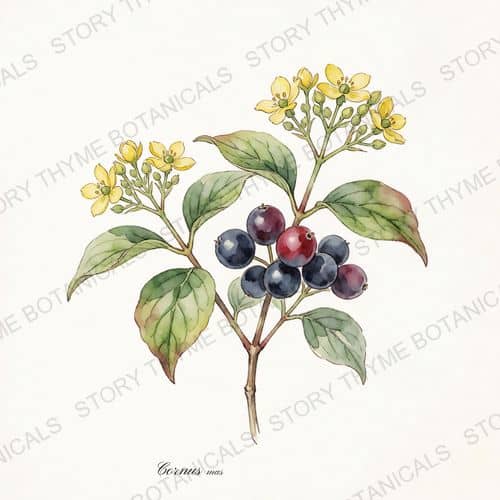
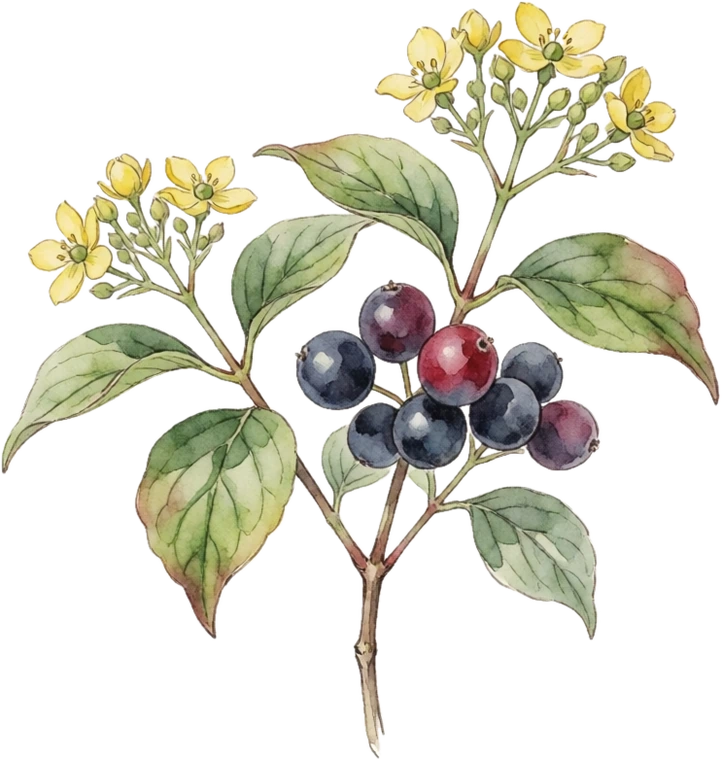
Botanical illustration of Cornelian Cherry Dogwood

Cornelian cherry dogwood blooms when almost nothing else dares — a haze of yellow flowers in late winter that reads like the year's first good news. By late summer it hangs with olive-shaped scarlet fruits, tart little cherries that make what devotees insist is the best homemade fruit syrup there is.

For the bees those winter flowers are crucial first forage; for you the shrub is simply bulletproof — no-spray, adaptable, largely ignored by deer, hardy zones 4 to 8, maturing into a handsome 15-to-25-foot large shrub or small tree. Plant two for real crops and give the neighborhood its earliest flowers.

Where to buy cornelian cherry dogwood — 2 nurseries compared

  • Full Sun to Part Shade
  • Moderate water
  • Slow-Moderate growth
  • Deer-resistant
  • Excellent edible
  • Attracts bees
  • Needs a pollination partner
Cornelian Cherry Dogwood — a print from the Plant Library collection

From the print shop

Growing cornelian cherry dogwood? Hang it.

Our Plant Library collection carries cornelian cherry dogwood — Cornus mas, print Nº 130, “Cornelian Cherry Dogwood.”

526 designsfrom $12.99white or black backgroundmatte poster, unframed

Shop Plant Library botanical prints →

✓

Will it fruit where you are?

Enter your ZIP — we look up your USDA hardiness zone (2023 map) and check it against what cornelian cherry dogwood actually needs.

Hardy inZones 4-8
PollinationPartner needed

Cornelian Cherry Dogwood · Common problems

Common cornelian cherry dogwood problems

Pests, diseases and weather to keep an eye on.

Pests

1 problem on file

  • Almost none

Diseases

1 problem on file

  • Almost none — a no-spray fruit

Pollination

Poor pollination → low fruit set (plant a partner)

Cornelian Cherry Dogwood · Growing & propagation

Growing cornelian cherry dogwood

Light, water, soil, propagation and the season’s jobs.
What it needsThe details
Light
Full Sun to Part Shade
Water
Moderate; adaptable
Soil
Any decent, well-drained · pH 6.0 - 7.5
Fertilizer
None needed
Pruning
Late Winter

Minimal; can be limbed into a small multi-stem tree.

Spacing
10-15 ft

How to plant & propagate cornelian cherry dogwood

Propagate
Grafted, or from cuttings/layering

Seed won't come true

Cornelian Cherry Dogwood · Harvest & keeping

What you get from cornelian cherry dogwood

How long before it bears, how much it gives, how you know it is ready, and how long it keeps once picked.
Botanical illustration of Cornelian Cherry Dogwood
Years to first harvest
4 to 6 years
Typical yield
15–40 lbs
What you eat
Fruit
How to tell it is ready
Cherry-red and dropping when truly ripe

Shake onto a tarp; mouth-puckering before then

How long it keeps
3-5 days fresh

A preserves classic

Cornelian Cherry Dogwood · Seasonal care & spray guidance

The cornelian cherry dogwood growing playbook

Field-tested instructions for every job cornelian cherry dogwood asks of you, compiled from university extension guidance — in the order the season brings them.

As growth begins

early spring

2 jobs
Planting outIn spring

Plant two different cultivars, and start from dormant bare-root stock

Set out at least two different named cultivars near each other rather than a single plant, and buy dormant bare-root stock where you can get it instead of potted plants. Give each one 12 to 24 feet of room in full sun to part shade, on a well-drained soil anywhere from pH 5.5 to 7.5. Expect to wait about four years for a real crop. Cornelian cherry is only partly self-fertile, so a lone plant will flower beautifully and still set a thin crop, while a second cultivar's pollen fills it out. Wisconsin's uncommon fruit trials found dormant bare-root plants established with less transplant stress and fewer pest problems than potted stock carried in from a nursery.

MulchingIn spring

Mulch the root zone, and water it through dry spells

Spread a few inches of wood chips or leaf mulch over the root zone, pulled back off the trunk, and top it up each spring. Water deeply whenever the soil dries out, particularly in the establishment years and while the fruit is sizing. Do not try to fix a soggy site with mulch - if water stands there, move the plant. For all its reputation as a tough plant, cornelian cherry is only moderately drought tolerant and does best with soil kept evenly moist, and mulch is what buys you both the moisture and the root growth. Drainage is the other half of it: crown canker in this species follows wet, poorly drained soil.

Just after bloom

as the fruit sets

1 job
PruningAt petal fall

Prune once the yellow flowers fade, and keep the suckers cut off

Wait until the yellow bloom has faded and you can see which wood actually flowered, then take out dead, crossing, and crowded wood and shorten branches to hold the shape, tree form, or hedge line you want. Cut root suckers off at ground level whenever they appear. On a young plant you are growing for fruit, keep the cuts light and accept that any wood you take now carries this year's fruit with it: the plant tolerates hard pruning, but a hard cut costs you a crop. It blooms on bare branches before a single leaf opens, on flower buds set the summer before. A dormant winter cut therefore removes bloom that is already made, and the fruit that would have followed, before you can see what you are taking. Cutting once the flowers fade puts the work at the point in the year that costs the least and shows the most. It is naturally low-branched and suckers freely, so left alone it thickens into a wide multi-stemmed shrub rather than the tree or hedge you meant to grow.

Through summer

the growing season

1 job
What to watch forIn summer

Walk it a few times a season, and expect to spray nothing

Look over the twigs and foliage a few times through the season for scale insects on the wood, dogwood sawfly larvae chewing leaves, and leafhoppers. Prune out infested twigs and bin them, hand-pick the sawfly larvae, and knock aphids off with a jet of water. Keep the plant vigorous rather than reaching for an insecticide. This is one of the toughest dogwoods, and it carries excellent resistance to dogwood anthracnose and dogwood borer - the two problems that destroy flowering dogwood. What does turn up here is occasional and largely cosmetic, and it responds to pruning and hand-work, which is why no spray programme exists for this crop.

Harvest time

as it ripens, and picking

1 job
HarvestingAt harvest

Let it go soft and drop, then pick the tree over several times

Do not pick at first bright red - it is still astringent at that stage. Wait until the fruit darkens to a deep, almost blackish red and gives to a light squeeze, or spread a sheet or fine net underneath and shake the branches so only the ready fruit falls. Fruit taken firm and red is still usable for syrup and jelly, where the tartness is wanted. Plan on going back three or four times over several weeks. Cornelian cherry keeps sweetening on the plant right up to the moment it lets go, so the same fruit that is mouth-puckering and astringent when firm turns sweet and plum-like if you leave it until it drops. The crop also ripens unevenly rather than all at once, which is exactly why one clean harvest does not work here.

Cornelian Cherry Dogwood · Calculators & field guides

A little help in the garden.

Calculators for the figures. Field guides for the hands-on work.

Cornelian Cherry Dogwood · Yearly calendar

The cornelian cherry dogwood year, month by month

What cornelian cherry dogwood asks for, month by month.

Jan

No calendar activity is listed for this month.

MonthJanFebMarAprMayJunJulAugSepOctNovDec
Bloom
Prune
Harvest

BloomMarch to April

PruneFebruary to March

HarvestAugust

What each band means

  • Bloom — flowers open — pollinators working, frost on blossoms is the danger.
  • Prune — shape it now — cuts heal cleanly and structure is visible.
  • Harvest — picking time — check ripeness every few days.

These are the species' typical months — expect them a few weeks earlier in warm zones and later in cold ones. Watch the plant, not just the calendar.

Cornelian Cherry Dogwood · Ecology & uses

Ecology & uses

What it does for the garden, and what it is grown for.
Botanical illustration of Cornelian Cherry Dogwood

Cornus mas

Cornelian Cherry Dogwood in the garden system

  • Understory layer shrub
  • Nectary/insectary
Attracts
Bees
Moisture
Facultative / average
Deer
Resistant

A safer unfenced choice

Origin
Introduced

What cornelian cherry dogwood is grown for

✓ Commonly eatenastringent until dead-ripe

Use
Syrup/jam
Use
Early bee forage
Use
Edible hedge
Edible value
4/5

Harvesting & storing cornelian cherry dogwood

Late Summer: olive-shaped tart-sweet red cherries for syrup, jam, and drinks.

Edibility, identification, and traditional-use notes here are general reference — not medical or veterinary advice, and not a claim that any plant treats or prevents anything. Medicinal ratings record how strongly a plant features in herbal tradition, nothing more. Never eat or dose a plant you have not positively identified. More on how to use this library.

Cornelian Cherry Dogwood · Varieties & cultivars

Best cornelian cherry dogwood varieties & cultivars

There are far more than these — the ones below are the named varieties of cornelian cherry dogwood people actually plant.

Named varieties of cornelian cherry dogwood differ in winter-chill needs, ripening time, hardiness, and whether they set fruit on their own — pick one that fits your climate.

8 varieties

Pioneer

Also known as Lukianovskyi;Pioneer TM

Partly self-fertile

Ripens
Late August to early September
Zones
4-8
Size
Pear-shaped, up to 1.5 inches long

Dark red, juicy, sweet and aromatic, somewhere between a cherry and a wild plum; very soft at full ripeness — Hardy to about -30F and bearing 2 to 3 years after planting. Wisconsin's uncommon fruit trials carried Pioneer and Elegant furthest, rating Pioneer slightly earlier, darker red, sweeter and much softer when dead ripe. The softness is the trade-off: it is a superb fresh-eating and syrup fruit that does not travel or hold.

Where to buy ‘Pioneer’

Story Thyme Farms may earn a small commission from these links, at no cost to you — it never changes what we recommend.
Sources & plant identity

Know what you’re growing.
See where the knowledge comes from.

Botanical illustration of Cornelian Cherry Dogwood

Cornelian Cherry Dogwood

Cornus mas

The plant, at a glance.

Botanical name
Cornus mas
Plant family
Cornaceae
Growth habit
Shrub · Perennial
Origin
Introduced
USDA plant symbol
COMA21
Invasive risk
Low
Every garden is different.

Hardiness, size and timing vary with your cultivar, soil and climate.

Rooted in research.

University extension research, brought together with hands-on growing experience at Story Thyme Farms.

Explore Cornelian Cherry Dogwood’s sources10 reference links
for Cornelian Cherry Dogwood

Questions

Cornelian Cherry Dogwood questions, answered straight.

Why isn't my cornelian cherry dogwood fruiting?

Most often: it has no genetically distinct partner nearby. Cornelian Cherry Dogwood is only partly self-fertile, so a lone plant sets a light crop at best — two seedlings/cultivars set far heavier crops. Plant a second, unrelated one nearby; two different cultivars, or a cultivar plus a seedling, is the classic pairing.

Do deer eat cornelian cherry dogwood?

Rarely — cornelian cherry dogwood is considered deer-resistant, which makes it one of the safer unfenced choices in deer country. Hungry deer in a hard winter test every rule, but it's a low-risk pick.

Is cornelian cherry dogwood safe for kids and pets?

Cornelian Cherry Dogwood is commonly eaten and isn't considered toxic, but "commonly eaten" isn't a guarantee for any particular person or animal — allergies, quantity, and which part you eat all matter. One caveat on this one: astringent until dead-ripe. Never eat a plant you haven't positively identified, and check with a vet before letting pets or livestock graze anything new.

When do you harvest cornelian cherry dogwood?

Late Summer: olive-shaped tart-sweet red cherries for syrup, jam, and drinks.

Elsewhere

Where cornelian cherry dogwood sits in the library.

Where cornelian cherry dogwood sits in the library

Grows in the same world