Swiss Chard

Beta vulgaris subsp. cicla

Family Amaranthaceae

AnnualZones 2-11

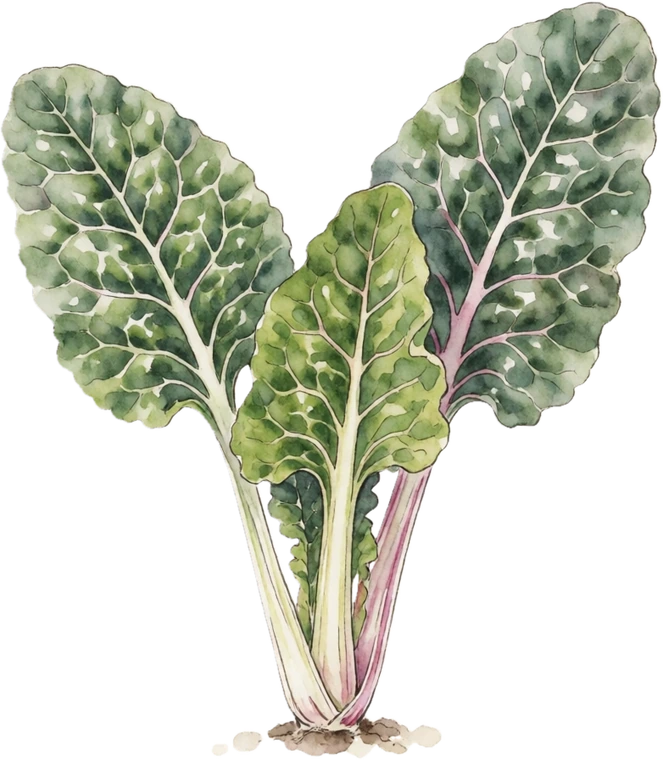
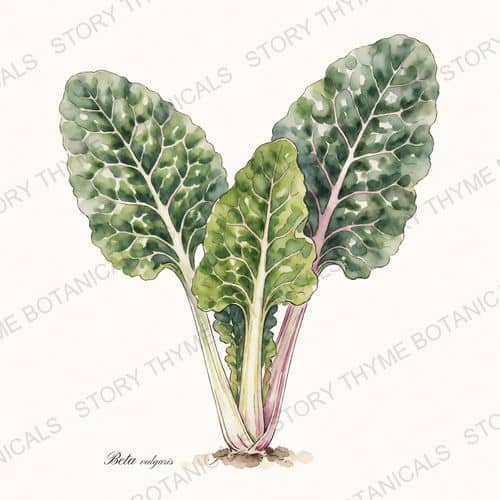
Botanical illustration of Swiss Chard

One sowing of Swiss chard feeds a kitchen from June to hard frost — sautéed greens, stems that cook like a second vegetable, and stained-glass color the whole time. While spinach melts in July heat, chard just keeps producing, which is why lazy geniuses grow it instead.

Handsome enough for edible landscaping, it stands one to two feet tall in sun or part shade and almost never bolts — its quiet superpower. Few plants earn a front-border spot and fill a dinner plate at once; tuck a few in and see.

Where to buy swiss chard — 4 nurseries compared

  • Full Sun to Part Shade
  • Moderate water
  • Fast growth
  • Excellent edible
Swiss Chard — a print from the Plant Library collection

From the print shop

Growing swiss chard? Hang it.

Our Plant Library collection carries swiss chard — Beta vulgaris, print Nº 471, “Swiss Chard.”

526 designsfrom $12.99white or black backgroundmatte poster, unframed

Shop Plant Library botanical prints →

✓

Will it fruit where you are?

Enter your ZIP — we look up your USDA hardiness zone (2023 map) and check it against what swiss chard actually needs.

Life cycleBiennial, grown as an annual

Swiss Chard · Common problems

Common swiss chard problems

Pests, diseases and weather to keep an eye on.

Swiss Chard · Growing & propagation

Growing swiss chard

Light, water, soil, propagation and the season’s jobs.
What it needsThe details
Light
Full Sun to Part Shade
Water
Moderate
Soil
Rich, moist · pH 6.0 - 7.0
Fertilizer
Compost at planting

Monthly nitrogen for cut-and-come-again

Pruning
None

Harvest outer stalks at the base; the center keeps producing all season.

Spacing
8-10 in

How to plant & propagate swiss chard

Maturity
50-60 days
From seed
Direct-sow after last frost

Germinates 50-75°F

Propagate
From seed

Swiss Chard · Seasonal care & spray guidance

The swiss chard growing playbook

Field-tested instructions for every job swiss chard asks of you, compiled from university extension guidance — in the order the season brings them.

When to spray swiss chard

Growing season. Row cover early for leaf miner.

As growth begins

early spring

4 jobs
SowingIn spring

Direct sow once the soil hits 40F, about 2-3 weeks before your last frost

Sow seed directly in the garden 2-3 weeks before your average last frost date, as soon as soil reaches 40F. Plant seed 1/2 inch deep, about 1-2 inches apart, and expect 7-14 days to emerge; germination is fastest between 55F and 75F. Chard is slow to bolt and will hold through the hottest part of summer producing leaves, so unlike spinach one spring sowing usually carries the season - but in long, hot summers a second sowing is cheap insurance. Chard germinates in cool soil, but its value is that it is slow to bolt and keeps making leaves right through the heat that finishes spinach. Getting it up and growing early gives it a full established crown before summer.

ThinningIn spring

Thin to 6 inches once seedlings have 3-4 true leaves

When seedlings have 3-4 true leaves, thin them to 6 inches between plants, in rows 12 inches apart. The thinnings are good eating - use them as baby greens rather than composting them. Crowded chard holds moisture on its leaves for hours longer after rain or dew, and that leaf wetness is what Cercospora needs to infect; extension guidance lists increased plant spacing as a leaf spot control, so spacing is disease management, not just a yield tactic.

What to watch forIn spring

Check leaf undersides for leafminer eggs and crush them

Turn leaves over and look for eggs: small white oblong eggs under 1 mm, laid on their sides in neat little rows in groups of several. Rub them off with your thumb. Pick and destroy any leaf already showing a pale winding tunnel, and do not leave those leaves lying in the bed. Keep checking every 7-10 days - there are 3-4 generations a season, with flushes roughly in late spring, midsummer, and late summer. The egg is the only stage you can reach. Once the larva mines into the leaf it feeds between the upper and lower surfaces where nothing touches it, and each mined leaf is a leaf you were going to eat.

ProtectionIn spring

Row cover against leafminer - but not over last year's chard ground

Cover the bed with row cover or insect netting before the leafminer flies are active in spring, sealing the edges to the soil. Critically, do not cover a bed where chard, beets, or spinach grew last year: the flies overwinter as pupae in that soil and a cover will simply trap them in with your crop. Rotate to fresh ground first, then cover. Beet and spinach leafminer flies lay their eggs on the leaf, and once the larva is inside the leaf it is protected from almost everything you could spray. Excluding the adult fly is the only control that reliably works, so the cover has to go on before she arrives.

Through summer

the growing season

4 jobs
WateringIn summer

1-2 inches a week, at the roots and never overhead at night

Give chard 1-2 inches of water a week, more in sandy soil or heat. Use drip or a wand at the base and avoid overhead irrigation. If you must water overhead, do it early enough that the leaves dry fully before dark - never in the evening. Two things ride on this. MSU Extension notes that plants which become drought-stressed are more likely to throw a flower stalk and stop leaf production. And extension leaf spot guidance calls for cultural practices that minimize periods of leaf wetness, including avoiding overhead irrigation - an evening sprinkler hands Cercospora the one condition it cannot manufacture for itself.

FeedingIn summer

One midseason nitrogen sidedress, and only if the soil is poor

About 4 weeks after transplanting or once plants are established and picking has begun, sidedress a quarter cup of a nitrogen fertilizer such as 21-0-0 per 10 feet of row. Place it to the side of the plants, not against the stems, and water it in. On decent garden soil chard performs well with little or no fertilizer - if the leaves are large and dark green, skip it. Chard is a cut-and-come-again leaf crop, so every harvest removes nitrogen the plant needs to build the next flush. On poor soil that shortfall shows up as small pale leaves; on good soil there is nothing to fix.

SprayingIn summer

Cercospora leaf spot: protectant spray before the spots take hold

Watch for small tan to brown round spots with a distinct purple to red border, worst in warm humid spells. If your site has a history of it, start a protectant on a weekly interval before symptoms get severe rather than after. Products labeled for leaf spot on Swiss chard include Reynoutria sachalinensis extract (Regalia, PHI 0d) and thyme oil (Guarda, PHI 0h) among OMRI-listed options, and azoxystrobin (Quadris F, PHI 0d) as a conventional option. Cultural control does the heavy lifting: increase plant spacing, avoid overhead irrigation, pick off spotted leaves and remove them from the bed, and promptly incorporate plant debris after harvest. Cercospora is most damaging in warm humid weather and spreads by splash from spots already on the plant. Protectants only shield tissue that is still clean, which is why they must go on ahead of the disease rather than after it is established.

HarvestingIn summer

Take the outer leaves young, and keep picking through the frosts

Start picking about 4 weeks in, once leaves are usable size, and take them young rather than letting them get big and coarse - younger leaves are the tastiest. Snap or cut the outer leaves at the base and leave the growing point and inner leaves alone, or cut the whole plant back to about 3 inches above the soil and let it regrow. Harvest early or late in the day. Keep going after light frosts - chard keeps growing until temperatures drop to the mid-20s, and a row cover or low tunnel stretches that further. The crown keeps making new leaves all season as long as it is intact, so picking outer leaves is harvesting the plant's output rather than the plant. Chard is a biennial grown as an annual, and MSU notes that if the plant is not damaged, harvesting can continue for up to two years.

Swiss Chard · Calculators & field guides

A little help in the garden.

Calculators for the figures. Field guides for the hands-on work.

Swiss Chard · Yearly calendar

The swiss chard year, month by month

What swiss chard asks for, month by month.

Jan

No calendar activity is listed for this month.

MonthJanFebMarAprMayJunJulAugSepOctNovDec
Harvest

HarvestMarch to June

What each band means

  • Harvest — picking time — check ripeness every few days.

These are the species' typical months — expect them a few weeks earlier in warm zones and later in cold ones. Watch the plant, not just the calendar.

Swiss Chard · Ecology & uses

Ecology & uses

What it does for the garden, and what it is grown for.
Botanical illustration of Swiss Chard

Beta vulgaris subsp. cicla

Swiss Chard in the garden system

  • Herbaceous layer annual
Moisture
Facultative / average
Deer
Browsed

Protect young plants

Origin
Introduced

What swiss chard is grown for

✓ Commonly eaten

Use
Sautéed greens
Use
Stems as a second veg
Use
Edible landscaping
Edible value
4/5

Harvesting & storing swiss chard

June - Frost from one spring sowing. About 50-60 days from planting.

Edibility, identification, and traditional-use notes here are general reference — not medical or veterinary advice, and not a claim that any plant treats or prevents anything. Medicinal ratings record how strongly a plant features in herbal tradition, nothing more. Never eat or dose a plant you have not positively identified. More on how to use this library.

Swiss Chard · Varieties & cultivars

Best swiss chard varieties & cultivars

There are far more than these — the ones below are the named varieties of swiss chard people actually plant.

Named varieties of swiss chard differ in winter-chill needs, ripening time, hardiness, and whether they set fruit on their own — pick one that fits your climate.

7 varieties

Fordhook Giant

Size
24-28 inches tall; broad thick white midribs and petioles

Mild; the standard green chard flavor — The most well-known green variety and the default if you just want to eat chard rather than look at it. Works for both baby greens and full bunching size, and keeps yielding heavily through warm weather. Heavily crinkled dark green leaves on thick white stems.

Where to buy ‘Fordhook Giant’verified

Story Thyme Farms may earn a small commission from these links, at no cost to you — it never changes what we recommend.

Sources & plant identity

Know what you’re growing.
See where the knowledge comes from.

Botanical illustration of Swiss Chard

Swiss Chard

Beta vulgaris subsp. cicla

The plant, at a glance.

Botanical name
Beta vulgaris subsp. cicla
Plant family
Amaranthaceae
Growth habit
Annual · Biennial
Origin
Introduced
USDA plant symbol
BEVU2
Invasive risk
Low
Every garden is different.

Hardiness, size and timing vary with your cultivar, soil and climate.

Rooted in research.

University extension research, brought together with hands-on growing experience at Story Thyme Farms.

Explore Swiss Chard’s sources4 reference links
for Swiss Chard

Research from these sources

Publisher marks identify sources, not sponsorship or endorsement.

Questions

Swiss Chard questions, answered straight.

Is swiss chard safe for kids and pets?

Swiss Chard is commonly eaten and isn't considered toxic, but "commonly eaten" isn't a guarantee for any particular person or animal — allergies, quantity, and which part you eat all matter. Never eat a plant you haven't positively identified, and check with a vet before letting pets or livestock graze anything new.

When do you harvest swiss chard?

June - Frost from one spring sowing. From planting, expect about 50-60 days to maturity.

How do you propagate swiss chard?

From seed.

Elsewhere

Where swiss chard sits in the library.

Where swiss chard sits in the library

Grows in the same world