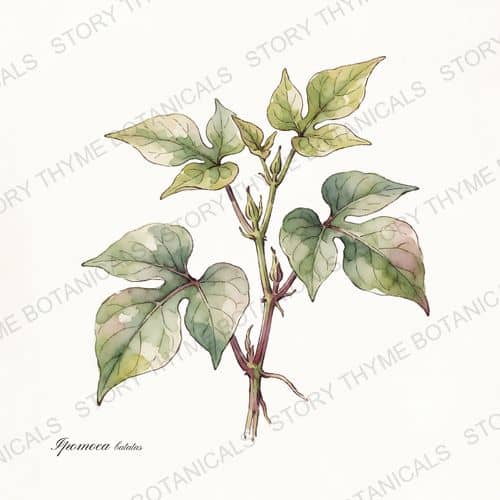
Sweet Potato

Ipomoea batatas

Family Convolvulaceae

AnnualZones 2-11

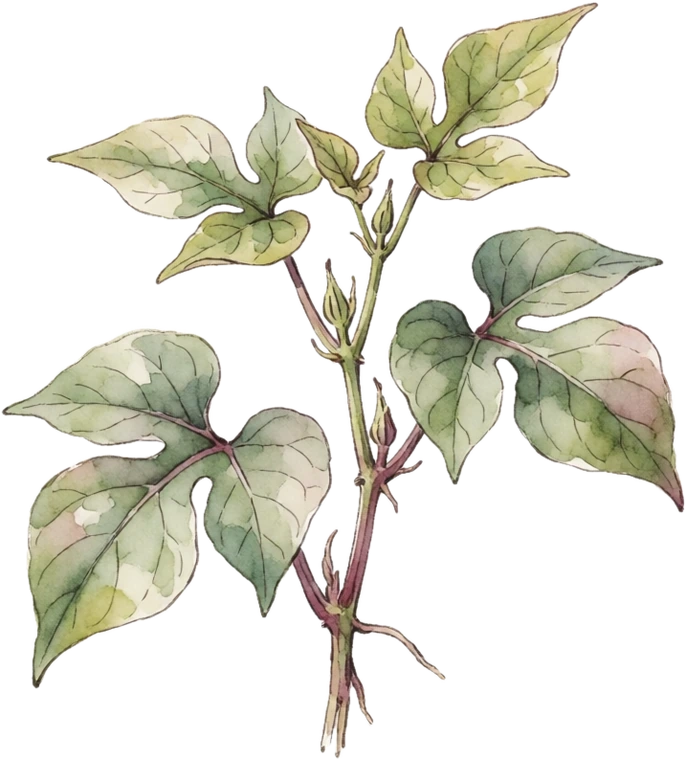
Botanical illustration of Sweet Potato

Sweet potatoes turn a summer of neglect into a fall of pies — heat-loving vines that shrug off drought and then hand over a wheelbarrow of storage roots in one September digging. Even the young leaves are edible greens, a crop that feeds you twice.

The vines run 6-10 feet and double as a dense, handsome groundcover that smothers open soil all summer. All they insist on is warmth — 100-plus warm days and full sun. Give a bed over to them in late spring and let the heat do the heavy lifting.

Where to buy sweet potato — 4 nurseries compared

  • Full Sun
  • Drought-tolerant · low water
  • Fast growth
  • Excellent edible
  • Attracts bees
Sweet Potato — a print from the Plant Library collection

From the print shop

Growing sweet potato? Hang it.

Our Plant Library collection carries sweet potato — Ipomoea batatas, print Nº 465, “Sweet Potato.”

526 designsfrom $12.99white or black backgroundmatte poster, unframed

Shop Plant Library botanical prints →

✓

Will it fruit where you are?

Enter your ZIP — we look up your USDA hardiness zone (2023 map) and check it against what sweet potato actually needs.

Life cycleTender perennial, grown as an annual

Sweet Potato · Common problems

Common sweet potato problems

Pests, diseases and weather to keep an eye on.

Pests

5 problems on file

Diseases

4 problems on file

Weather

1 problem on file

Sweet Potato · Growing & propagation

Growing sweet potato

Light, water, soil, propagation and the season’s jobs.
What it needsThe details
Light
Full Sun
Water
Drought-tolerant once established

Water at slip planting

Soil
Loose, Sandy, not too rich · pH 5.8 - 6.2
Fertilizer
Minimal

Rich soil grows vines not roots.

Pruning
None (annual) — None.
Spacing
12-18 inches

How to plant & propagate sweet potato

Maturity
90-120 days
From seed
Plant rooted slips after soil warms (65°F+); loves heat
Propagate
From seed

Sweet Potato · Harvest & keeping

What you get from sweet potato

How long before it bears, how much it gives, how you know it is ready, and how long it keeps once picked.
Botanical illustration of Sweet Potato
Years to first harvest
0 years
Typical yield
15–30 lbs per 10ft row
What you eat
Storage roots

Young leaves

How to tell it is ready
Harvest 85-120 days after planting once roots reach eating size and before frost
How long it keeps
Cure before storage

Stores for months warm and dry

Sweet Potato · Seasonal care & spray guidance

The sweet potato growing playbook

Field-tested instructions for every job sweet potato asks of you, compiled from university extension guidance — in the order the season brings them.

As growth begins

early spring

3 jobs
SowingIn spring

Start slips six to eight weeks before you can plant out

Six to eight weeks before you intend to transplant outside, bed whole storage roots and cover them with about 2 inches of moist sand, holding the soil at 75 to 80 F. When the sprouts are 4 to 6 inches long, remove each slip with a twisting tug and plant it. Where you can, buy slips from a reputable source grown from virus-tested stock - saved and swapped roots are how disease arrives in a garden. Sweet potato is grown from rooted shoots, not seed or cut tubers, and the mother root will not push sprouts at all until it is held near 80 F - which is why the timer starts indoors, weeks before the garden is warm enough.

Planting outIn spring

Set slips only once the soil holds 65 F at four inches

Wait until soil temperature at a 4-inch depth is at least 65 F - measure it, do not go by the calendar, and expect that to fall some weeks after your frost-free date rather than on it. Mound ridges 8 to 12 inches high and about 12 inches wide, then set slips about 12 inches apart in rows 36 to 40 inches apart, 4 to 6 inches deep, with several nodes buried and several leaves above ground. Water regularly after planting to help them establish. The plant is injured below about 50 F and simply sits in cold ground without rooting, so slips set early lose more time than they gain. The ridge raises and warms the root zone and gives the storage roots loose, drained soil to expand into.

MulchingIn spring

Lay black plastic first if your season is short

In a short-season garden, lay black plastic mulch over the finished ridges a week or two before planting and set the slips through slits in it. Leave it down all season. Where the season is long and hot, skip it and mulch with straw or leaves once the vines are running. Black plastic warms the root zone and buys back a few weeks of growing season, which is the whole margin in a climate that only just clears the 90 to 120 frost-free days this crop needs. In New Hampshire trials the soil under black plastic reached planting temperature by about June 1.

Through summer

the growing season

3 jobs
WateringIn summer

An inch a week, evenly - then cut water off before harvest

Water uniformly: at least 1 inch of rain or irrigation a week through the season, aiming for steady moisture rather than swings between bone dry and soaked. Then stop watering for the last three to four weeks before you plan to dig. Uneven water is what cracks a sweet potato: a long dry spell followed by a soaking makes the root swell faster than its skin can grow and it splits, which is why the fix is steady moisture all season and then a dry finish - not letting the bed swing between extremes. Constantly waterlogged soil rots the roots instead.

FeedingIn summer

One side-dress before the vines close over the row

Clemson's program is a preplant application of 5-10-10 at 30 pounds per 1,000 square feet tilled into the soil, then a single side-dress of 4 pounds of 5-10-10 per 100 feet of row before the vines cover the row. A soil test beats guessing on both. Do not reach for a high-nitrogen fertilizer. Too much nitrogen buys you vines instead of roots: the plant puts the surplus into leaf and stem growth and the storage roots stay small. The side-dress lands before the canopy closes because that is the last moment you can get fertilizer to the soil without walking on the vines.

What to watch forIn summer

Weevil and wireworm - cultural control is the home-garden answer

Rotate: do not plant sweet potatoes in ground that grew them year after year, which is what builds weevil populations. Plant only slips from a weevil-free area; if you cannot, examine each seed root carefully and destroy any that is infested. Pull volunteers, and turn under or destroy vines and culls after harvest rather than leaving a pile. Expect wireworm damage in ground recently broken out of sod. If flea beetles have scarred your roots before, Jewel or Centennial are the resistant varieties. Sweetpotato weevil is the crop's worst pest and there is no rescue for it: the larvae burrow deep into the stems and fleshy roots where nothing reaches them, and infestation turns the roots bitter and unfit to eat. Clean stock, rotation and residue destruction are the control. NC State does refer commercial growers to the state agricultural chemicals manual, but there is no home-garden rescue spray for a pest that lives inside the root.

Harvest time

as it ripens, and picking

1 job
HarvestingAt harvest

Get them out of the ground before the vines are killed

Dig around the time of your first frost - a light frost on the tops is survivable, but complete the harvest before a killing frost, and never leave dug roots lying in the garden to be frosted. Harvest gently, taking care not to bruise or scrape the skin, and cure the same day. Once a hard frost kills the vines, the dead stems conduct rot straight down into the roots still sitting in the soil, and the crop is at risk from that point on. The skin is thin enough that a fingernail scrape becomes a rot entry point, which is exactly the wound curing has to heal.

After harvest

autumn, and putting it to bed

2 jobs
HarvestingIn September and October

Harvest and cure sweet potatoes

Dig before frost once roots are sized, handle gently, then cure warm and humid before storage. Curing heals harvest wounds and converts starches to sugars for better storage and flavor.

HarvestingAfter harvest

Cure at 85 F and high humidity, then never below 50 F

Cure the roots immediately after digging: hold them near 85 F at about 90 percent humidity for four to six days, in a single layer with air moving around them. Then store at 55 to 60 F at high humidity (about 95 percent), where a cured crop keeps six to ten months. Do not wash them until you are ready to use them, and do not refrigerate them. Curing does two jobs at once. The warm, humid air makes the plant wall off its own harvest scrapes with new corky tissue, which is what shuts rot organisms out, and it converts starch to sugar - an uncured sweet potato is bland and rots within weeks. Below about 50 F the roots take chilling injury, which is why a refrigerator ruins them.

Sweet Potato · Calculators & field guides

A little help in the garden.

Calculators for the figures. Field guides for the hands-on work.

Sweet Potato · Yearly calendar

The sweet potato year, month by month

What sweet potato asks for, month by month.

Jan

No calendar activity is listed for this month.

MonthJanFebMarAprMayJunJulAugSepOctNovDec
Harvest

HarvestSeptember to October

What each band means

  • Harvest — picking time — check ripeness every few days.

These are the species' typical months — expect them a few weeks earlier in warm zones and later in cold ones. Watch the plant, not just the calendar.

Sweet Potato · Ecology & uses

Ecology & uses

What it does for the garden, and what it is grown for.
Botanical illustration of Sweet Potato

Ipomoea batatas

Sweet Potato in the garden system

  • Root layer annual
Attracts
Bees
Moisture
Facultative / average
Deer
Browsed

Protect young plants

Origin
Introduced

What sweet potato is grown for

✓ Commonly eatenSafe; roots and young leaves are edible (avoid moldy or chemically treated ornamental vines)

Use
Storage
Use
Baking
Use
Pies
Edible value
4/5

Harvesting & storing sweet potato

September - October (before frost). About 90-120 days from planting.

Edibility, identification, and traditional-use notes here are general reference — not medical or veterinary advice, and not a claim that any plant treats or prevents anything. Medicinal ratings record how strongly a plant features in herbal tradition, nothing more. Never eat or dose a plant you have not positively identified. More on how to use this library.

Sweet Potato · Varieties & cultivars

Best sweet potato varieties & cultivars

There are far more than these — the ones below are the named varieties of sweet potato people actually plant.

Named varieties of sweet potato differ in winter-chill needs, ripening time, hardiness, and whether they set fruit on their own — pick one that fits your climate.

11 varieties

Vardaman

Orange flesh — The bush sweet potato - unlike standard types that run many feet, this stays compact, so it suits a small bed or large container. Still needs the same warm season and loose soil.

Where to buy ‘Vardaman’

Story Thyme Farms may earn a small commission from these links, at no cost to you — it never changes what we recommend.

Sources & plant identity

Know what you’re growing.
See where the knowledge comes from.

Botanical illustration of Sweet Potato

Sweet Potato

Ipomoea batatas

The plant, at a glance.

Botanical name
Ipomoea batatas
Plant family
Convolvulaceae
Growth habit
Annual · Tender Perennial
Origin
Introduced
USDA plant symbol
IPBA2
Invasive risk
Low
Every garden is different.

Hardiness, size and timing vary with your cultivar, soil and climate.

Rooted in research.

University extension research, brought together with hands-on growing experience at Story Thyme Farms.

Explore Sweet Potato’s sources4 reference links
for Sweet Potato

Research from these sources

Publisher marks identify sources, not sponsorship or endorsement.

Questions

Sweet Potato questions, answered straight.

Is sweet potato safe for kids and pets?

Sweet Potato is commonly eaten and isn't considered toxic, but "commonly eaten" isn't a guarantee for any particular person or animal — allergies, quantity, and which part you eat all matter. One caveat on this one: Safe; roots and young leaves are edible (avoid moldy or chemically treated ornamental vines. Never eat a plant you haven't positively identified, and check with a vet before letting pets or livestock graze anything new.

When do you harvest sweet potato?

September - October (before frost). From planting, expect about 90-120 days to maturity.

How do you propagate sweet potato?

From seed.

Elsewhere

Where sweet potato sits in the library.

Where sweet potato sits in the library

Grows in the same world