Love-in-a-Mist
Nigella damascena
Family Ranunculaceae
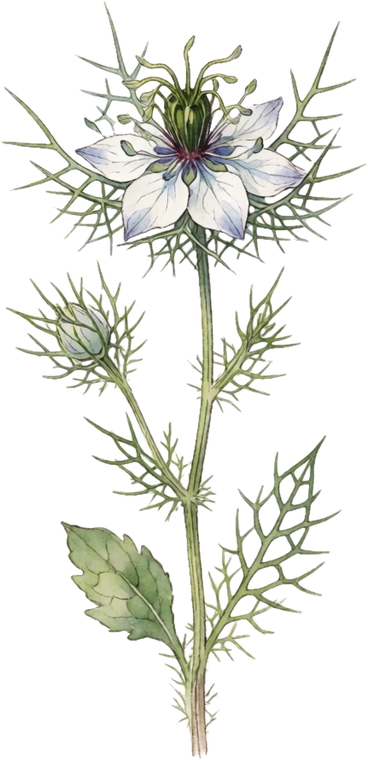
Love-in-a-mist plays two acts and steals both — jewel-blue flowers floating in a haze of thread-fine green, then those unmistakable balloon pods, striped in maroon, that florists fight over fresh and dried. Few annuals leave behind something as beautiful as their bloom.
A cool-season cottage classic, it settles wherever seed touches bare ground and returns faithfully for years without becoming a nuisance, feeding bees along the way. Note this is the ornamental nigella, not the culinary black cumin — grow it for the vase. Every cutting garden deserves its mist.
 Full Sun
 Low water
 Fast growth
 Attracts bees
 None winter chill
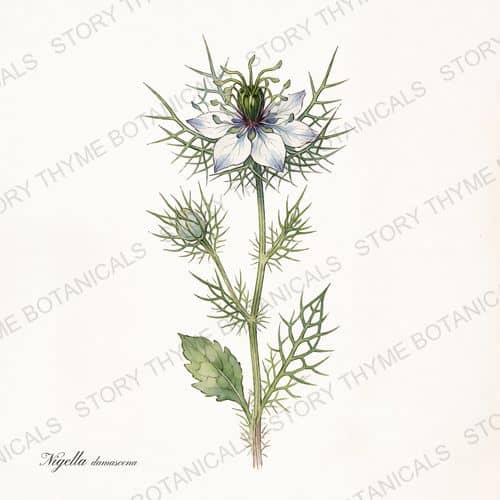
From the print shop
Growing love-in-a-mist? Hang it.
Our Plant Library collection carries love-in-a-mist — Nigella damascena, print Nº 285, “Love-in-a-Mist.”
526 designsfrom $12.99white or black backgroundmatte poster, unframed
Will it fruit where you are?
Enter your ZIP — we look up your USDA hardiness zone (2023 map) and check it against what love-in-a-mist actually needs.
 Life cycleAnnual
Love-in-a-Mist · Common problems
Common love-in-a-mist problems

Pests
1 problem on file
- Almost none

Diseases
1 problem on file
- Almost none
Love-in-a-Mist · Growing & propagation
Growing love-in-a-mist
- Light
- Full Sun
- Water
- Low-Moderate
 Soil
Soil- Well-drained, average · pH 6.0 - 7.5
 Fertilizer
- None
 Pruning
- Direct-sow; leave some pods to dry
Ethereal blue flowers cradled in a fine ferny 'mist' of foliage, followed by wonderfully ornamental balloon-like striped seed pods that are a florist's favorite fresh or dried. Direct-sow in fall or early spring (it hates transplanting), and it self-sows to return every year. A cool-season charmer — it fades in summer heat after setting its coveted pods.
 Spacing
- 6-8 in
How to plant & propagate love-in-a-mist
 Maturity
- 65-85 days
 From seed
- Direct-sow fall/early spring (dislikes transplant); self-sows
- Propagate
- From seed
Love-in-a-Mist · Calculators & field guides
A little help in the garden.
Love-in-a-Mist · Yearly calendar
The love-in-a-mist year, month by month
Jan
No calendar activity is listed for this month.
 Bloom
BloomBloomMay to June
What each band means
- Bloom — flowers open — pollinators working, frost on blossoms is the danger.
These are the species' typical months — expect them a few weeks earlier in warm zones and later in cold ones. Watch the plant, not just the calendar.
Love-in-a-Mist · Ecology & uses
Ecology & uses
Nigella damascena
Love-in-a-Mist in the garden system
- Herbaceous layer annual
- Nectary/insectary
 Attracts
- Bees
 Moisture
- Upland / dry
 Deer
Deer- Browsed
Protect young plants
 Origin
- Introduced
What love-in-a-mist is grown for
! Some parts toxic — see notesSeeds of this species not for eating (the culinary black cumin is N. sativa) — grown ornamentally
 Use
Use- Cottage flower
- Use
- Dried pods
- Use
- Self-sowing
- Use
- Cut flower
Harvesting & storing love-in-a-mist
Ornamental; the inflated striped SEED PODS are prized in fresh and dried arrangements. About 65-85 days from planting.
Edibility, identification, and traditional-use notes here are general reference — not medical or veterinary advice, and not a claim that any plant treats or prevents anything. Medicinal ratings record how strongly a plant features in herbal tradition, nothing more. Never eat or dose a plant you have not positively identified. More on how to use this library.
Love-in-a-Mist · Varieties & cultivars
Choosing a love-in-a-mist variety
'Miss Jekyll' (blue); 'Persian Jewels' (mix); 'Albion' (white, big pods)
Sources & plant identity
Know what you’re growing.
See where the knowledge comes from.
Love-in-a-Mist
Nigella damascena
The plant, at a glance.
- Botanical name
- Nigella damascena
- Plant family
- Ranunculaceae
- Growth habit
- Annual
- Origin
- Introduced
- USDA plant symbol
- NIDA
- Invasive risk
- Low
Hardiness, size and timing vary with your cultivar, soil and climate.
Rooted in research.
University extension research, brought together with hands-on growing experience at Story Thyme Farms.
Questions
Love-in-a-Mist questions, answered straight.
Is love-in-a-mist safe for kids and pets?
With care. Seeds of this species not for eating (the culinary black cumin is N. sativa) — grown ornamentally Site it accordingly if children or pets roam the garden. This is general reference, not medical or veterinary advice — call a vet or poison control if something has actually been eaten.
When do you harvest love-in-a-mist?
Ornamental; the inflated striped SEED PODS are prized in fresh and dried arrangements. From planting, expect about 65-85 days to maturity.
How do you propagate love-in-a-mist?
From seed.
Elsewhere
Where love-in-a-mist sits in the library.
 Sunflower
 Zinnia
 Peony
Peony Daylily