Hawthorn
Crataegus viridis 'Winter King'
Family Rosaceae
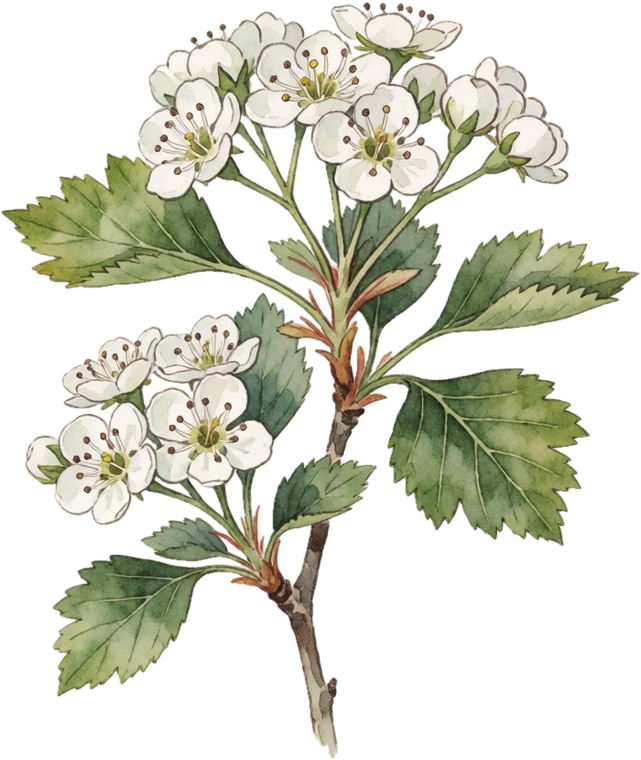
Four seasons, one small tree: Hawthorn opens in clouds of white spring bloom, ripens persistent red haws that glow against winter branches, and shows off silvery bark in between. The haws themselves are an old country harvest — jelly and heart-tonic tea — as long as the seeds go in the compost, not the pot.
Bees mob the flowers; birds live off the berries deep into winter. 'Winter King' is the disease-resistant pick, a tough, adaptable native that tops out around 20 to 30 feet and asks almost nothing. Give it full sun away from the path — most hawthorns carry thorns — and it repays you year-round.
 Full Sun
 Low water
 Slow-Moderate growth
 Native to North America
 Attracts bees
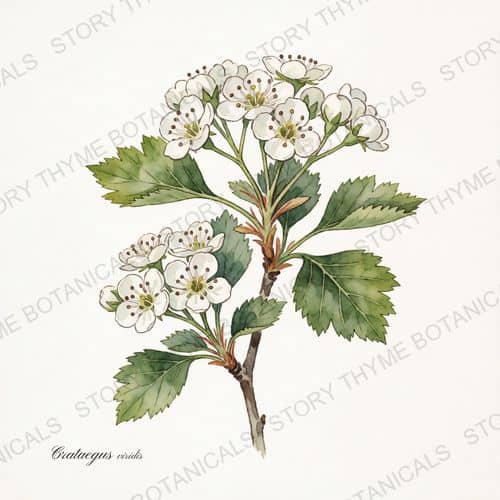
From the print shop
Growing hawthorn? Hang it.
Our Plant Library collection carries hawthorn — Crataegus viridis, print Nº 227, “Hawthorn.”
526 designsfrom $12.99white or black backgroundmatte poster, unframed
Will it fruit where you are?
Enter your ZIP — we look up your USDA hardiness zone (2023 map) and check it against what hawthorn actually needs.
 Hardy inZones 4-7
Hawthorn · Common problems
Common hawthorn problems

Pests
7 problems on file
- Almost none on resistant types
- Codling Moth
- Plum Curculio
- Eastern Tent Caterpillar
- Sawflies
- Periodical Cicada
- Lace Bugs

Diseases
4 problems on file
- Cedar-Hawthorn Rust
- Fireblight (choose resistant 'Winter King')
- Apple Scab
- Cedar-Apple Rust
Hawthorn · Growing & propagation
Growing hawthorn
- Light
- Full Sun
- Water
- Low-Moderate
Very adaptable, tough
 Soil
Soil- Any, even poor/clay · pH 6.0 - 7.5
 Fertilizer
- None needed
 Pruning
- Late Winter
Thorny (some cultivars less so); train up for a small ornamental tree. Very tough and adaptable.
 Spacing
- 15-20 ft
How to plant & propagate hawthorn
- Propagate
- Seed (stratify), cuttings, or layering
Hawthorn · Seasonal care & spray guidance
The hawthorn growing playbook
When to spray hawthorn
Growing season. Resistant cultivars skip the spray.
Hawthorn · Calculators & field guides
A little help in the garden.
Hawthorn · Yearly calendar
The hawthorn year, month by month
Jan
HarvestSeptember to February
 BloomPrune
 Harvest
BloomMarch to May
PruneFebruary to March
HarvestSeptember to February
What each band means
- Bloom — flowers open — pollinators working, frost on blossoms is the danger.
- Prune — shape it now — cuts heal cleanly and structure is visible.
- Harvest — picking time — check ripeness every few days.
These are the species' typical months — expect them a few weeks earlier in warm zones and later in cold ones. Watch the plant, not just the calendar.
Hawthorn · Ecology & uses
Ecology & uses
Crataegus viridis 'Winter King'
Hawthorn in the garden system
- Understory layer tree
- Nectary/insectary
- Keystone: Keystone — hosts 160+ caterpillar species
 Attracts
- Bees, Birds
 Moisture
- Upland / dry
 Deer
Deer- Browsed
Protect young plants
- Origin
- Native to North America
What hawthorn is grown for
! Some parts toxic — see notesHaws edible (jelly/tea); SEEDS toxic (as all Prunus/Rosaceae kin) — don't crush
- Use
- Bird berries
- Traditional use
- Heart-tonic haws
- Use
- Four-season small tree
- Edible value
- 3/5
Harvesting & storing hawthorn
Fall/Winter: persistent red 'haws' (berries) feed birds; edible, used for jelly and heart-tonic tea.
Edibility, identification, and traditional-use notes here are general reference — not medical or veterinary advice, and not a claim that any plant treats or prevents anything. Medicinal ratings record how strongly a plant features in herbal tradition, nothing more. Never eat or dose a plant you have not positively identified. More on how to use this library.
Hawthorn · Varieties & cultivars
Choosing a hawthorn variety
'Winter King' (green hawthorn, disease-resistant, silvery bark, big red haws — the best); cockspur, Washington hawthorn
Sources & plant identity
Know what you’re growing.
See where the knowledge comes from.
Hawthorn
Crataegus viridis 'Winter King'
The plant, at a glance.
- Botanical name
- Crataegus viridis 'Winter King'
- Plant family
- Rosaceae
- Growth habit
- Tree · Perennial
- Origin
- Native to North America
- USDA plant symbol
- CRVI2
- Invasive risk
- Low
Hardiness, size and timing vary with your cultivar, soil and climate.
Rooted in research.
University extension research, brought together with hands-on growing experience at Story Thyme Farms.
Questions
Hawthorn questions, answered straight.
Is hawthorn safe for kids and pets?
With care. Haws edible (jelly/tea); SEEDS toxic (as all Prunus/Rosaceae kin) — don't crush Site it accordingly if children or pets roam the garden. This is general reference, not medical or veterinary advice — call a vet or poison control if something has actually been eaten.
When do you harvest hawthorn?
Fall/Winter: persistent red 'haws' (berries) feed birds; edible, used for jelly and heart-tonic tea.
How do you propagate hawthorn?
Seed (stratify), cuttings, or layering.
Elsewhere
Where hawthorn sits in the library.
 Flowering Dogwood
 Eastern Redbud
 Crape Myrtle
 Maple
Maple