Eastern Hemlock
Tsuga canadensis
Family Pinaceae
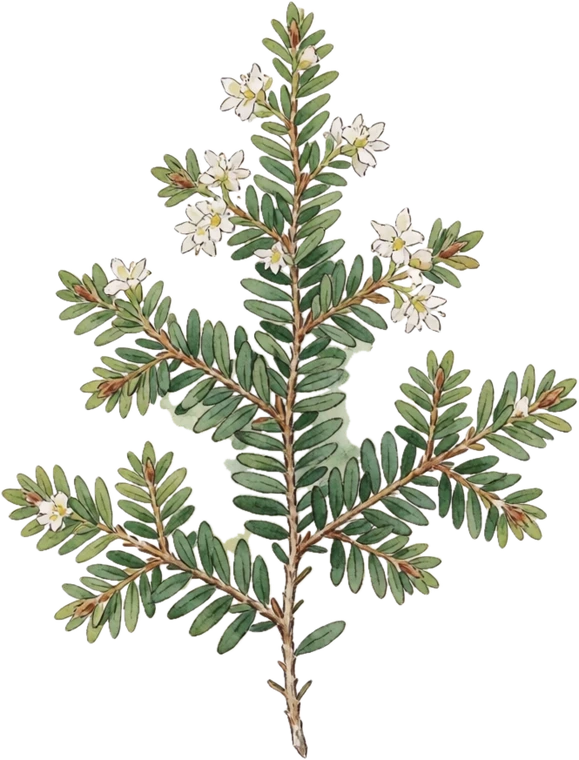
Graceful in a way no spruce ever manages, eastern hemlock drapes soft, feathery needles from gently drooping branches — the evergreen for shade, where nearly every other conifer refuses to grow. Left alone it becomes a cathedral tree; clipped, it makes the softest, finest hedge in the trade.
Birds shelter and feed in it year-round, and it thrives in the cool, moist, wind-sheltered corners many yards have going spare. It comes with one honest condition: the woolly adelgid is ravaging wild hemlocks, so plant it only where you'll keep watch. Do that, and you're growing an heirloom.
 Part Shade to Shade
 Moderate water
 Slow-Moderate growth
 Native to North America
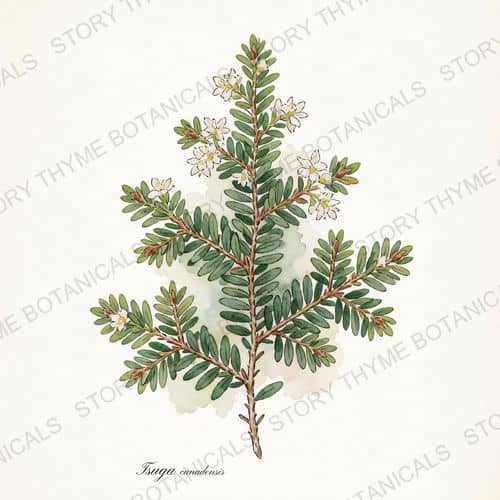
From the print shop
Growing eastern hemlock? Hang it.
Our Plant Library collection carries eastern hemlock — Tsuga canadensis, print Nº 160, “Eastern Hemlock.”
526 designsfrom $12.99white or black backgroundmatte poster, unframed
Will it thrive where you are?
Enter your ZIP — we look up your USDA hardiness zone (2023 map) and check it against what eastern hemlock actually needs.
 Hardy inZones 3-7
Eastern Hemlock · Common problems
Common eastern hemlock problems

Pests
2 problems on file
- Hemlock Woolly Adelgid (the major threat — white cottony masses)
- Spider Mites in heat

Diseases
2 problems on file
- Needle Blight in poor air flow
- Winter Burn
Eastern Hemlock · Growing & propagation
Growing eastern hemlock
- Light
- Part Shade to Shade
One of the few shade-tolerant conifers
- Water
- Moderate
Cool, moist; hates drought, heat, and wind
 Soil
Soil- Rich, moist, acid, well-drained · pH 5.0 - 6.0
 Fertilizer
- None
 Pruning
- Late Winter
Shears beautifully into a soft hedge — A graceful, soft-needled native evergreen that (unusually) thrives in shade and makes one of the most beautiful clipped hedges of any conifer. Wants cool, moist, sheltered, acid conditions — it suffers in heat, drought, and wind. SERIOUS THREAT: the hemlock woolly adelgid (tiny white 'cotton' on needle undersides) is devastating wild hemlocks; plant only where you'll monitor and treat it.
 Spacing
- 20-30 ft
Or sheared as a hedge
How to plant & propagate eastern hemlock
- Propagate
- Seed (stratify), cuttings, or layering
Eastern Hemlock · Seasonal care & spray guidance
The eastern hemlock growing playbook
When to spray eastern hemlock
Dormant season. Horticultural oil for adelgid in fall/spring where present.
Growing season. Adelgid control (oil or systemic) is essential in infested regions — do not plant untended in adelgid country.
Eastern Hemlock · Calculators & field guides
A little help in the garden.
Eastern Hemlock · Yearly calendar
The eastern hemlock year, month by month
Jan
No calendar activity is listed for this month.
 BloomPrune
BloomMarch to May
PruneFebruary to March
What each band means
- Bloom — flowers open — pollinators working, frost on blossoms is the danger.
- Prune — shape it now — cuts heal cleanly and structure is visible.
These are the species' typical months — expect them a few weeks earlier in warm zones and later in cold ones. Watch the plant, not just the calendar.
Eastern Hemlock · Ecology & uses
Ecology & uses
Tsuga canadensis
Eastern Hemlock in the garden system
- Canopy layer tree
 Attracts
- Birds
 Habitat
- Woodland
- Moisture
- Facultative / average
 Deer
Deer- Browsed
Protect young plants
- Origin
- Native to North America
What eastern hemlock is grown for
! Some parts toxic — see notesMildly toxic to livestock (needles); this is the tree, not the poison hemlock plant
 Use
Use- Shade evergreen
- Use
- Soft hedges
- Use
- Native
Adelgid-aware
Edibility, identification, and traditional-use notes here are general reference — not medical or veterinary advice, and not a claim that any plant treats or prevents anything. Medicinal ratings record how strongly a plant features in herbal tradition, nothing more. Never eat or dose a plant you have not positively identified. More on how to use this library.
Eastern Hemlock · Varieties & cultivars
Choosing a eastern hemlock variety
Species; 'Sargentii' (weeping); dwarf cultivars for gardens
Sources & plant identity
Know what you’re growing.
See where the knowledge comes from.
Eastern Hemlock
Tsuga canadensis
The plant, at a glance.
- Botanical name
- Tsuga canadensis
- Plant family
- Pinaceae
- Growth habit
- Tree · Perennial
- Origin
- Native to North America
- USDA plant symbol
- TSCA
- Invasive risk
- Low
Hardiness, size and timing vary with your cultivar, soil and climate.
Rooted in research.
University extension research, brought together with hands-on growing experience at Story Thyme Farms.
Where to buy
Third-party nurseries — not Story Thyme Farms.
Third-party nurseries, not Story Thyme Farms. Prices are theirs.
Story Thyme Farms may earn a small commission from these links, at no cost to you — it never changes what we recommend.
Questions
Eastern Hemlock questions, answered straight.
Is eastern hemlock safe for kids and pets?
With care. Mildly toxic to livestock (needles); this is the tree, not the poison hemlock plant Site it accordingly if children or pets roam the garden. This is general reference, not medical or veterinary advice — call a vet or poison control if something has actually been eaten.
How do you propagate eastern hemlock?
Seed (stratify), cuttings, or layering.
Elsewhere
Where eastern hemlock sits in the library.
 Black Locust
 Sassafras
 Northern Catalpa
 American Sycamore