Clematis
Clematis hybrids & species
Family Ranunculaceae
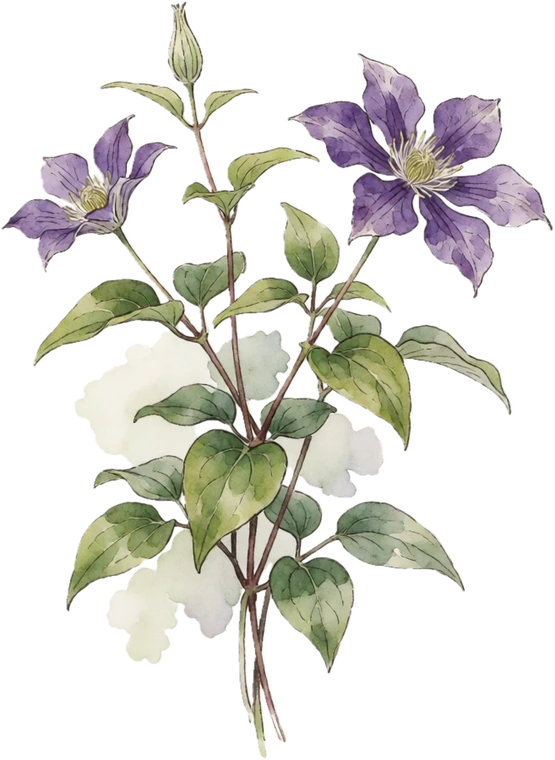
Clematis is the queen of vines for a reason: flowers the size of saucers, or bells, or starry sprays, poured over a trellis in quantities no other climber matches. From six-foot mailbox types to twenty-foot wall-swallowers, there's a hybrid for every vertical surface you own.
It climbs politely — twining leaf stems, no sticky pads, no wall damage — and partners famously with roses, hiding their bare knees. Expect the old rhythm: sleep, creep, then a third-year leap that repays the wait. Pets shouldn't nibble it. Give the mailbox its crown.
 HEAD in sun
 Moderate water
 Slow start growth
 Attracts bees
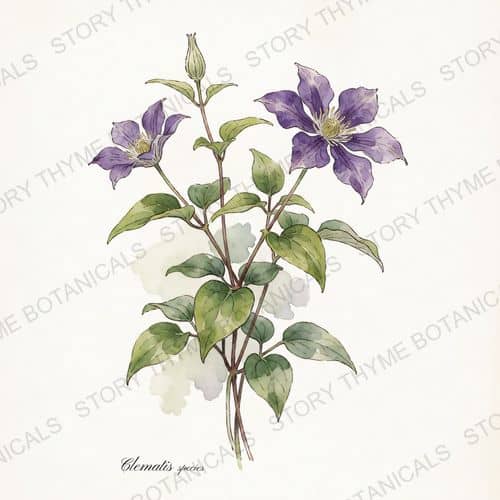
From the print shop
Growing clematis? Hang it.
Our Plant Library collection carries clematis — Clematis species, print Nº 115, “Clematis.”
526 designsfrom $12.99white or black backgroundmatte poster, unframed
Will it fruit where you are?
Enter your ZIP — we look up your USDA hardiness zone (2023 map) and check it against what clematis actually needs.
 Hardy inZones 4-9
Clematis · Common problems
Common clematis problems

Pests
1 problem on file
- Earwigs in blooms

Diseases
1 problem on file
- CLEMATIS WILT (Group 2 curse — a stem collapses overnight; cut below soil, it usually regrows) — plant 3 in DEEPER than the pot to insure against it
Clematis · Growing & propagation
Growing clematis
- Light
- HEAD in sun, FEET in shade
Shade the root zone with a flagstone or shrub
- Water
- Moderate, consistent
 Soil
Soil- Rich, drained, LIMED · pH 6.5 - 7.5
 Fertilizer
- Rose food monthly in season
Clematis are hungry
 Pruning
- Group 1 (spring bloomers): after bloom only. Group 2 (big June hybrids): light tidy. Group 3 (late, viticella/jackmanii): CUT TO 12 IN every March
Easiest — KNOW YOUR GROUP — the tag says 1/2/3 and it's the difference between armloads and bare wire.
 Spacing
- 3 ft from support
Clematis · Seasonal care & spray guidance
The clematis growing playbook
When to spray clematis
Growing season. Deep planting + Group 3 choices sidestep the wilt drama entirely.
Clematis · Calculators & field guides
A little help in the garden.
Clematis · Yearly calendar
The clematis year, month by month
Jan
No calendar activity is listed for this month.
 BloomPrune
BloomMay to September
PruneMarch to June
What each band means
- Bloom — flowers open — pollinators working, frost on blossoms is the danger.
- Prune — shape it now — cuts heal cleanly and structure is visible.
These are the species' typical months — expect them a few weeks earlier in warm zones and later in cold ones. Watch the plant, not just the calendar.
Clematis · Ecology & uses
Ecology & uses
Clematis hybrids & species
Clematis in the garden system
- Vine layer vine
 Attracts
- Bees
- Moisture
- Facultative / average
 Deer
Deer- Browsed
Protect young plants
 Origin
- Introduced
What clematis is grown for
! Some parts toxic — see notesToxic to pets (mouth irritant)
 Use
Use- Mailboxes/trellises
- Use
- Rose companions
- Use
- Vertical color
Edibility, identification, and traditional-use notes here are general reference — not medical or veterinary advice, and not a claim that any plant treats or prevents anything. Medicinal ratings record how strongly a plant features in herbal tradition, nothing more. Never eat or dose a plant you have not positively identified. More on how to use this library.
Clematis · Varieties & cultivars
Choosing a clematis variety
Group 3 workhorses: 'Jackmanii' (the purple classic), 'Polish Spirit', 'Ville de Lyon'; sweet autumn (fragrant SEPTEMBER blanket — check invasiveness locally)
Sources & plant identity
Know what you’re growing.
See where the knowledge comes from.
Clematis
Clematis hybrids & species
The plant, at a glance.
- Botanical name
- Clematis hybrids & species
- Plant family
- Ranunculaceae
- Growth habit
- Vine · Perennial
- Origin
- Introduced
- USDA plant symbol
- CLEMA
- Invasive risk
- Low
Hardiness, size and timing vary with your cultivar, soil and climate.
Rooted in research.
University extension research, brought together with hands-on growing experience at Story Thyme Farms.
Questions
Clematis questions, answered straight.
Is clematis safe for kids and pets?
With care. Toxic to pets (mouth irritant) Site it accordingly if children or pets roam the garden. This is general reference, not medical or veterinary advice — call a vet or poison control if something has actually been eaten.
Elsewhere
Where clematis sits in the library.
 Sweet Pea
 Morning Glory
 Wisteria
 Coral Honeysuckle