Bok Choy

Brassica rapa subsp. chinensis

Family Brassicaceae

Annual annualZones 2-11

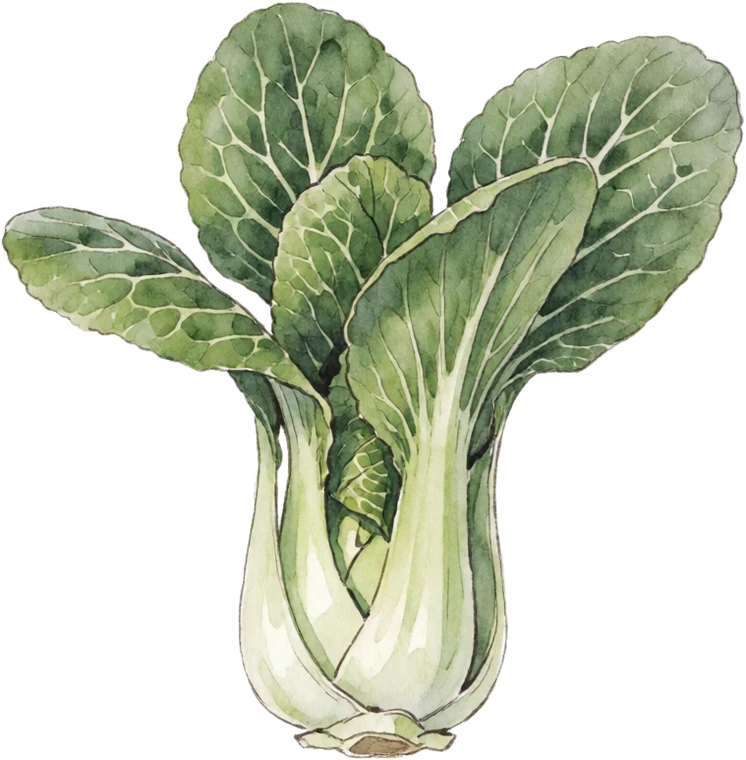
Botanical illustration of Bok Choy

Bok choy is the fastest brassica to the table — baby heads in about a month, crisp juicy stems and tender greens that make a stir-fry out of nearly nothing. The fall crop, cut September through November, is twice the vegetable with none of the drama.

Small enough for pots and bed edges — eight to eighteen inches — it takes part shade and cool weather in stride, and bees find any plant that flowers. It fills the gap between sowings faster than almost anything. Keep a packet going and never face an empty wok.

Where to buy bok choy — 2 nurseries compared

  • Full Sun to Part Shade
  • Moderate water
  • Very Fast growth
  • Excellent edible
  • Attracts bees
  • None winter chill
Bok Choy — a print from the Plant Library collection

From the print shop

Growing bok choy? Hang it.

Our Plant Library collection carries bok choy — Brassica rapa, print Nº 67, “Bok Choy.”

526 designsfrom $12.99white or black backgroundmatte poster, unframed

Shop Plant Library botanical prints →

✓

Will it fruit where you are?

Enter your ZIP — we look up your USDA hardiness zone (2023 map) and check it against what bok choy actually needs.

Life cycleAnnual
Winter chillNone

Bok Choy · Common problems

Common bok choy problems

Pests, diseases and weather to keep an eye on.

Pests

5 problems on file

Diseases

1 problem on file

Bok Choy · Growing & propagation

Growing bok choy

Light, water, soil, propagation and the season’s jobs.
What it needsThe details
Light
Full Sun to Part Shade
Water
Steady

Stress = instant bolt

Soil
Rich, moist · pH 6.0 - 7.5
Fertilizer
Nitrogen-forward at planting
Pruning
None

Cut whole heads at the base, or split harvest: outer stalks first.

Spacing
6-10 in

How to plant & propagate bok choy

Maturity
45-60 days
From seed
Direct-sow spring or fall

Bolt-prone in spring heat

Propagate
From seed

Bok Choy · Seasonal care & spray guidance

The bok choy growing playbook

Field-tested instructions for every job bok choy asks of you, compiled from university extension guidance — in the order the season brings them.

When to spray bok choy

Growing season. Row cover from day one — flea beetles adore it.

As growth begins

early spring

3 jobs
SowingIn spring

Spring sowing: get it up fast, and watch the cold nights

Sow seed a quarter to a half inch deep in fertile, well-drained soil at pH 6.0 to 7.5, three seeds every 12 inches for dwarf varieties or every 18 inches for full-size heads, then thin to one plant per spot. Work compost or well-rotted manure in beforehand, and skip fresh manure. Bok choy is a fast, shallow-sown brassica that wants steady moisture and fertility to size up before heat arrives, and crowded plants stall into small, tough heads.

Planting outIn spring

Set out young - a rootbound start means a bolted crop

Start seed in 72- or 128-cell trays 2 to 4 weeks before setting out, and transplant while the roots still fill the cell loosely. Do not set out seedlings that are rootbound, wilted, or have been sitting stressed in the tray. Transplant stress and rootbound roots both read to the plant as the end of its vegetative life, and it responds by throwing a seedstalk instead of a head.

ProtectionIn spring

Row cover at planting, before the maggot flies are up

Lay a lightweight floating row cover over the bed at sowing or transplanting and seal the edges to the soil with pins or buried soil, or hoop it into a low tunnel. It must be on before the cabbage maggot flies begin flying - locally, that is about when yellow rocket blooms. The cover is a physical barrier: cabbage maggot flies cannot reach the soil to lay eggs, and flea beetles cannot reach the cotyledons. There is no rescue treatment once maggots are in the roots, so exclusion is the whole game.

Through summer

the growing season

4 jobs
SowingIn summer

Sow the fall crop in midsummer - this is the crop that works

Sow again in midsummer so the plants size up as days shorten and nights cool. Same depth and spacing as spring. Keep the seedbed damp; summer soil dries out fast and a checked seedling never recovers its vigor. Maturing into shortening days and cooling temperatures sidesteps the cold-then-warm swing that triggers bolting, which is why fall is the dependable bok choy season in most of the country.

FeedingThrough summer

Starter at planting, side-dress three weeks on

Use a starter fertilizer when you transplant, then side-dress about three weeks later, watering it in so it reaches the roots. Bok choy is a medium-feeder: its nutrients can come from soil organic matter or from fertilizer. Bok choy is a succulent leafy crop with a medium nutrient demand and a 45-to-50-day run; the nitrogen has to arrive while the leaves are still expanding or you get small, fibrous stalks.

What to watch forThrough summer

Flea beetles: the cotyledon stage is when they matter

Check seedlings for tiny jumping beetles and their shotgun-hole feeding. At the cotyledon stage, treat if you find one beetle per transplant, or five beetles across ten transplants. Once plants are past 4 to 5 true leaves they tolerate far more feeding - the threshold rises to about 4 beetles per plant at 3-6 inches tall and 8 per plant above that - so established plants rarely need anything. Flea beetles overwinter as adults in debris and move in from cruciferous weeds in spring; a seedling has so little leaf area that the same feeding that a mature plant shrugs off will kill it outright.

SprayingThrough summer

Cabbageworms: Bt while the caterpillars are small

Sample 25 plants weekly from emergence, looking for velvety green caterpillars and greenish-brown fecal pellets. On young plants, treat at about one caterpillar per five plants. Spray Bacillus thuringiensis and cover the leaf undersides and the center of the plant where they feed. Bt has to be eaten to work and only kills early-instar larvae, so it is very effective on young caterpillars and nearly useless on big ones - the timing, not the product, decides the result.

Harvest time

as it ripens, and picking

1 job
HarvestingAt harvest

Cut at 10 to 15 leaves, before it thinks about flowering

Cut the whole plant off at soil level once it carries 10 to 15 leaves - roughly 40 to 50 days from seeding. Dwarf types are ready around 6 inches, full-size around 12. You can also pick individual outer leaves as you need them and leave the plant standing. Held past maturity the plant turns bitter and then bolts, and a bolting plant pours its sugars into the seedstalk rather than the stems you are growing it for.

Bok Choy · Calculators & field guides

A little help in the garden.

Calculators for the figures. Field guides for the hands-on work.

Bok Choy · Yearly calendar

The bok choy year, month by month

What bok choy asks for, month by month.

Jan

No calendar activity is listed for this month.

MonthJanFebMarAprMayJunJulAugSepOctNovDec
Harvest

HarvestMay to June, then September to November

What each band means

  • Harvest — picking time — check ripeness every few days.

These are the species' typical months — expect them a few weeks earlier in warm zones and later in cold ones. Watch the plant, not just the calendar.

Bok Choy · Ecology & uses

Ecology & uses

What it does for the garden, and what it is grown for.
Botanical illustration of Bok Choy

Brassica rapa subsp. chinensis

Bok Choy in the garden system

  • Herbaceous layer annual
Attracts
Bees
Moisture
Facultative / average
Deer
Browsed

Protect young plants

Origin
Introduced

What bok choy is grown for

✓ Commonly eaten

Use
Stir-fry
Use
Braising
Use
Baby greens
Edible value
4/5

Harvesting & storing bok choy

May - June; September - November (the calmer season). About 45-60 days from planting.

Edibility, identification, and traditional-use notes here are general reference — not medical or veterinary advice, and not a claim that any plant treats or prevents anything. Medicinal ratings record how strongly a plant features in herbal tradition, nothing more. Never eat or dose a plant you have not positively identified. More on how to use this library.

Bok Choy · Varieties & cultivars

Best bok choy varieties & cultivars

There are far more than these — the ones below are the named varieties of bok choy people actually plant.

Named varieties of bok choy differ in days to maturity, disease resistance, flavor, and habit — pick one that fits your season and space.

5 varieties

Joi Choi

Also known as Joi Choy

Zones
2-11
Size
12-15 inches tall, full size

succulent thick white petioles — Thick flattened white petioles under dark green leaves, with a basal stem nearly double the thickness of Prize Choy. Much less likely to bolt in fall.

Where to buy ‘Joi Choi’

Story Thyme Farms may earn a small commission from these links, at no cost to you — it never changes what we recommend.

Sources & plant identity

Know what you’re growing.
See where the knowledge comes from.

Botanical illustration of Bok Choy

Bok Choy

Brassica rapa subsp. chinensis

The plant, at a glance.

Botanical name
Brassica rapa subsp. chinensis
Plant family
Brassicaceae
Growth habit
Annual
Origin
Introduced
USDA plant symbol
BRRA
Invasive risk
Low
Every garden is different.

Hardiness, size and timing vary with your cultivar, soil and climate.

Rooted in research.

University extension research, brought together with hands-on growing experience at Story Thyme Farms.

Explore Bok Choy’s sources12 reference links
for Bok Choy

Research from these sources

Publisher marks identify sources, not sponsorship or endorsement.

Questions

Bok Choy questions, answered straight.

Is bok choy safe for kids and pets?

Bok Choy is commonly eaten and isn't considered toxic, but "commonly eaten" isn't a guarantee for any particular person or animal — allergies, quantity, and which part you eat all matter. Never eat a plant you haven't positively identified, and check with a vet before letting pets or livestock graze anything new.

When do you harvest bok choy?

May - June; September - November (the calmer season). From planting, expect about 45-60 days to maturity.

How do you propagate bok choy?

From seed.

Elsewhere

Where bok choy sits in the library.

Where bok choy sits in the library

Grows in the same world