Bloody Dock (Red-Veined Sorrel)

Rumex sanguineus

Family Polygonaceae

PerennialZones 4-8

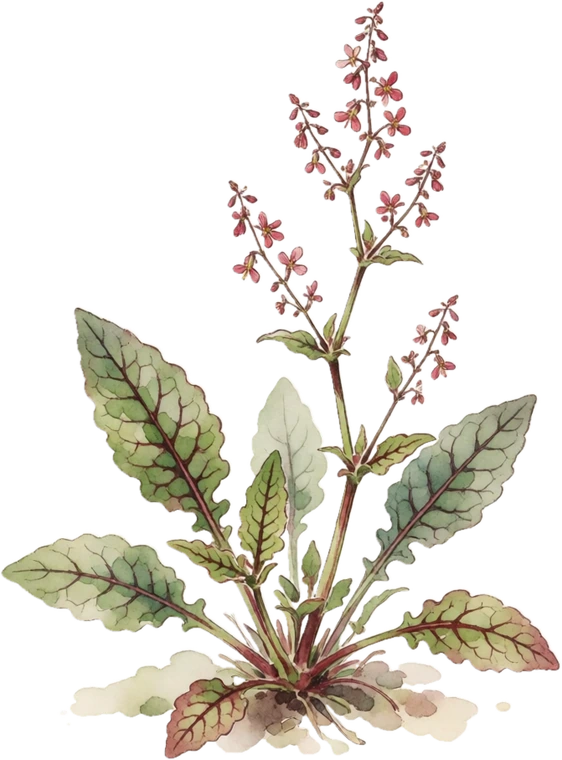
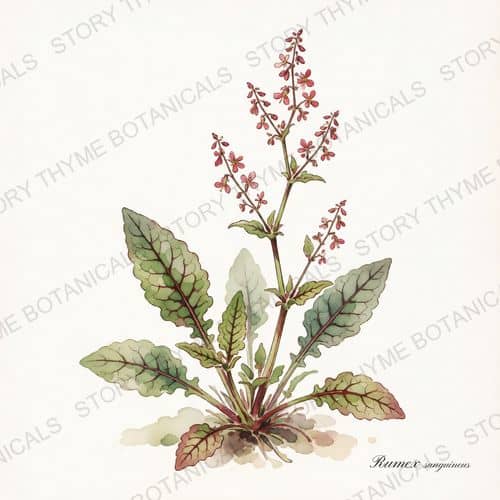
Botanical illustration of Bloody Dock (Red-Veined Sorrel)

Few edibles stop people mid-stride, but bloody dock does — every green leaf inked with veins of deep blood-red, vivid enough to edge a flower bed or star in a container. The flavor matches the drama in miniature: a bright, lemony sorrel tang that wakes up a salad as a garnish.

A tidy perennial at 12 to 18 inches, it offers young leaves nearly year-round and pleases bees when it blooms. Like all sorrels it's rich in oxalic acid — a seasoning green, not a spinach stand-in by the bowlful. Plant it where the foliage gets the admiration it invites.

Where to buy the plant — 1 nursery

  • Full Sun to Part Shade
  • Moderate water
  • Fast growth
  • Excellent edible
  • Attracts bees
Bloody Dock (Red-Veined Sorrel) — a print from the Plant Library collection

From the print shop

Growing bloody dock (red-veined sorrel)? Hang it.

Our Plant Library collection carries bloody dock (red-veined sorrel) — Rumex sanguineus, print Nº 63, “Bloody Dock (Red-Veined Sorrel).”

526 designsfrom $12.99white or black backgroundmatte poster, unframed

Shop Plant Library botanical prints →

✓

Will it fruit where you are?

Enter your ZIP — we look up your USDA hardiness zone (2023 map) and check it against what bloody dock (red-veined sorrel) actually needs.

Hardy inZones 4-8

Bloody Dock (Red-Veined Sorrel) · Common problems

Common bloody dock (red-veined sorrel) problems

Pests, diseases and weather to keep an eye on.

Pests

1 problem on file

  • Almost none

Diseases

1 problem on file

  • Almost none

Bloody Dock (Red-Veined Sorrel) · Growing & propagation

Growing bloody dock (red-veined sorrel)

Light, water, soil, propagation and the season’s jobs.
What it needsThe details
Light
Full Sun to Part Shade
Water
Moderate

Keep evenly moist for tender leaves

Soil
Rich, moist · pH 6.0 - 7.0
Fertilizer
Light compost in spring
Pruning
Cut flower stalks; tidy in spring

One of the most ornamental edibles there is — vivid crimson veins on green leaves. Cut the flower stalks to keep leaves young and mild; older leaves toughen and grow bitter. Self-sows.

Spacing
8-12 in

How to plant & propagate bloody dock (red-veined sorrel)

Maturity
perennial
From seed
Sow spring

Ornamental-edible; self-sows

Propagate
From seed or division

Bloody Dock (Red-Veined Sorrel) · Seasonal care & spray guidance

The bloody dock (red-veined sorrel) growing playbook

Field-tested instructions for every job bloody dock (red-veined sorrel) asks of you, compiled from university extension guidance — in the order the season brings them.

As growth begins

early spring

5 jobs
SowingIn spring

Direct sow in spring

Sow seed directly into the ground in spring once the soil can be worked. Plants form a tightly packed basal rosette about a foot tall and spread steadily from there, so give them room. Bloody dock is a cool-season perennial that establishes its basal rosette in spring while soil is moist and temperatures are mild, which is also when the leaves are at their most tender and least bitter.

FeedingIn spring

One feeding a year, in spring

Fertilize once annually in spring as growth resumes. This plant is not a heavy feeder and needs nothing further through the season. Bloody dock is grown for a continuous flush of young leaves, and a single spring feeding as the rosette rebuilds carries it through the year without pushing the soft growth that invites rust and mildew.

DividingIn spring

Divide the clumps in early spring

Lift and divide established clumps by root division in early spring. This is the simplest way to make more plants and to keep an aging clump vigorous. The plant is a clump-forming perennial that spreads continuously, and division renews a crowded center while giving you new plants without letting it flower and self-seed.

PruningIn spring

Clear last year's foliage before new leaves emerge

In spring, before the new leaves push up, cut away and remove the old tattered foliage from the previous season. This is one of only two jobs the plant genuinely asks for in a year. The crown regrows from the center each spring, and old collapsed foliage sitting on it holds moisture against the new growth and hides the slugs that will graze the first tender leaves.

What to watch forIn spring

Watch for slugs on the new leaves, plus rust and mildew

Check the new spring growth for slug damage, along with rust and powdery mildew on the foliage. Lay a board or moistened newspaper as a trap and clear it each morning, water early in the day so leaves and soil dry out, and space plants for air movement. If you need a bait, iron phosphate is the one to use. Slugs shelter in damp cover overnight and graze the tender young leaves that are the entire point of this crop, and the moist soil bloody dock prefers is exactly the condition that keeps them and the foliar fungi active.

While it flowers

at bloom

1 job
PruningAt bloom

Cut the flower spikes as they rise

As soon as the tall flower stalks appear, cut them out at the base. If you do let a plant flower and set seed, cut it back hard afterward to rejuvenate it. The inflorescence is not ornamental and pulls the plant's energy into seed instead of leaf. Removing it forces bushier basal growth and keeps the leaves coming, and it stops the self-seeding that lets this plant turn weedy and escape the bed.

Harvest time

as it ripens, and picking

1 job
HarvestingAt harvest

Pick the young leaves and keep picking

Take the young, tender leaves for salads and let the plant keep producing. Young leaves are good raw or cooked. Older leaves turn bitter and tough, so pick them small rather than waiting for size. Leaf quality falls off sharply with age in this species — older leaves go bitter and tough — so the harvest window on any given leaf is short and repeated picking of small leaves is what keeps the crop worth eating.

Bloody Dock (Red-Veined Sorrel) · Calculators & field guides

A little help in the garden.

Calculators for the figures. Field guides for the hands-on work.

Bloody Dock (Red-Veined Sorrel) · Yearly calendar

The bloody dock (red-veined sorrel) year, month by month

What bloody dock (red-veined sorrel) asks for, month by month.

Jan

HarvestJanuary to December

MonthJanFebMarAprMayJunJulAugSepOctNovDec
Bloom
Prune
Harvest

BloomMay to August

PruneMarch to May

HarvestJanuary to December

What each band means

  • Bloom — flowers open — pollinators working, frost on blossoms is the danger.
  • Prune — shape it now — cuts heal cleanly and structure is visible.
  • Harvest — picking time — check ripeness every few days.

These are the species' typical months — expect them a few weeks earlier in warm zones and later in cold ones. Watch the plant, not just the calendar.

Bloody Dock (Red-Veined Sorrel) · Ecology & uses

Ecology & uses

What it does for the garden, and what it is grown for.
Botanical illustration of Bloody Dock (Red-Veined Sorrel)

Rumex sanguineus

Bloody Dock (Red-Veined Sorrel) in the garden system

  • Herbaceous layer perennial
  • Dynamic accumulator
Attracts
Bees
Moisture
Facultative / average
Deer
Browsed

Protect young plants

Origin
Introduced

What bloody dock (red-veined sorrel) is grown for

! Some parts toxic — see notesHigh in oxalic acid — a tart garnish green, not a bulk salad in quantity

Use
Ornamental edging
Use
Tart salad garnish
Use
Containers
Edible value
4/5

Harvesting & storing bloody dock (red-veined sorrel)

Young leaves nearly year-round — lemony, tart, striking green-and-blood-red veined foliage. About perennial from planting.

Edibility, identification, and traditional-use notes here are general reference — not medical or veterinary advice, and not a claim that any plant treats or prevents anything. Medicinal ratings record how strongly a plant features in herbal tradition, nothing more. Never eat or dose a plant you have not positively identified. More on how to use this library.

Bloody Dock (Red-Veined Sorrel) · Varieties & cultivars

Choosing a bloody dock (red-veined sorrel) variety

Match the plant to your climate, season and available space.

Species (the red-veined ornamental dock)

Sources & plant identity

Know what you’re growing.
See where the knowledge comes from.

Botanical illustration of Bloody Dock (Red-Veined Sorrel)

Bloody Dock (Red-Veined Sorrel)

Rumex sanguineus

The plant, at a glance.

Botanical name
Rumex sanguineus
Plant family
Polygonaceae
Growth habit
Perennial
Origin
Introduced
USDA plant symbol
RUSA2
Invasive risk
Low
Other names
Rumex sanguineus (red-veined sorrel, bloodwort)
Every garden is different.

Hardiness, size and timing vary with your cultivar, soil and climate.

Rooted in research.

University extension research, brought together with hands-on growing experience at Story Thyme Farms.

Explore Bloody Dock (Red-Veined Sorrel)’s sources3 reference links
for Bloody Dock (Red-Veined Sorrel)

Research from these sources

Publisher marks identify sources, not sponsorship or endorsement.

Where to buy

Third-party nurseries — not Story Thyme Farms.

Third-party nurseries, not Story Thyme Farms. Prices are theirs.

Story Thyme Farms may earn a small commission from these links, at no cost to you — it never changes what we recommend.

Questions

Bloody Dock (Red-Veined Sorrel) questions, answered straight.

Is bloody dock (red-veined sorrel) safe for kids and pets?

With care. High in oxalic acid — a tart garnish green, not a bulk salad in quantity Site it accordingly if children or pets roam the garden. This is general reference, not medical or veterinary advice — call a vet or poison control if something has actually been eaten.

When do you harvest bloody dock (red-veined sorrel)?

Young leaves nearly year-round — lemony, tart, striking green-and-blood-red veined foliage. From planting, expect about perennial to maturity.

How do you propagate bloody dock (red-veined sorrel)?

From seed or division.

Elsewhere

Where bloody dock (red-veined sorrel) sits in the library.

Where bloody dock (red-veined sorrel) sits in the library

Grows in the same world