Asparagus

Asparagus officinalis

Family Asparagaceae

PerennialZones 3-8

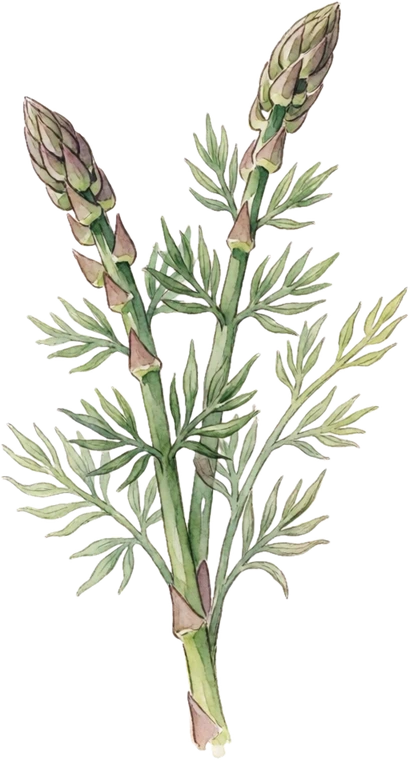
Botanical illustration of Asparagus

Asparagus is the twenty-year promise: plant it once and every April for decades the spears come up on their own, weeks ahead of anything else worth eating. Fresh-cut spears are sweeter and snappier than any rubber-banded bundle, roasted the same evening they broke ground.

After harvest the bed grows into 5-6 foot ferns — a soft green screen for the back of a border all summer. It asks mainly for patience up front and a permanent, sunny home. Site it like you'd site a tree, and your future self eats first every spring.

Where to buy asparagus — 7 nurseries compared

  • Full Sun
  • Moderate water
  • Slow to establish growth
  • Excellent edible
  • Salt-tolerant
  • Needs a pollination partner
  • Juglone-sensitive
Asparagus — a print from the Plant Library collection

From the print shop

Growing asparagus? Hang it.

Our Plant Library collection carries asparagus — Asparagus officinalis, print Nº 35, “Asparagus.”

526 designsfrom $12.99white or black backgroundmatte poster, unframed

Shop Plant Library botanical prints →

✓

Will it fruit where you are?

Enter your ZIP — we look up your USDA hardiness zone (2023 map) and check it against what asparagus actually needs.

Hardy inZones 3-8
PollinationPartner needed

Asparagus · Common problems

Common asparagus problems

Pests, diseases and weather to keep an eye on.

Pests

2 problems on file

Diseases

2 problems on file

  • Fusarium Crown Rot
  • Rust

Pollination

Poor pollination → low fruit set (plant a partner)

Asparagus · Growing & propagation

Growing asparagus

Light, water, soil, propagation and the season’s jobs.
What it needsThe details
Light
Full Sun
Water
Moderate; deep soak in drought

Roots go 6 ft

Soil
Deep, Sandy Loam, Well-drained · pH 6.5 - 7.5
Fertilizer
Balanced in early spring, again after harvest ends.
Pruning
Late Winter

Cut dead ferns to ground AFTER they brown (they feed the crown).

Spacing
18 inches (crowns)

How to plant & propagate asparagus

Propagate
Division or seed

Asparagus · Harvest & keeping

What you get from asparagus

How long before it bears, how much it gives, how you know it is ready, and how long it keeps once picked.
Botanical illustration of Asparagus
Years to first harvest
3 years
Typical yield
3–4 lbs per 10ft row
What you eat
Spears
How to tell it is ready
Harvest 6-8 inch spears

Stop when spear size declines

How long it keeps
3-5 days refrigerated

Asparagus · Seasonal care & spray guidance

The asparagus growing playbook

Field-tested instructions for every job asparagus asks of you, compiled from university extension guidance — in the order the season brings them.

When to spray asparagus

Dormant season. Clean up all fern debris in winter (beetle overwintering).

Growing season. Hand-pick beetles at spear stage; neem if heavy. Let ferns grow all summer untouched.

As growth begins

early spring

3 jobs
Planting outIn spring

Plant crowns in spring, in a deep furrow you fill gradually

As soon as the soil is workable and no longer wet, dig a furrow 6 to 12 inches deep - shallower in clay (6 to 8 inches), deeper in very sandy soil (10 to 12 inches) - and lay one-year-old crowns head-to-toe, bud-up, so buds are 12 inches apart down the row. Space furrows at least 3 feet apart; 4 to 5 feet is typical where you have the room. Cover with only 2 to 3 inches of soil at first, then pull in more soil a few inches at a time as the ferns push up, until the furrow is level by the end of the season. A crown buried all at once in 10 inches of cold soil can exhaust its stored reserves before a shoot ever reaches light, but the same crown will climb out fine if you backfill in stages behind the growing ferns. The depth is what buys you a bed that keeps producing for fifteen years or more.

MulchingIn March and April

Pull mulch back from asparagus

Move heavy winter mulch off the row as spears begin, leaving aisles mulched for weed control. Cool wet mulch over crowns can delay spear emergence; aisles still benefit from weed-smothering mulch.

HarvestingIn April, May and June

Cut asparagus spears

Harvest 6-8 inch spears during the harvest window, then stop and let ferns rebuild the crowns. Stopping harvest protects next year's yield by letting ferns recharge the root system.

Through summer

the growing season

1 job
WateringIn summer

Water the fern, deeply and rarely

In the first two seasons after planting, give the bed 1 to 2 inches of water every other week. From the third year on, an established bed can go about 3 weeks between waterings, but water deeply enough to wet the soil 3 to 4 feet down. Keep it up all summer, long after harvest is over. A mature asparagus root system runs several feet deep, so light frequent sprinkling only wets the top few inches and trains roots shallow. The summer fern is the crop's factory, and a fern that wilts in August is a smaller harvest next April.

Harvest time

as it ripens, and picking

2 jobs
What to watch forAt harvest

Scout for asparagus beetle as the spears come up

From the day the first spears break ground, walk the row on warm sunny afternoons - between noon and 6 p.m., when the beetles are actually out and moving - and look for slate-blue adults, gray grubs, and the dark oval eggs standing on end along the spears. In a garden, act when about 10 percent of plants carry adults, 50 to 75 percent carry larvae, or 20 percent of spears carry eggs. Hand-picking into soapy water handles small beds. The overwintered adults emerge with the first spears and start laying immediately, and the eggs glued to a spear do not wash off - they go to the kitchen with the crop. Scouting in the morning badly undercounts them, because the beetles drop and hide when it is cool.

SprayingAt harvest

Asparagus beetle: carbaryl on spears only if scouting says so

If beetle counts pass threshold during cutting season and hand-picking is not keeping up, spray carbaryl on the spears at the low label rate, and do not reapply within 3 days. No more than 3 applications during the harvest season. Keep spraying to the spear stage - once cutting ends and the ferns go up, switch to cultural control and let the fern canopy alone. Adults feed on the spear tips and lay eggs on the stalks, and larvae hatching in about a week chew the fern later; knocking the first generation back during cutting is what keeps the summer population from building on the ferns.

After harvest

autumn, and putting it to bed

3 jobs
FeedingAfter harvest

Feed the bed the moment you stop cutting

As soon as the last spear is cut and you let the row go to fern, apply a complete fertilizer such as 16-16-8 at about 1 pound per 100 square feet, and water it in. Do not feed heavily during the cutting window itself. Everything you harvest next spring is paid for by the sugars the ferns make this summer and send down to the crown. Fertilizing at the end of harvest lands the nitrogen exactly when the plant is building that fern canopy, not when it is only pushing stored spears.

PruningIn autumn

Cut the ferns down once frost has browned them completely

Wait until frost has killed the ferns and they are fully brown, then cut them to short stubs at the soil surface and carry the debris out of the bed - do not leave it lying between the rows. If snow buries the ferns before you get to them, remove them first thing in spring, before the spears emerge. Cutting green ferns steals the reserves still moving down into the crown and cuts next spring's yield. But once they are brown they are only shelter: asparagus beetles overwinter in that dead stalk litter, and purple spot and rust spores ride it into spring.

SprayingAfter harvest

Rust on the ferns: fungicide only after cutting ends

Once harvest is over and the ferns are up, watch for reddish-brown pustules that leave rust-colored dust on your fingers, worst after spells of warm days and cool dewy nights. If rust is established, myclobutanil can be sprayed on the ferns; wettable sulfur is another option. Cut and remove infected fern residue before spears emerge the following spring. Puccinia asparagi infects the fern, not the spear, and each summer pustule throws spores that reinfect the same canopy for months. A fern stripped by rust in August is a crown with nothing stored in it, and thin spears the next spring are the bill.

Asparagus · Calculators & field guides

A little help in the garden.

Calculators for the figures. Field guides for the hands-on work.

Asparagus · Yearly calendar

The asparagus year, month by month

What asparagus asks for, month by month.

Jan

No calendar activity is listed for this month.

MonthJanFebMarAprMayJunJulAugSepOctNovDec
Bloom
Prune
Harvest

BloomMarch to May

PruneFebruary to March

HarvestApril to June

What each band means

  • Bloom — flowers open — pollinators working, frost on blossoms is the danger.
  • Prune — shape it now — cuts heal cleanly and structure is visible.
  • Harvest — picking time — check ripeness every few days.

These are the species' typical months — expect them a few weeks earlier in warm zones and later in cold ones. Watch the plant, not just the calendar.

Asparagus · Ecology & uses

Ecology & uses

What it does for the garden, and what it is grown for.
Botanical illustration of Asparagus

Asparagus officinalis

Asparagus in the garden system

  • Herbaceous layer perennial
Moisture
Facultative / average
Salt
Salt-tolerant

Fine near roads and coasts

Deer
Browsed

Protect young plants

Origin
Introduced
Juglone
Asparagus is sensitive to juglone

The toxin exuded by black walnut, butternut, and their relatives. Keep it 50+ ft from any walnut or hickory, or its leaves will yellow, wilt, and die back for no obvious reason.

What asparagus is grown for

! Some parts toxic — see notesRed berries toxic

Use
Fresh
Use
Roasting
Use
Freezing
Edible value
4/5

Harvesting & storing asparagus

April - June (8 weeks max, none year 1-2).

Edibility, identification, and traditional-use notes here are general reference — not medical or veterinary advice, and not a claim that any plant treats or prevents anything. Medicinal ratings record how strongly a plant features in herbal tradition, nothing more. Never eat or dose a plant you have not positively identified. More on how to use this library.

Asparagus · Varieties & cultivars

Best asparagus varieties & cultivars

There are far more than these — the ones below are the named varieties of asparagus people actually plant.

Named varieties of asparagus differ in winter-chill needs, ripening time, hardiness, and whether they set fruit on their own — pick one that fits your climate.

8 varieties

Millennium

Also known as Guelph Millennium

Ripens
Late spring, late-emerging
Zones
3-8
Disease
Intermediate resistance to rust
Size
Large, uniform spears

Tender with tight tips — Bred at the University of Guelph and now the standard replacement for the Jersey series, which Walker Brothers stopped propagating. In 2013 Minnesota trials it yielded 2,094 lbs/acre against 1,287 for Jersey Giant and 1,233 for Jersey Knight, and Michigan work found it slower to come into bearing but superior over a 15-year stand. It goes dormant earlier in fall and emerges later in spring, which dodges frost and lets you cut the ferns sooner to deny beetles a place to overwinter.

Where to buy ‘Millennium’verified

Story Thyme Farms may earn a small commission from these links, at no cost to you — it never changes what we recommend.

Sources & plant identity

Know what you’re growing.
See where the knowledge comes from.

Botanical illustration of Asparagus

Asparagus

Asparagus officinalis

The plant, at a glance.

Botanical name
Asparagus officinalis
Plant family
Asparagaceae
Growth habit
Perennial
Origin
Introduced
USDA plant symbol
ASOF
Invasive risk
Low
Every garden is different.

Hardiness, size and timing vary with your cultivar, soil and climate.

Rooted in research.

University extension research, brought together with hands-on growing experience at Story Thyme Farms.

Explore Asparagus’s sources9 reference links
for Asparagus

Questions

Asparagus questions, answered straight.

Why isn't my asparagus fruiting?

Most often: it has no genetically distinct partner nearby. Asparagus can't pollinate itself — dioecious — male hybrids yield more (no seed energy). Plant a second, unrelated one nearby; two different cultivars, or a cultivar plus a seedling, is the classic pairing.

Is asparagus safe for kids and pets?

With care. Red berries toxic Site it accordingly if children or pets roam the garden. This is general reference, not medical or veterinary advice — call a vet or poison control if something has actually been eaten.

When do you harvest asparagus?

April - June (8 weeks max, none year 1-2).

How do you propagate asparagus?

Division or seed.

Elsewhere

Where asparagus sits in the library.

Where asparagus sits in the library

Grows in the same world