Ornamental Allium
Allium 'Globemaster' & spp.
Family Amaryllidaceae
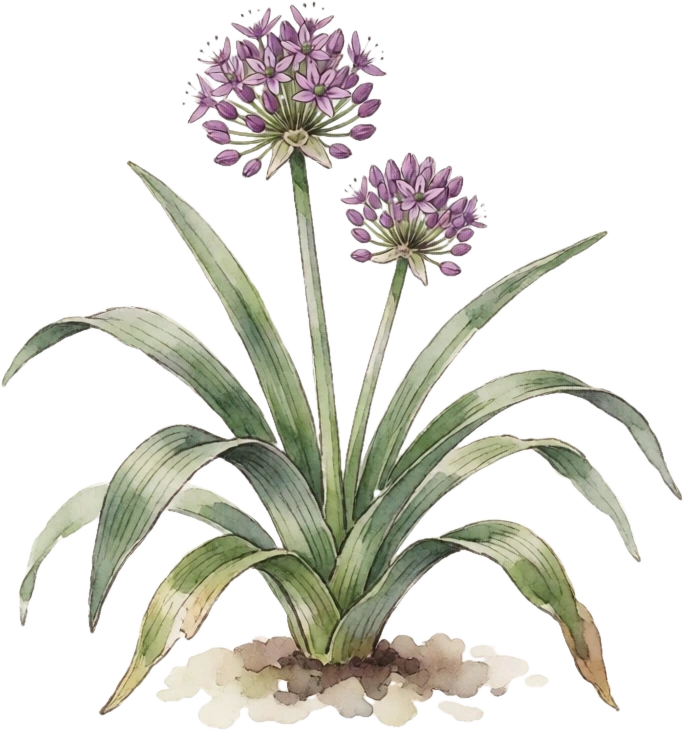
Perfect purple spheres floating on bare stems above the early-summer border — ornamental alliums are the exclamation points florists charge six dollars a stem for, and yours come back free every year. Even after the color fades, the dried heads stand like sculpture into winter.
Bees swarm the globes; deer and rabbits, smelling onion, want nothing to do with them — which is why alliums headline gardens in deer country. Pets shouldn't chew any part, so bed them among perennials and enjoy. Tuck bulbs between clumps this fall and wait for the lollipops.
 Full Sun
 Low water
 Spring bulb growth
 Attracts bees
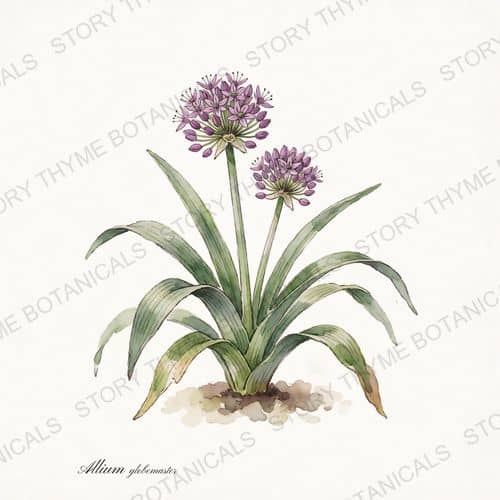
From the print shop
Growing ornamental allium? Hang it.
Our Plant Library collection carries ornamental allium — Allium globemaster, print Nº 7, “Ornamental Allium.”
526 designsfrom $12.99white or black backgroundmatte poster, unframed
Will it fruit where you are?
Enter your ZIP — we look up your USDA hardiness zone (2023 map) and check it against what ornamental allium actually needs.
 Hardy inZones 4-8
Ornamental Allium · Common problems
Common ornamental allium problems

Pests
1 problem on file
- NONE (onion family = pest-proof)

Diseases
1 problem on file
- Bulb Rot in swamps
Ornamental Allium · Growing & propagation
Growing ornamental allium
- Light
- Full Sun
- Water
- Low
 Soil
Soil- Well-drained · pH 6.0 - 7.5
 Fertilizer
- Bulb feed at fall planting
 Pruning
- Foliage yellows AT bloom time
Plant among perennials that hide the shins — None; leave dried heads standing — they're sculpture through summer.
 Spacing
- 8-12 in
How to plant & propagate ornamental allium
- Propagate
- Offsets, division, or bulbils
Ornamental Allium · Calculators & field guides
A little help in the garden.
Ornamental Allium · Yearly calendar
The ornamental allium year, month by month
Jan
No calendar activity is listed for this month.
 Bloom
BloomBloomMay to August
What each band means
- Bloom — flowers open — pollinators working, frost on blossoms is the danger.
These are the species' typical months — expect them a few weeks earlier in warm zones and later in cold ones. Watch the plant, not just the calendar.
Ornamental Allium · Ecology & uses
Ecology & uses
Allium 'Globemaster' & spp.
Ornamental Allium in the garden system
- Nectary/insectary
 Attracts
- Bees
 Moisture
- Upland / dry
 Deer
Deer- Browsed
Protect young plants
 Origin
- Introduced
What ornamental allium is grown for
! Some parts toxic — see notesToxic to dogs, cats and horses — organosulfur compounds cause Heinz-body haemolytic anaemia; also toxic to cattle, sheep and goats. Cats are the most sensitive.
 Use
Use- Border exclamation points
- Use
- Dried heads
- Use
- Deer country
Edibility, identification, and traditional-use notes here are general reference — not medical or veterinary advice, and not a claim that any plant treats or prevents anything. Medicinal ratings record how strongly a plant features in herbal tradition, nothing more. Never eat or dose a plant you have not positively identified. More on how to use this library.
Ornamental Allium · Varieties & cultivars
Choosing a ornamental allium variety
'Globemaster' (softball, sterile, longest show); 'Purple Sensation' (economical drifts); 'Mount Everest' (white); drumstick allium (July, cheap)
Sources & plant identity
Know what you’re growing.
See where the knowledge comes from.
Ornamental Allium
Allium 'Globemaster' & spp.
The plant, at a glance.
- Botanical name
- Allium 'Globemaster' & spp.
- Plant family
- Amaryllidaceae
- Growth habit
- Bulb · Perennial
- Origin
- Introduced
- USDA plant symbol
- ALLIU
- Invasive risk
- Low
Hardiness, size and timing vary with your cultivar, soil and climate.
Rooted in research.
University extension research, brought together with hands-on growing experience at Story Thyme Farms.
for Ornamental Allium
Research from these sources

Publisher marks identify sources, not sponsorship or endorsement.
Where to buy
Third-party nurseries — not Story Thyme Farms.
Third-party nurseries, not Story Thyme Farms. Prices are theirs.
Story Thyme Farms may earn a small commission from these links, at no cost to you — it never changes what we recommend.
Questions
Ornamental Allium questions, answered straight.
Is ornamental allium safe for kids and pets?
With care. Toxic to dogs, cats and horses — organosulfur compounds cause Heinz-body haemolytic anaemia; also toxic to cattle, sheep and goats. Cats are the most sensitive. Site it accordingly if children or pets roam the garden. This is general reference, not medical or veterinary advice — call a vet or poison control if something has actually been eaten.
How do you propagate ornamental allium?
Offsets, division, or bulbils.
Elsewhere
Where ornamental allium sits in the library.
 Sunflower
 Zinnia
 Peony
Peony Daylily