The Flock · A field guide
Heritage chicken breeds
worth saving.
Explore breed diversity and the records behind it.
49breed records
to compare
5traits for
each breed
Choosing your flock
Keeping more than a flock alive.
A heritage breed is one that predates the industrial hybrid: it mates naturally, lives a long productive life, and grows at a natural rate. Dozens are now rarer than they have ever been, kept alive mostly by small flocks. The Livestock Conservancy tracks them on a ladder from Critical (fewer than a thousand birds, seven or fewer primary breeders) up through Threatened and Watch to Recovering.
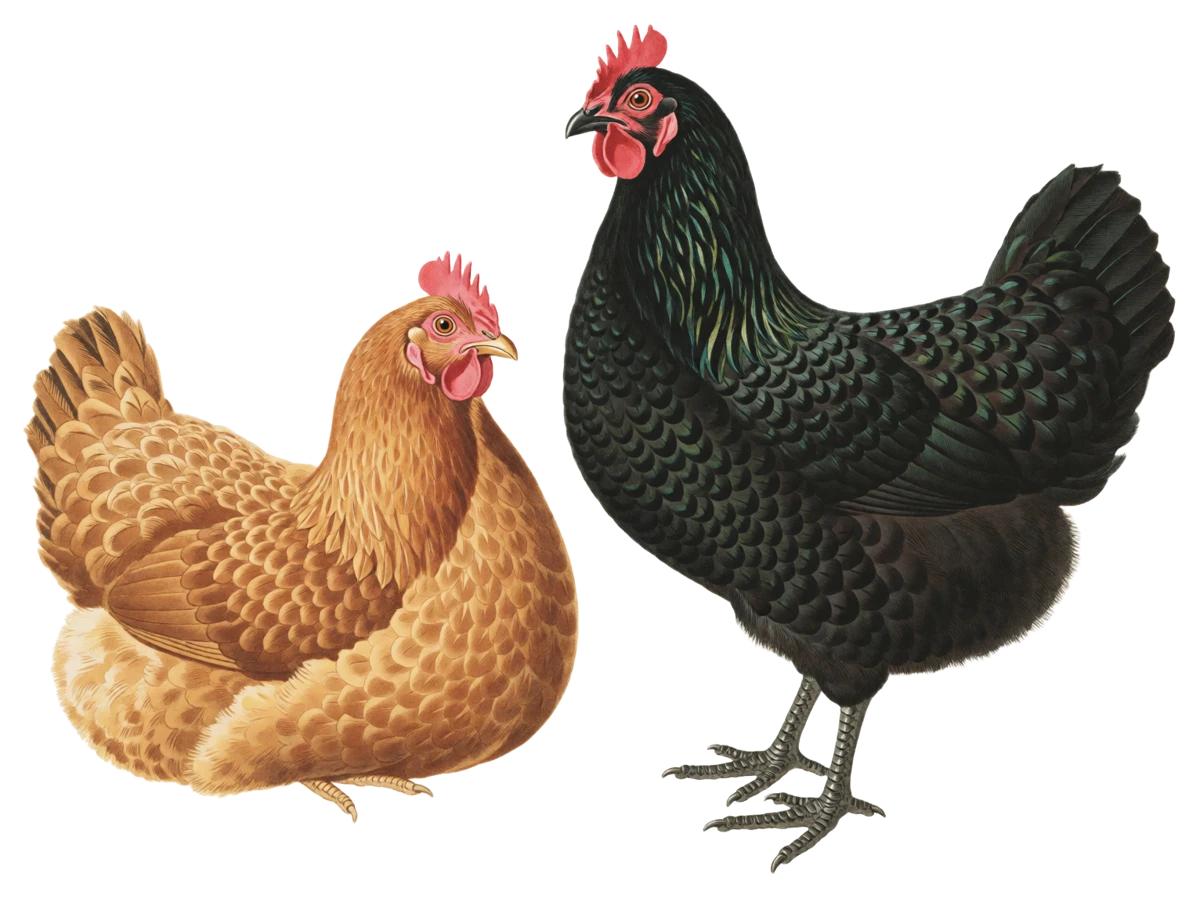
These 49 breeds carry a conservation status. Some — Dominique, Buckeye, Delaware, Chantecler — are recognizable American breeds a hatchery can still supply; others are down to a handful of breeders. Choosing one of these for a backyard flock is the rare conservation act that costs nothing extra: the way you save a heritage chicken is by keeping and breeding it. They are also the birds behind our heritage-breed prints.
The breed records
Compare the breeds.
49 breeds, with the details that matter for this guide.

Swipe across the table to see every detail.
Scroll through all 49 breeds below, or type a name to narrow the list.
| Breed | Status | APA class | Kept for | Eggs / year | Origin |
|---|---|---|---|---|---|
| Araucana | Critical | All Other Standard Breeds | Egg | 150–180 | Chile |
| Aseel | Critical | All Other Standard Breeds | Game | 40–80 | India |
| Booted Bantam | Critical | Feather Legged (Bantam) | Ornamental | 120–160 | Netherlands |
| Catalana | Critical | Mediterranean | Dual-purpose | 150–200 | Spain |
| Cubalaya | Critical | All Other Standard Breeds | Ornamental | 100–150 | Cuba |
| Holland | Critical | American | Dual-purpose | 200–240 | United States |
| Java | Critical | American | Dual-purpose | 150–180 | United States |
| La Flèche | Critical | Continental | Dual-purpose | 140–200 | France |
| Malay | Critical | All Other Standard Breeds | Exhibition | 70–120 | Southeast Asia / England |
| Redcap | Critical | English | Dual-purpose | 150–200 | England |
| Shamo | Critical | All Other Standard Breeds | Game | 60–100 | Japan |
| Spanish | Critical | Mediterranean | Egg | 150–200 | Spain |
| Campine | Threatened | Continental | Egg | 150–200 | Belgium |
| Dorking | Threatened | English | Dual-purpose | 140–190 | England |
| Hamburg | Threatened | Continental | Egg | 150–220 | Netherlands |
| Houdan | Threatened | Continental | Dual-purpose | 150–230 | France |
| Icelandic | Threatened | — | Dual-purpose | 180–240 | Iceland |
| Japanese Bantam | Threatened | Single Comb Clean Legged (Bantam) | Ornamental | 60–90 | Japan |
| Lakenvelder | Threatened | Continental | Egg | 150–200 | Germany / Netherlands |
| Langshan | Threatened | Asiatic | Dual-purpose | 140–200 | China |
| Modern Game | Threatened | All Other Standard Breeds | Exhibition | 50–100 | England |
| Nankin | Threatened | Single Comb Clean Legged (Bantam) | Ornamental | 50–100 | United Kingdom |
| New Hampshire | Threatened | American | Dual-purpose | 200–240 | United States |
| Russian Orloff | Threatened | — | Dual-purpose | 150–180 | Russia |
| Sicilian Buttercup | Threatened | Mediterranean | Egg | 120–180 | Italy |
| Sultan | Threatened | All Other Standard Breeds | Ornamental | 50–100 | Turkey |
| Sumatra | Threatened | All Other Standard Breeds | Ornamental | 50–100 | Indonesia |
| Yokohama | Threatened | All Other Standard Breeds | Ornamental | 60–100 | Germany |
| Ancona | Watch | Mediterranean | Egg | 180–220 | Italy |
| Andalusian | Watch | Mediterranean | Egg | 150–200 | Spain |
| Appenzeller Spitzhauben | Watch | — | Dual-purpose | 150–180 | Switzerland |
| Barbu d'Uccle | Watch | Feather Legged (Bantam) | Ornamental | 100–150 | Belgium |
| Buckeye | Watch | American | Dual-purpose | 150–200 | United States |
| Chantecler | Watch | American | Dual-purpose | 180–220 | Canada |
| Cornish | Watch | English | Meat | 80–120 | England |
| Crèvecœur | Watch | Continental | Ornamental | 100–150 | France |
| Dominique | Watch | American | Dual-purpose | 230–270 | United States |
| Faverolles | Watch | Continental | Dual-purpose | 150–200 | France |
| Minorca | Watch | Mediterranean | Egg | 120–220 | Spain |
| Old English Game | Watch | All Other Standard Breeds | Game | 100–160 | United Kingdom |
| Phoenix | Watch | All Other Standard Breeds | Ornamental | 100–130 | Germany |
| Rhode Island White | Watch | American | Dual-purpose | 200–250 | United States |
| Sebright | Watch | Rose Comb Clean Legged (Bantam) | Ornamental | 60–100 | England |
| Cochin | Recovering | Asiatic | Ornamental | 110–160 | China |
| Delaware | Recovering | American | Dual-purpose | 200–280 | United States |
| Jersey Giant | Recovering | American | Dual-purpose | 150–200 | United States |
| Leghorn | Recovering | Mediterranean | Egg | 250–320 | Italy |
| Polish | Recovering | Continental | Ornamental | 150–200 | Netherlands |
| Sussex | Recovering | English | Dual-purpose | 200–250 | England |
Put it to work
Keep exploring.
Breed facts from our open chicken-breed database, cross-checked against US hatchery listings, the Livestock Conservancy’s 2026 priority list and the American Poultry Association. Lay rates are a healthy hen’s good year, not a guarantee.